Choropedia
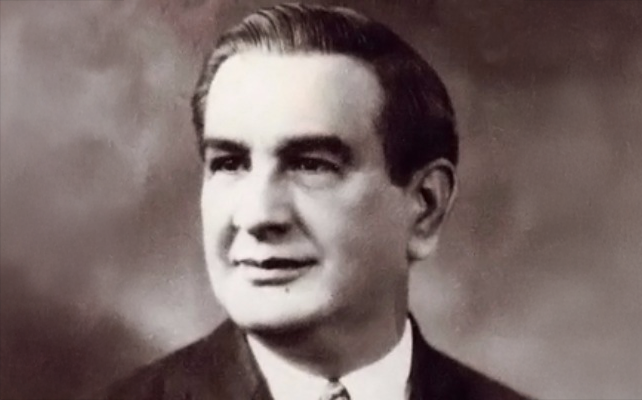
Zequinha de Abreu - Brazilian Composer
Discover Zequinha de Abreu, a notable Brazilian composer known for his contributions to choro and popular music.
Introduction
José Gomes de Abreu, known as Zequinha de Abreu (Santa Rita do Passa Quatro, 19 September 1880 – São Paulo, 22 January 1935), was a composer, instrumentalist, and conductor who occupies an important place in the history of Brazilian urban popular music. Although his name is almost automatically associated with Tico-tico no Fubá, his relevance to choro is broader: his work helps connect the world of bands from the interior of São Paulo state, salon music, popular piano, and the repertoire that would later become established as a classic of the genre.
To reduce him to the author of a single success would be to impoverish his catalogue. Reference sources record a composer of extensive output — choros, waltzes, tangos, maxixes, marches, and sambas. The picture that emerges is of an author deeply integrated into the musical practice of his time, and not merely the creator of an isolated hit.
Training and Musical Context
Zequinha's musical formation began in childhood, in contact with the musical life of the São Paulo interior. He studied in São Simão, where he began his musical education with Dionísio Machado; he then moved to the Colégio São Luís in Itu, played the ocarina in a family ensemble, and studied harmony with José Basílio. Later, at the Episcopal Seminary in São Paulo, he continued his studies with José Pinto Tavares and Father Juvenal Kelly. This foundation accounts for the technical solidity of a composer who moved naturally between popular practice, written composition, and work as a conductor.
Back in Santa Rita do Passa Quatro, Zequinha worked in his father's pharmacy, but quickly returned to musical life, organizing ensembles such as the Lira Santarritense and the Orquestra Smart, attached to the local cinema. During this period he was already composing waltzes, choros, tangos, and maxixes to animate parties, dances, and silent film screenings. Around the turn of the 1920s he moved to São Paulo, extending his reach as a pianist at the Casa Beethoven and in nightclubs and salons, bringing his music into a broader and commercially more dynamic urban circuit.
Musical Style
Zequinha's catalogue reveals a composer equally at home in several genres of urban popular music of the period. Waltzes and choros are the most prominent, but tangos, maxixes, marches, and sambas are also present. This is significant because it shows that his writing emerged in an environment where genre boundaries were more porous — where the same composer could write for piano, band, small ensembles, and domestic sheet-music use without being confined to a single label.
In choro: his best-known pieces suggest a preference for very clear melodic lines, lively pulse, and instrumental brilliance — qualities that helped works such as Tico-tico no Fubá, Não me Toques, Sururu na Cidade, and Os Pintinhos no Terreiro remain in the active repertoire.
In the waltz: a more lyrical Zequinha appears, with a singable and sentimental appeal, perceptible in titles such as Branca, Tardes em Lindóia, Elza, Súplicas de Amor, and Só pelo Amor Vale a Vida.
Taken together, his work balances immediate communicability with strong melodic finish — two qualities that account for why it has crossed the century and remains alive among musicians, researchers, and listeners.
Key Works
| Title | Genre | Notes |
|---|---|---|
| Tico-tico no Fubá | Choro-polka | Composed in 1917; one of the Brazilian compositions with the widest international circulation. Featured in North American films (1944) and performed by Carmen Miranda in Copacabana (1947). |
| Branca | Waltz | One of his greatest successes, with sustained discographic presence across the decades; frequently cited alongside Tico-tico no Fubá as a central title in his catalogue. |
| Não me Toques | Choro | One of the most representative pieces of his style in the genre; a consistent presence in the repertoire. |
| Sururu na Cidade | Choro | A lively and communicative work, durably associated with his name. |
| Os Pintinhos no Terreiro | Choro | Another classic of his choro catalogue, with strong melodic appeal. |
| Tardes em Lindóia · Elza · Súplicas de Amor · Só pelo Amor Vale a Vida | Waltzes | A group of waltzes demonstrating the more lyrical and sentimental side of his output. |
| Bafo de Onça | Maxixe | An example of his work in genres neighbouring choro. |
| Patinando | March | Representative of his output outside his principal genres. |
| Pé de Elefante | Samba | Illustrates the breadth of his catalogue beyond choro and waltz. |
A Listening Guide
Tico-tico no Fubá is the most immediate entry point into Zequinha de Abreu's world — and also the most revealing of his style in choro. The piece brings together a very clear melodic line, lively pulse, and instrumental brilliance that distinguish it immediately from a European polka played literally. It is the same syncopation and the same "Brazilian accent" that define choro, delivered with extraordinary communicative force.
But listening to Branca is equally necessary to complete the portrait of the composer. There the other side of Zequinha appears: the lyricism of the waltz, the long and singable phrase, the sentimental expressiveness that explains why his name survived beyond specialist circles. The two pieces together show that his music had broad reach — bright virtuosity and accessible lyricism within the same body of work.
Influences and Relationships
Formation and circulation in the São Paulo interior:
- Dionísio Machado, José Basílio, José Pinto Tavares, Father Juvenal Kelly — Teachers who formed Zequinha's technical foundation across his musical education in São Simão, Itu, and São Paulo.
- Lira Santarritense and Orquestra Smart — Ensembles he organized in Santa Rita do Passa Quatro, where he developed his practice as a composer and conductor before moving to the capital.
Phonographic circulation and the reach of Tico-tico no Fubá:
- Orquestra Colbaz — Responsible for the first recorded disc of the piece, in 1931, for Columbia.
- Ademilde Fonseca — Recorded Tico-tico no Fubá in 1942 with lyrics by Eurico Barreiros, contributing to the diffusion of the vocal version.
- Ervin Drake — Author of the English lyrics used in North American versions from 1944 onward.
- Carmen Miranda and Aloysio de Oliveira — Responsible for the performance in the film Copacabana (1947), which brought the piece to wide international audiences.
- Roberta Sá — Performed Tico-tico no Fubá at the closing ceremony of the Rio Olympic Games in 2016 — an example of the work's longevity as a recognizable sign of Brazilian musical identity.
Legacy
Zequinha de Abreu's place in choro does not depend solely on the worldwide phenomenon of Tico-tico no Fubá. His importance also lies in representing a decisive stage of Brazilian urban popular music in which interior-state bands, salon piano, the sheet-music market, dance, and phonographic circulation were still in intense dialogue with one another. His work documents that encounter and shows how choro could emerge and take shape outside the strict Rio de Janeiro axis without losing musical density or lasting power.
Zequinha deserves to be remembered not only as the author of a celebrated choro, but as a composer who helped consolidate a Brazilian musical language of enormous melodic appeal, great instrumental flexibility, and strong capacity for circulation. His catalogue holds together the bright virtuosity of choro and the lyricism of the waltz — two faces that explain why his music has crossed the century and remains alive among musicians, researchers, and listeners.
Sources
- Dicionário Cravo Albin da Música Popular Brasileira — Entry "Zequinha de Abreu." Primary source for biographical data, general career trajectory, and assessment of Branca as a central title in his catalogue.
- Instituto Casa do Choro — Entry and works catalogue for Zequinha de Abreu. Central source for musical formation, career chronology, and repertoire circulation.
- Música Brasilis — Composer profile and score of Tico-tico no Fubá. Reference for catalogue data and score preservation.
- Discografia Brasileira / Instituto Moreira Salles — Phonographic record of Tico-tico no Fubá, including the Orquestra Colbaz recording (1931, Columbia).
- Rádio Batuta / Instituto Moreira Salles — Playlist and historical contextualisation of Tico-tico no Fubá, including its reappearance at the Rio Olympic Games closing ceremony in 2016.
Editorial note: this entry avoids the absolute formulation that Tico-tico no Fubá is "the most recorded Brazilian song in the world." The sources consulted more reliably support the formulation that it is one of the most recorded Brazilian compositions and one of the most widely circulated internationally.
Suggested course
Move from editorial context into guided study with synchronized score and structured steps.
All courses
Browse the public course catalog connected to the content hubs.