Choropedia
Waldir Azevedo: Brazilian Music Pioneer
Discover Waldir Azevedo, a key cavaquinho player and composer known for hits like Brasileirinho and Delicado, who elevated the instrument in choro.
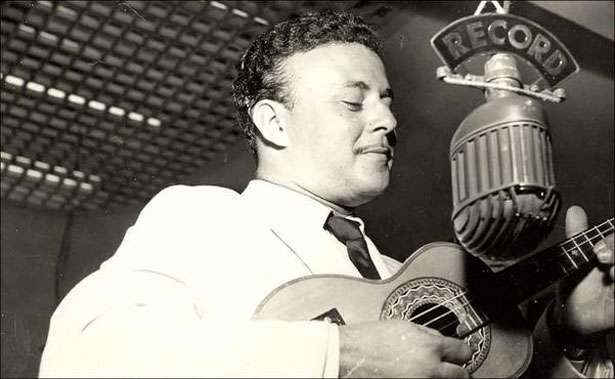
Waldir Azevedo (Rio de Janeiro, 27 January 1923 – São Paulo, 20 September 1980) was one of the decisive figures in Brazilian instrumental music of the twentieth century. A cavaquinho player and composer, he became known nationally and internationally through works such as Brasileirinho, Delicado, and Pedacinhos do Céu, and occupies a central place in the history of choro for the way he repositioned the cavaquinho in the Brazilian musical imagination.
His importance is not reducible to popular success. Waldir helped transform an instrument frequently associated with rhythmic-harmonic accompaniment into a solo voice of considerable projection, with its own repertoire, phonographic presence, and concert appeal. Academic research on his interpretive style frequently points to him as a decisive figure in the consolidation of the cavaquinho as a solo instrument in Brazil.
Training and Musical Context
Raised in the Engenho Novo neighbourhood of Rio de Janeiro, Waldir showed musical interest from a very early age. As a boy, he bought his first flute with money earned from selling songbirds; he then moved to the mandolin (bandolim) and eventually to the cavaquinho, the instrument with which he would build his artistic identity. Before living entirely from music, he worked at the Light — the electric power and transport company of Rio de Janeiro — and once dreamed of becoming a pilot, a plan abandoned due to a heart condition.
His entry into the professional music world came through the universe of radio talent shows, regionais, and broadcast programmes. By 1943 he was already performing with César Moreno's regional, and in 1945 he joined Dilermando Reis's ensemble at Rádio Clube do Brasil as cavaquinho player. That environment proved decisive: it was a crossroads of choro, samba, radio music, dance repertoire, and the logic of the recording industry that would propel his career.
In the late 1940s, Waldir launched Brasileirinho on his first record for Continental. The success was great enough for him to leave his clerical post at the Light and commit fully to his artistic career. Shortly afterwards came Delicado, another landmark in sales and reach.
Musical Style
Waldir Azevedo's style united popular appeal, melodic clarity, and technical invention. His playing impresses not only through speed, but through the distinctness with which the cavaquinho sings, articulates, and sustains interest across the full arc of a piece. Recent scholarship highlights that his work and performance represent a watershed in the history of the instrument, to the point where one can speak of a "before and after Waldir" in the history of the Brazilian cavaquinho.
Technique and sonority: Among the most recognizable features of his playing are a highly regular tremolo, a precisely controlled right-hand plectrum technique, and the presence of melodic arpeggios and legato passages that expand the perception of the cavaquinho well beyond its traditional rhythmic-marking role. His sound combines brightness, rhythmic precision, and a phrasing that manages to be simultaneously virtuosic and singable.
Compositional language: Waldir worked above all with short, memorable, rhythmically driven themes — highly efficient in radio and phonographic circulation. Although he is remembered primarily for his choros, his work also engages strongly with other urban and popular genres, most emblematically the baião in the case of Delicado.
Key Works
| Title | Year | Notes |
|---|---|---|
| Brasileirinho | 1949 | His first major discographic success as a soloist. An obligatory piece in the choro repertoire; combines virtuosity, rhythmic drive, and strong communicability. |
| Delicado | 1950 | Greatly extended his national and international reach. The version by Percy Faith reached number one on a Billboard chart in 1952 — a rare instance of a Brazilian instrumental composition achieving that level of global penetration at the time. |
| Pedacinhos do Céu | 1951 | Reveals the more lyrical and airy side of Waldir's artistry, while remaining fully idiomatic on the cavaquinho. An immediate classic of his catalogue. |
| Carioquinha · Chiquita · Vê se Gostas · Minhas Mãos, Meu Cavaquinho | — | Works that demonstrate the breadth of his output and the enduring consistency of his melodic voice across the decades. |
A Listening Guide
If a single piece were needed to introduce Waldir Azevedo's musical world, Brasileirinho would be the most natural candidate. In it, the cavaquinho appears not as a supporting player but as the absolute centre of the musical narrative: it carries the theme, generates tension, projects brilliance, and sustains the energy of the piece with remarkable technical assurance.
When listening to the recording, it is worth noting how the right-hand articulation, the arpeggio figures, and the regularity of the tremolo are not mere ornaments of display. They are part of the construction of the form and character of the music. In Waldir, technique and musicality are inseparable — as if the instrument had finally found its own public voice.
Influences and Relationships
Formative context:
- César Moreno — The regional with which Waldir performed from 1943, at the outset of his professional career.
- Dilermando Reis and Rádio Clube do Brasil — The ensemble and environment Waldir joined in 1945, a crossroads of choro, samba, radio music, and the recording industry.
Reach and circulation:
- Continental — The record label through which he launched Brasileirinho and consolidated his career as a soloist.
- Percy Faith — Canadian-American conductor and arranger whose recording of Delicado reached number one on a Billboard chart in 1952, bringing a composition by Waldir to the top of the international instrumental music market.
- International diffusion — Other compositions by Waldir circulated in countries including the United States, Germany, and Japan.
Institutionalization of choro:
- Clube do Choro de Brasília — In 1971, having retired from Rádio Clube do Brasil, Waldir moved to Brasília and helped found the Clube do Choro, reinforcing his commitment not only to the repertoire but to the institutional preservation and memory of the genre.
Legacy
The legacy of Waldir Azevedo is broad because it operates on several levels simultaneously. He left enduring popular successes, consolidated an indispensable repertoire for any cavaquinho player, and redefined the instrument's place in Brazilian music. According to the Casa do Choro, his career encompasses more than 200 instrumental recordings and approximately 70 compositions — figures that help convey the extent of his artistic presence.
But his deepest legacy may be something else: Waldir showed that the cavaquinho could sustain, on its own, the full weight of the listener's attention, technical demand, and public prestige. For that reason, his name remains an obligatory reference not only for choro instrumentalists, but for any serious reflection on the development of the Brazilian cavaquinho.
Sources
- Dicionário Cravo Albin da Música Popular Brasileira — Entry "Waldir Azevedo." Primary source for biographical data and general career trajectory.
- Instituto Casa do Choro — Entry "Waldir Azevedo." Central source for career chronology, circulation of his work, move to Brasília, and legacy in choro.
- Discografia Brasileira / IMS — Phonogram entries for Brasileirinho and Delicado. Useful for release dates, discographic context, and the initial impact of his major successes.
- Billboard — Historical record of Delicado in the Percy Faith version. Reference for the international reach of the work in 1952.
- BENON, Leonardo Bodstein. O estilo interpretativo de Waldir Azevedo: aspectos técnicos e expressivos [The Interpretive Style of Waldir Azevedo: Technical and Expressive Aspects]. Universidade de Brasília, 2017. — Academic reference for Waldir's role in the consolidation of the solo cavaquinho and for the technical aspects of his performance.
Suggested course
Move from editorial context into guided study with synchronized score and structured steps.
All courses
Browse the public course catalog connected to the content hubs.