Choropedia
Subgenres of Choro
Explore the rhythmic and stylistic matrices of choro.
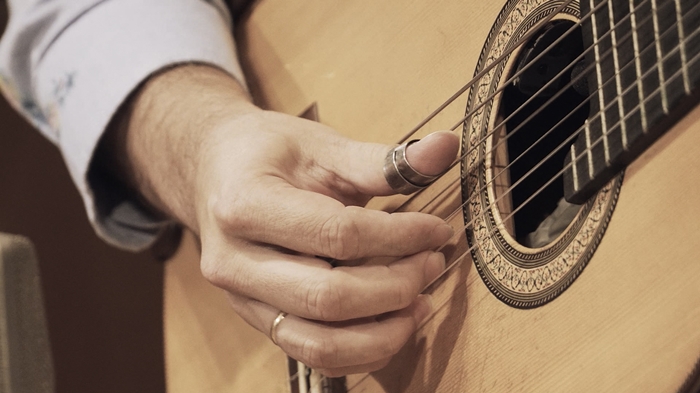
Choro did not emerge as an isolated and closed genre, but as a Brazilian urban musical language built through the appropriation, transformation and reworking of diverse musical traditions that circulated throughout the country between the 19th and 20th centuries. Polca, waltz, schottisch, lundu, habanera, modinha, tango brasileiro and, later, other rhythmic and expressive inflections came to coexist in the chorões' repertoire, absorbed into a shared instrumental accent.
When discussing the so-called "subgenres of choro," it is important to recognize that we are not always dealing with rigid divisions. More often than not, these are rhythmic-stylistic families, repertoire categories or ways of playing that coexist within the tradition of choro.
Subgenre, form or groove?
In the world of choro, these three notions frequently overlap. In some cases, the name refers to a historical dance or song genre, such as polca, waltz or schottisch. In others, it refers primarily to a way of accompanying — a groove —, as occurs with certain uses of varandão or choro-sambado. There is also the dimension of form, linked to the organization of sections and the architecture of the repertoire.
A single piece can therefore be understood simultaneously through its form, its historical origins and the groove that characterizes it in instrumental practice.
The use of "choro subgenres" is valid, as long as its flexibility is understood. Rather than fixed compartments, the term points to different matrices and inflections that participate in the language of choro.
Polca and polca-choro
The polca holds a central place in the historical formation of choro. Introduced to Brazil in the 19th century as a ballroom dance in binary meter, it was progressively Brazilianized by popular musicians. Through contact with Afro-Brazilian musical traditions — especially the lundu — it ceased to be merely an imported dance and began functioning as raw material for the formation of a Brazilian urban musical language.
The expression polca-choro describes this transitional zone. It applies to pieces in which the historical identity of the polca is still recognizable, but whose interpretation, phrasing, accompaniment and rhythmic feel already belong clearly to the world of choro. The testimony attributed to Pixinguinha himself — "back then, everything was polca" — shows how fluid these labels were historically.
Maxixe, choro-maxixe and tango brasileiro
The maxixe is one of the decisive matrices of Brazilian urban popular music from the late 19th and early 20th centuries. Described as a heavily syncopated dance linked to popular urban contexts, it is associated with the transformation of the polca through contact with the lundu, the batuque and other Afro-Brazilian practices.
In this context, the tango brasileiro often appears as a closely related category, in some cases functioning almost as a stylized or socially legitimized form of the same rhythmic phenomenon. The term choro-maxixe, in turn, is useful for indicating works or performances in which the language of choro combines with the rhythmic drive and dance character of the maxixe. More than fixed boundaries, what we find here is a field of strong historical and stylistic continuity.
Waltz and valsa-choro
The waltz represents the main ternary presence within the world of choro. Although it is a European genre, its diffusion in Brazil was widespread, crossing both erudite and popular repertoires and becoming an important part of choro ensembles and rodas de choro.
The expression valsa-choro does not usually denote an autonomous historical genre, but rather a way of playing a waltz with the language of choro. Ornamentation, bass lines, accompaniment patterns, regional ensemble conventions and phrasing inflections bring these waltzes into the chorístico universe, even when collections or catalogues register them simply as "waltz."
Schottisch, xote and xótis
The schottisch — which in Brazil also appears as xote or xótis — is yet another example of a European dance absorbed and reworked in the Brazilian musical environment. In binary meter and close to the polca in several respects, it became part of the popular repertoire and also appears in the world of choro as one of its historical repertoire forms.
In the chorístico context, the schottisch matters less as an exotic relic of the past and more as one of the genres that shaped the language. Its presence shows that choro has always been constituted from a broad field of dances and songs instrumentalized by a shared way of playing.
Lundu as matrix
The lundu holds a fundamental position in the genealogy of choro. More than a specific genre, it functions as a rhythmic, corporeal and cultural matrix of Brazilian urban popular music. Associated with African and Afro-diasporic origins, it decisively influenced the processes of Brazilianization of European genres and the formation of the characteristic rhythmic feel that would later consolidate into choro.
When speaking of choro subgenres, the lundu should therefore be understood in a double register: as a repertoire genre and as one of the deep foundations of the rhythmic-stylistic language of choro.
Samba-choro and choro-sambado
The terms samba-choro and choro-sambado help name the convergence between the language of choro and the rhythmic paradigms of samba, especially from the transformations that took place in the first decades of the 20th century.
Samba-choro generally designates pieces in which elements of samba and choro merge in a more balanced way, whether in the rhythmic foundation, the dance-like character or the instrumental language. Choro-sambado, in turn, more precisely indicates a type of choro whose groove and accentuation approach those of samba. This distinction is historically meaningful, since documentation on choro points to significant changes in the accompaniment and rhythmic pulse of the regional ensemble throughout the 20th century, with a growing presence of samba batucada in relation to earlier paradigms linked to the maxixe.
Samba-canção and choro-canção
Samba-canção belongs more broadly to the field of Brazilian popular song, but is relevant here as it represents a lyrical and melodic axis that dialogues with the expressive world of choro. Its more restful tempo and its melodic-harmonic emphasis reveal a less dance-oriented and more cantabile strand of Brazilian urban music.
Choro-canção, on the other hand, is a category directly linked to the world of choro itself. In pedagogical materials and archives, it appears as a label for works with a more lyrical, singable and expressive character, often less virtuosic and less percussive than other modalities in the repertoire. It represents an internal inflection of choro in which the melodic singability and expressive phrasing take on greater prominence.
Varandão and choro-varandão
The varandão — or choro-varandão — is a particularly revealing case of the classificatory flexibility of choro. Unlike the polca, waltz or schottisch, it does not assert itself primarily as a 19th-century historical genre, but rather as a term of practice, associated with a groove, a character and a particular mode of rhythmic accompaniment.
In literature related to instrumental practice and teaching, varandão is associated with choros of moderate tempo, a more settled rhythmic feel and accompaniment that is often more melodic or arpeggiated. Its classificatory value is less about naming a historical form and more about describing a type of musical texture and ambience. This illustrates, in an exemplary way, that in choro certain "subgenres" are defined less by the formal origins of a piece and more by the behavior of its performance.
Final remarks
Speaking of choro subgenres is useful, as long as an overly rigid taxonomy is avoided. In choro, names can designate a dance genre, a historical matrix, a catalogue category, an expressive character or an accompaniment groove. Polca, maxixe, waltz, schottisch, lundu, samba-choro, choro-sambado, choro-canção and varandão all belong to this fluid universe, in which form, instrumental practice, social history and collective listening are intertwined.
It may be more accurate to say that choro contains rhythmic-stylistic families rather than entirely closed subgenres. But that is precisely where its richness lies: choro is not a single drawer, but a constellation of ways of playing, accompanying, composing and feeling.
As with any overview of this nature, this entry can be expanded and deepened. Even so, it provides a solid foundation for understanding the main matrices and inflections that participate in the tradition of choro.
References
- Instituto Casa do Choro — sheet music archive and repertoire classifications.
- Dicionário Cravo Albin da Música Popular Brasileira — entries on choro, polca, maxixe, tango brasileiro, waltz, schottisch, lundu and modinha.
- Official documentation of the registration process of choro as an intangible cultural heritage of Brazil, including discussion of historical matrices, instrumental formation, form and groove.
Suggested course
Move from editorial context into guided study with synchronized score and structured steps.
All courses
Browse the public course catalog connected to the content hubs.