Choropedia
Sátiro Bilhar: Brazilian Musician and Composer
Discover Sátiro Bilhar, a renowned guitarist and composer known for his influence on choro music.
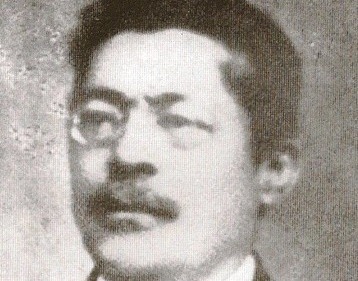
Introduction
Sátiro Lopes de Alcântara Bilhar, also spelled Satyro Bilhar in some sources, was a guitarist, pianist, composer, and clerk at the Central do Brasil Railroad. His biography, like that of many 19th-century chorões (players of choro, the traditional Brazilian instrumental genre that emerged in late 19th-century Rio de Janeiro), reaches us through fragmentary documents, musicians' memories, dedications, testimonies, and small legends from the roda (the choro circle, where musicians gather to play together).
Sátiro Bilhar was born in Baturité, in the state of Ceará, on February 27, 1860, and died in Rio de Janeiro on October 23, 1926.
He was a distinctive presence in the world of the early chorões, linked to popular guitar, to modinhas (sentimental Luso-Brazilian songs), lundus (an Afro-Brazilian song and dance form ancestral to samba), polcas, balls, serenades, and the art of variation. His figure appears frequently associated with the imagination of the velha guarda (the "old guard" of choro musicians): a musician with a refined ear, a bohemian life, a strong personality, and enormous inventive power at his instrument.
His importance to choro is tied less to the extent of his written output than to his way of playing. Sátiro represents a school of Brazilian guitar that predates the modern fixing of the instrument in methods, recordings, and canonical repertoires — a school in which the music did not end when it was written down, but continued in the hands of the performer.
Training and Musical Context
Sátiro Bilhar took part intensely in the world of musicians, poets, bohemians, and serenaders of Rio's nightlife at the end of the 19th century and the first decades of the 20th — a decisive moment in the consolidation of choro as a genre and as a practice of the roda.
Sátiro lived out a very Brazilian double life: on one side, the regular clerk at the Central do Brasil Railroad; on the other, the bohemian in intense nocturnal circulation. This double life is not a folkloric detail. It helps us understand the environment in which choro was formed: a city in which musicians could move between public employment, domestic musical gatherings, popular festivities, salons, guitar rodas, poetry, theater, modinha, and dance, without rigid hierarchies between these spheres.
He belongs to a lineage of musicians who do not fit into a fixed category. He was a composer, an accompanist, a social figure, a storyteller, a partner of poets, and above all a guitarist of very particular presence. His name appears alongside figures such as João Pernambuco, Quincas Laranjeiras, Catulo da Paixão Cearense, Villa-Lobos, and Donga, within the generation of the early chorões.
He was not remembered as a virtuoso in the conventional sense, but as someone whose playing drew more attention than the repertoire itself. His touch seemed to carry a signature: less concerned with simply presenting a piece, more interested in reinventing it in front of the listener.
Musical Style
Sátiro Bilhar's style is one of those that can only be described indirectly, through the testimonies of contemporaries, dedications, and the few surviving works. Even so, some central traits can be recognized:
Variation as core material: According to a frequently cited testimony by Donga, Sátiro had few compositions in his repertoire, but he transformed them in many ways: he would play the same piece as a choro, then as a valsa, alter the harmony, invent effects, and develop the themes. The phrase attributed to that memory — "with four songs he could carry the whole ball" — captures the strength of his art of variation.
Harmonic language: Descriptions from contemporaries point to a striking harmonic wit, with spontaneous reharmonizations, changes of character, and passages that surprised the ears accustomed to the roda. Harmony was living material, responding to the environment, the audience, and the stage of the night.
Genre adaptation: The ability to play the same piece in different meters and genres — from choro to valsa, from modinha to maxixe (an urban Afro-Brazilian dance form of the late 19th century) — points to a musical thinking in which genre was not a cage, but a starting point for invention. This flexibility was both technical and social: it allowed him to respond to balls, gatherings, and rodas with a minimal amount of material.
Instrumentation and texture: The guitar in his hands seems to have worked as a small portable theater — an instrument capable of at once singing the melody, sustaining the harmony, commenting through baixarias (the bass-line counter-melodies typical of Brazilian guitar accompaniment in choro), and suggesting dance. The memory of his baixarias, associated by contemporaries with his deep, raspy voice, suggests an intimate link between body, speech, and instrument.
Typical forms: The known catalog articulates genres of the urban popular repertoire of his time — choro, modinha, lundu, maxixe, canção — without a rigid hierarchy between them. This formal mobility is characteristic of the early generation of chorões, in which genres coexisted at the same balls and the same serenades.
Innovations and distinctive aspects: Sátiro's most singular contribution lies in the way he conceived musical performance. The piece was not a fixed object, but material that changed its clothes according to the room, the ball, the listening, and the mood of the night. In Sátiro, choro appears more as a way of playing than as a closed repertoire — a conception that illuminates the oral and performative nature of the genre during its formation.
Important Works
Sátiro Bilhar's body of work survives in a fragmentary state. Below is a selection of the compositions associated with him in reference sources:
| Title | Genre | Notes |
|---|---|---|
| Tira Poeira | Choro | Sátiro Bilhar's best-known work; preserved in the choro repertoire and canonized in later recordings, especially by Jacob do Bandolim. |
| Gosto de ti porque gosto | Modinha / lundu | Notated in 2/4; there are early 20th-century recordings, including by Cadete (Odeon) and Mário Pinheiro (Victor Record), released as a lundu. |
| Gosto! | Maxixe | Cataloged among the compositions attributed to the author. |
| As ondas são anjos que dormem no mar | Song / modinha | Partnership with Catulo da Paixão Cearense. |
| Estudo de harpa | Piece for guitar | Work mentioned among his known compositions. |
| O que vejo em teus olhos | Song / modinha | Work mentioned among his known compositions. |
| Tu és uma estrela | Song / modinha | Work mentioned among his known compositions. |
Musical Example
Tira Poeira is the most useful piece for introducing the listener to Sátiro Bilhar's musical imagination. A choro in 2/4, it has traveled through time and remained in the repertoire of chorões, especially through Jacob do Bandolim's recordings. More than an isolated piece, it works as a kind of historical password: to play this choro is also to play an old memory of the Brazilian guitar, tied to the rodas of the early 20th century, to the velha guarda, and to the imagination of Rio's bohemian world. Attentive listening reveals the logic of variation, thematic development, and the interplay between melody, harmony, and baixaria that characterized the language of his generation.
Legacy
Sátiro Bilhar remains a figure that is half historical, half mythological. This mixture does not diminish his importance — on the contrary, it reveals how the memory of choro was formed through layers of testimony, admiration, anecdote, score, recording, and oral transmission.
His legacy can be observed in three dimensions. The first is repertorial, above all through Tira Poeira, a piece that stayed alive in the hands of Jacob do Bandolim and of later generations, and through compositions that survived in recordings and catalogs. The second is instrumental: Sátiro represents a lineage of the Brazilian guitar based on variation, on creative accompaniment, and on freedom of interpretation, which illuminates the performative nature of choro during its formative period. The third is symbolic: his story shows that choro was born as much in the salons as in the backstage areas, as much in the score as in the ear, as much on the stage as in the kitchen of the party.
His importance to the history of choro cannot be measured by the size of his written output alone. Sátiro shows that a musician could be historically decisive by having created a way of playing that impressed other musicians. His language rested on variation, on harmonic transformation, on adaptation to the environment, and on direct communication with the roda. He played few pieces, but drew many paths from them. In this sense, he embodies a central idea of choro: that music does not end when it is written down, but goes on living in the performer's hands.
Sátiro Bilhar was not simply the author of a famous choro. He was one of those figures who help us understand the secret intelligence of Brazilian popular music: the capacity to do much with little, to turn repetition into surprise, and to convert four songs into an entire night.
Reference Recordings
Sátiro Bilhar predates the phase of regular recording in Brazil, and his own playing was never documented on disc. His work survives in recordings made by other performers:
- Gosto de ti porque gosto. Recorded by Cadete on Odeon.
- Gosto de ti porque gosto. Recorded by Mário Pinheiro on Victor Record, as a lundu.
- Tira Poeira. Recordings by Jacob do Bandolim and other performers throughout the 20th century, which consolidated the piece in the choro repertoire.
Sources
The following sources are relevant to the study of Sátiro Bilhar and the musical context in which he worked:
- Instituto Casa do Choro. Entry "Satyro Bilhar" and catalog of works associated with the composer, including Tira Poeira, Gosto de ti porque gosto, and Gosto!. — Reference documentation on works and trajectory.
- Cravo Albin Dictionary of Brazilian Popular Music. Entry "Sátiro Bilhar." — Reference biographical entry, with selected works and information on recordings and relationships with Catulo, Donga, Villa-Lobos, and Jacob do Bandolim.
- Instituto Moreira Salles / ArtePensamento. — Reference to Sátiro Bilhar's manner of playing and to Donga's testimony about his originality.
- Discografia Brasileira. — Phonographic records of works associated with Sátiro Bilhar, including Gosto de ti and later occurrences of Tira Poeira on disc.
- Música Brasilis. — Complementary reference on the Bilhar family and on the biographical divergences among sources.
Suggested course
Move from editorial context into guided study with synchronized score and structured steps.
All courses
Browse the public course catalog connected to the content hubs.