Choropedia
Raphael Rabello - Brazilian Guitarist
Discover Raphael Rabello, the influential Brazilian guitarist and composer.
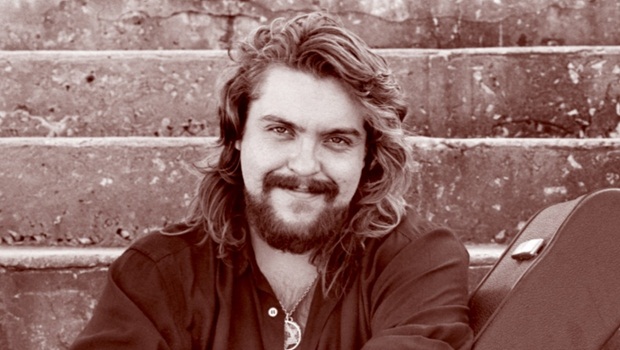
Introduction
Raphael Rabello, the stage name of Rafael Baptista Rabello (Petrópolis, Rio de Janeiro, October 31, 1962 to Rio de Janeiro, April 27, 1995), was a guitarist, composer, and arranger associated with choro, samba, Brazilian instrumental music, and the concert guitar repertoire. In a short, intense, and brilliant career, he occupied a singular position in the history of the Brazilian guitar: he was both a direct heir to the school of Dino 7 Cordas and one of the musicians responsible for opening a new path for the instrument from the 1980s onward.
His importance to choro is tied to a specific transformation: the shift of the seven-string guitar from an almost exclusively accompanying role, the rhythmic and harmonic foundation of regional ensembles and the territory of bass counterlines known as baixarias, into the field of solo performance, recitals, and instrumental composition. Raphael did not break with tradition; he set it ablaze from within. After him, it became impossible to think of the seven-string guitar merely as a supporting instrument.
Training and Musical Context
Raphael grew up in a deeply musical family. He was the youngest of nine siblings, among them the singer Amélia Rabello and the cavaquinho player Luciana Rabello. His maternal grandfather, also a guitarist, was one of his earliest influences, and Raphael began playing intuitively at the age of seven. At twelve, he began studying with Jayme Florence, known as Meira, a master connected to Regional do Canhoto and a decisive reference for several generations of Brazilian guitarists.
A large part of his training, however, came from attentive listening to records, especially the volumes of Choros Imortais by Regional do Canhoto. He also studied music theory with Maria Alice Salles and, later, harmony with Ian Guest. This background helps explain part of his musical language: a sharply developed ear for popular music, an extraordinary instrumental technique, and a harmonic awareness that allowed him to move between choro, samba, song, chamber repertoire, and concert music.
His professional career began while he was still a teenager. In 1976, he joined Os Carioquinhas, a group formed with Luciana Rabello, Paulo Alves, Téo, and Mario Florêncio, which in its second lineup would also include Maurício Carrilho, Celso Cruz, and Celsinho Silva. It was in this context that Raphael moved from the six-string guitar to the seven-string guitar, under the strong influence of Dino 7 Cordas, although Dino was never formally his teacher.
In 1977, Os Carioquinhas recorded their LP for Som Livre. During the recording sessions, Raphael was introduced to Radamés Gnattali by Copinha, a meeting that would become central to his trajectory. Shortly afterward, in 1979, he took part in the formation of Camerata Carioca, an ensemble created to accompany Joel Nascimento in the performance of Radamés Gnattali’s suite Retratos, arranged for a regional ensemble. By the age of 13, Raphael was already making professional recordings; at 14, he was playing both with Os Carioquinhas and with Choros do Brasil, a group formed by Turíbio Santos.
Musical Style
Raphael Rabello’s style combines virtuosity, polyphonic density, rhythmic precision, and an uncommon freedom of phrasing in the Brazilian guitar tradition. Some of his most characteristic traits include:
Melodic language: His melodies and improvisations reveal great technical fluency and expressive phrasing, inherited from instrumental choro but expanded through resources drawn from classical guitar and flamenco. There is a taste for long lines, continuous singing, and inflections that bring the guitar close to the voice of a wind soloist or a mandolin player.
Harmonic language: His harmony dialogues with the vocabulary of choro and samba, while incorporating resources learned from Ian Guest and from the chamber repertoire of Radamés Gnattali. Substitutions, chromaticisms, modal borrowings, and reharmonizations appear without ostentation, always in service of the piece’s direction and the ensemble’s melodic flow.
Rhythm and syncopation: The pulse of choro and samba is always present, even in pieces closer in character to concert music. His baixarias and countermelodies articulate syncopations and displaced accents with meticulous precision, and the swing of his phrasing remains firm even in the most virtuosic passages.
Baixarias and dialogue with the soloist: As an accompanist, Raphael pushed the logic of baixarias to its limit: long, fast, dense lines that filled even the smallest spaces between the phrases of a soloist or singer. In his hands, the seven-string guitar was not merely a foundation. It was almost a second melody, moving through the low register with the alert instinct of a nocturnal animal, commenting, provoking, anticipating, responding, and pushing the phrase somewhere else.
Instrumentation and texture: In 1986, Raphael commissioned luthier Mario Jorge Passos to build a seven-string guitar with nylon strings, adapting the traditional language of the steel-string seven-string guitar to a sound closer to the classical guitar. This gesture redrew the instrument’s textural possibilities and opened the way for the seven-string guitar in solo and concert contexts.
Typical forms: The repertoire articulated by Raphael, both as performer and composer, moves across choros, sambas, songs, chamber pieces, and concert works, without imposing a rigid hierarchy among these fields. His own compositions explore forms close to choro and Brazilian instrumental music, with room for development and virtuosity.
Innovations and distinctive aspects: Raphael’s most original contribution lies in shifting the seven-string guitar into the solo field without abandoning the logic of accompaniment. The adoption of nylon strings and the incorporation of techniques from classical guitar and flamenco expanded the expressive voltage of the instrument and directly influenced later generations in their adoption of the nylon-string seven-string guitar, including names such as Rogério Caetano and Yamandu Costa.
Important Works
Below is a selection of recordings and compositions that represent Raphael Rabello’s style, including solo albums, historic encounters, and original works:
| Title | Category | Notes |
|---|---|---|
| Rafael Sete Cordas (1982) | Debut solo album | A milestone in the affirmation of the seven-string guitar as a solo instrument. |
| Tributo a Garoto (1982) | Duo with Radamés Gnattali | Brings together choro, Brazilian guitar, and chamber repertoire. |
| Raphael Rabello interpreta Radamés Gnattali (1987) | Solo album | A fundamental record of his relationship with Radamés’s guitar works; two tocatas were recorded on the 1986 nylon-string seven-string guitar. |
| Raphael Rabello & Dino 7 Cordas (1991) | Duo | A symbolic meeting between master and disciple, tradition and the expansion of the seven-string guitar. |
| Todo o Sentimento (1991) | Collaboration with Elizeth Cardoso | An example of Raphael’s refinement as an accompanist. |
| Dois Irmãos (1992) | Duo with Paulo Moura | A dialogue between guitar and clarinet/saxophone within the Brazilian popular repertoire. |
| Todos os Tons (1992) | Solo album | One of the central recordings of his maturity as a soloist. |
| Meu Avô | Original composition | A tribute to one of his earliest musical references. |
| Sete Cordas | Original composition | A manifesto-piece about the instrument he redefined. |
| Peito Aberto | Original composition | Part of the group of his most frequently performed original works. |
Musical Example
Tocata em ritmo de samba, by Radamés Gnattali, in the recording from Raphael Rabello interpreta Radamés Gnattali (1987), is one of the most useful pieces for introducing listeners to his style. Recorded on the nylon-string seven-string guitar built in 1986 by Mario Jorge Passos, the interpretation condenses much of Raphael’s artistic project: the polyphonic density of the seven-string guitar rooted in the choro tradition, the rhythmic precision of samba, a sound closer to the classical guitar, and a compositional mindset that moves between popular and concert music without rigid borders. Alongside tracks from Rafael Sete Cordas and his encounter with Dino 7 Cordas, this recording summarizes the guitarist’s singular place in Brazilian music.
Influences and Relationships
Influences on Raphael Rabello:
- Dino 7 Cordas: The major reference for his seven-string guitar language. Even though Dino was not formally his teacher, he remained an internal “accent” within Raphael’s guitar playing, present even in solo passages.
- Jayme Florence, known as Meira: His teacher during his formative years from around the age of twelve, a master connected to Regional do Canhoto and to the tradition of the Brazilian guitar.
- Regional do Canhoto and Choros Imortais: His contact with these recordings during his learning years shaped his ear and his sense of repertoire.
- Radamés Gnattali: Composer and friend, a source of repertoire and a decisive interlocutor in the rapprochement between choro, popular music, and the concert hall.
- Classical guitar and flamenco: Studies acknowledged by Raphael himself as a way to give the Brazilian guitar a more extroverted and aggressive technique.
Dialogues and relationships:
- Camerata Carioca: An ensemble created in 1979 to accompany Joel Nascimento in the performance of Radamés Gnattali’s Retratos, and one of the central environments in the renewal of instrumental choro in the 1980s.
- Os Carioquinhas: His first professional group, alongside Luciana Rabello, Paulo Alves, Téo, and Mario Florêncio, later joined by Maurício Carrilho, Celso Cruz, and Celsinho Silva.
- Elizeth Cardoso: His partner on Todo o Sentimento (1991), one of the recordings that best reveals his work as an accompanist.
- Paulo Moura: His partner on Dois Irmãos (1992), a landmark instrumental dialogue.
- Ney Matogrosso, Amélia Rabello, Armandinho Macedo: Among the many artists with whom he recorded throughout an intense discography.
Legacy
Raphael Rabello died very young, but his work reorganized the place of the seven-string guitar in Brazilian music. Before him, the instrument already possessed a rich tradition in accompaniment, especially through Dino 7 Cordas. After him, it became impossible to think of the seven-string guitar only as a supporting instrument.
His legacy lies in this bridge: Raphael did not break with the old school; he set it ablaze from within. He brought the seven-string guitar into solo performance, the concert stage, and the listening habits of new generations, while keeping alive the logic of baixarias, accompaniment, and the rhythmic-harmonic conversation of choro. He was both a soloist and an accompanist of the highest level, and the power of his style lies precisely in his refusal of that rigid division.
His work decisively expanded the technical horizon of the Brazilian guitar. The adoption of nylon strings on the seven-string guitar in 1986 opened a new lineage that directly influenced the next generation of guitarists. From Raphael onward, the seven-string guitar began to carry another ambition: it continued to be ground, bass counterline, and accompaniment, but it also gained height, flight, and a voice of its own.
The Escola de Choro Raphael Rabello, created in Brasília after his death, gives institutional form to this inheritance. Born from the project of creating an institution dedicated to Brazilian music at a higher-education level, an idea he had begun to develop with Reco do Bandolim, the school keeps alive the commitment to training and to the continuity of the tradition he helped transform.
Raphael was, in short, a point of mutation in the Brazilian guitar. His brief trajectory produced a displacement whose effects continue to shape the choices of performers, composers, and listeners to this day.
Selected Discography
- Rafael Sete Cordas, 1982.
- Tributo a Garoto, with Radamés Gnattali, 1982.
- Raphael Rabello interpreta Radamés Gnattali, 1987.
- Raphael Rabello & Dino 7 Cordas, 1991.
- Todo o Sentimento, with Elizeth Cardoso, 1991.
- Dois Irmãos, with Paulo Moura, 1992.
- Todos os Tons, 1992.
Sources
The following sources are relevant to the study of Raphael Rabello and the musical context in which he worked:
- Casa do Choro. Archive. Entry “Raphael Rabello.” Central documentation on his life, work, trajectory, discography, and institutional legacy.
- Dicionário Cravo Albin da Música Popular Brasileira. Entry “Raphael Rabello.” A reference biographical and discographical entry, with lists of works, recordings, and partnerships.
- Instituto Moreira Salles. Rádio Batuta. Texts by Lucas Nobile on Rafael Sete Cordas and Raphael Rabello interpreta Radamés Gnattali. Historical analyses of the guitarist’s fundamental recordings.
- GONÇALVES, Marcello. A escola do violão de 7 cordas brasileiro: da origem às manifestações atuais. PPGM/UFRJ. An academic reference study on the seven-string guitar tradition and on the turning point represented by Raphael’s adoption of nylon strings.
- Itaú Cultural. Text on Lucas Nobile’s research for the biography Raphael Rabello: o violão em erupção. Contextualizes recent biographical work on the guitarist.
Suggested course
Move from editorial context into guided study with synchronized score and structured steps.
All courses
Browse the public course catalog connected to the content hubs.