Choropedia
Radamés Gnattali: A Brazilian Music Pioneer
Discover the life and legacy of Radamés Gnattali, a key figure in Brazilian music merging choro and samba with classical sophistication.
Introduction
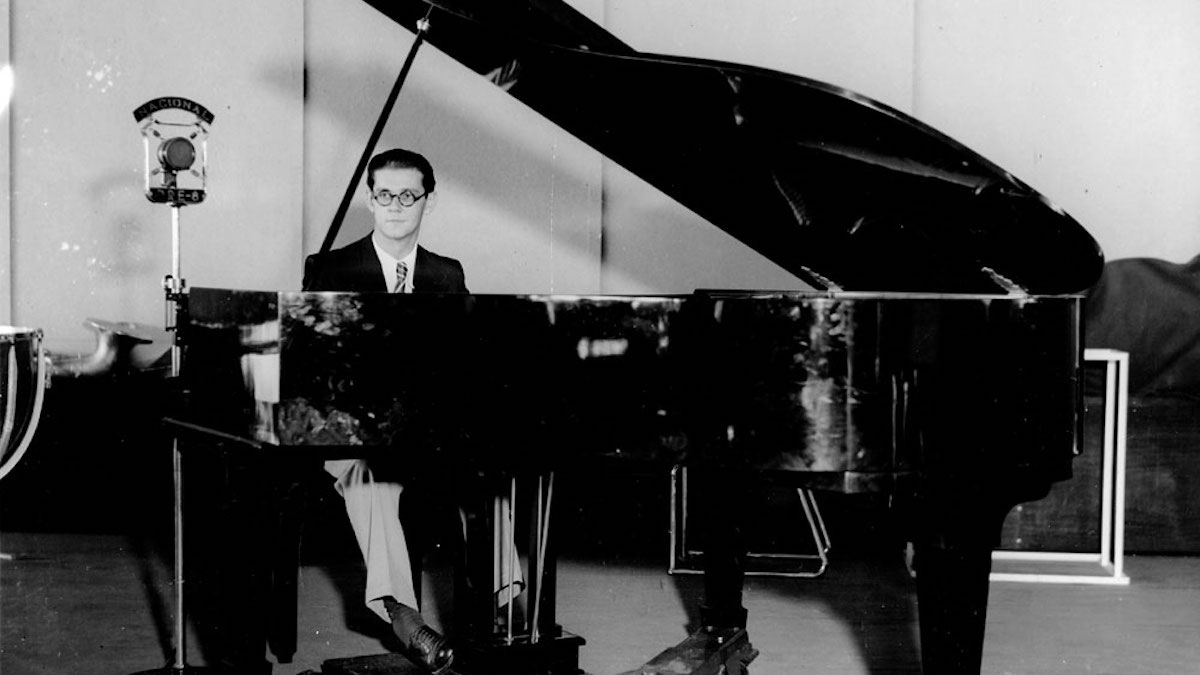
Radamés Gnattali (Porto Alegre, January 27, 1906 – Rio de Janeiro, February 13, 1988) was a Brazilian composer, arranger, conductor, and pianist, widely recognized as one of the rare musicians to move with absolute fluency between the worlds of classical and popular music. His work established, as musicologist Marcia Taborda points out, new paradigms in the conception and execution of choro arrangements, representing a stylistic landmark in the genre's trajectory.
Trained as a concert pianist, Radamés abandoned his solo career in the 1930s to devote himself to popular music — a decision that would change the course of Brazilian musical history. Over more than five decades, he composed choros, waltzes, sambas, concertos, symphonies, and film scores, created iconic arrangements that became inseparable from the original compositions — such as his arrangement of Aquarela do Brasil —, revolutionized orchestration at Rádio Nacional, founded landmark instrumental ensembles, and mentored an entire generation of young choro musicians. Valdinha Barbosa and Anne Marie Devos captured his creative restlessness in the title of his biography: Radamés Gnattali: o eterno experimentador (The Eternal Experimenter).
Background and Musical Context
Radamés grew up in Porto Alegre, in a family of Italian origin deeply connected to music. His father, Alessandro Gnattali, was a carpenter by trade but passionate about opera — he eventually became a professional musician, playing bassoon and later working as a conductor. His mother, Adélia Fossati Gnattali, was a pianist. The couple's passion for opera was so intense that they named their first three children after characters from Verdi operas: Radamés, Aída, and Ernâni. All three would pursue musical careers.
He began learning piano from his mother as a young boy and simultaneously started violin studies with his cousin Olga Fossati. At age nine, he already showed early signs of his talent as an arranger: he was decorated by the Italian consul for conducting a small children's orchestra performing arrangements of his own composition. At fourteen, he entered the Porto Alegre Conservatory directly into the fifth year of the piano program. During this period, he was already frequenting carnival groups and serenader circles, and since he could not bring the piano to those settings, he took up the guitar and cavaquinho — his first practical contact with the instruments of choro.
In 1923, he graduated with a gold medal from the Institute of Fine Arts of Porto Alegre. Brought to Rio de Janeiro for a recital that was highly praised by critics, he came to know the composer Ernesto Nazareth, whom he would listen to outside the Odeon cinema — an encounter that left a lasting mark on his aesthetic formation. In 1925, at the invitation of Mário de Andrade, he performed a recital at the Dramatic and Musical Conservatory of São Paulo. With his brothers Alexandre and Ernâni, he founded the Henrique Oswald Quartet, switching from violin to viola — an experience that proved fundamental to his future career as an orchestrator.
The experience that consolidated his ensemble training came from his friendship with drummer Luciano Perrone, whom he met in 1929 at the Casino das Fontes in the Minas Gerais town of Lambari. Perrone would become his lifelong musical partner and one of his favorite musicians.
Musical Style
Radamés Gnattali's style is the result of a synthesis that no other Brazilian musician of his generation achieved: the organic fusion of the technical sophistication of European concert music with the rhythmic, melodic, and expressive richness of Brazilian popular music — especially choro, samba, and baião.
Harmonic language: Radamés's harmony goes far beyond the common tonal vocabulary of the choro of his era. His classical training gave him command of chromatic progressions, remote modulations, controlled dissonances, and voice leading of contrapuntal rigor. This sophistication, however, never sounds academic or imposed — it integrates into the popular discourse naturally, expanding expressive possibilities without breaking the bond with tradition.
Orchestration and arranging: It is perhaps in orchestration that Radamés's most revolutionary contribution lies. On the program Um Milhão de Melodias (A Million Melodies) at Rádio Nacional (1943–1956), he replaced the American jazz foundation — piano, bass, drums, and guitar — with a genuinely Brazilian ensemble: two guitars (with Garoto and Bola Sete), cavaquinho (Zé Menezes), drums and percussion (Luciano Perrone), double bass (Vidal), pandeiro (João da Bahiana), woodblock and plate with knife (Heitor dos Prazeres), and ganzá (Bide). He began using orchestral instruments percussively, achieving effects that were unprecedented until then. A fundamental idea — placing rhythm within the orchestra itself — came from Luciano Perrone and was put into practice by Radamés in a pioneering manner.
Melodic language: His melodies move between the lyricism of salon waltzes, the cunning of Rio's choro, and an inventiveness that reflects his attentive listening to composers such as Ernesto Nazareth, Pixinguinha, and Debussy. There is an elegance of construction in his themes that reveals the craft of a composer trained in the European tradition, but tempered by an unmistakably Brazilian flavor.
Treatment of choro: Radamés did not treat choro as a minor or folkloric genre to be "elevated" — on the contrary, he recognized its intrinsic sophistication. His famous remark about Pixinguinha sums up this attitude: "There are millions of choros, but the truly good ones are Pixinguinha's. Good because they are more elaborate? No, it's because he is a genius." At the same time, he did not shy away from expanding the genre's boundaries: in Suíte Retratos, he combined solo bandolim, regional ensemble, and string orchestra in a work that is simultaneously a reverent tribute to tradition and a proposal for formal and timbral renewal.
Instrumentation and ensembles: Throughout his career, Radamés experimented with the most diverse formations: from the Trio Carioca (piano, violin, and cello) to the Continental Quartet and Sextet, from the Brazilian Orchestra to duos with Raphael Rabello, from the full symphony orchestra to the intimacy of the Camerata Carioca. This restless pursuit of new timbral combinations is one of the reasons for his nickname, "the eternal experimenter."
Important Works
Below is a selection of compositions by Radamés Gnattali representative of his style and present in the fundamental repertoire of choro and Brazilian music:
| Title | Genre | Notes |
|---|---|---|
| Suíte Retratos (1956) | Suite for bandolim, regional ensemble, and orchestra | Masterpiece of the choro-concerto form; pays tribute to Pixinguinha, Ernesto Nazareth, Anacleto de Medeiros, and Chiquinha Gonzaga. Dedicated to Jacob do Bandolim, who recorded it in 1964. |
| Remexendo | Choro | One of Radamés's best-known choros; recorded by the Continental Quartet and in countless versions. |
| Cabuloso | Choro | Recorded with the Trio Carioca in 1937; a piece of lively and inventive character. |
| Tristonho | Choro | Recorded by the Victor Brazilian Orchestra in 1943; lyrical and introspective in character, contrasting with the genre's usual vivacity. |
| Recordando | Choro | Recorded with the Trio Carioca; a piece of nostalgic flavor. |
| Amoroso | Choro | Recorded by the Victor Typical Orchestra in 1936. |
| Estilo de Vida | Polka-choro | Recorded by the Victor Typical Orchestra in 1935; an example of his mastery of the choro idiom. |
| Conversa Mole (Jacobeana) | Choro | Composed in tribute to Jacob do Bandolim; recorded with the Camerata Carioca. |
| Bate-papo a Três Vozes | Samba | Recorded with Luciano Perrone and Vidal in 1956; an example of his chamber-like writing for samba. |
| Serenata do Joá | Choro | One of his first compositions to be recorded, by Luiz Americano in 1934. |
| Meu Amigo Tom Jobim | Choro | A tribute to maestro Antônio Carlos Jobim; recorded with the Sextet. |
| Meu Amigo Pixinga | Choro | A tribute to Pixinguinha, composed with the reverence he always devoted to the master of choro. |
| Uma Rosa para Pixinguinha | Choro | Performed at the historic Pixinguinha 70 concert at the Teatro Municipal in 1968. |
Musical Example
"Suíte Retratos" is Radamés Gnattali's most emblematic work in the choro universe and offers a privileged synthesis of his art as both composer and orchestrator. Written in 1956 for solo bandolim, regional ensemble, and string orchestra, the suite pays tribute to four composers Radamés considered pillars of Brazilian instrumental music: Pixinguinha, Ernesto Nazareth, Anacleto de Medeiros, and Chiquinha Gonzaga. Each movement is a musical "portrait" — not a literal quotation, but a stylistic recreation that captures the essence of each honoree through Radamés's personal language.
The work's complexity led Jacob do Bandolim, its dedicatee, to deepen his studies of musical writing and theory. In a celebrated letter to Radamés, Jacob confessed that before Retratos he had always insisted that the key was to rehearse, and that from that encounter onward he came to understand that, more than rehearsing, it was necessary to study. Jacob described Radamés's silent smile of approval after the performance as the greatest reward of his thirty-year career, recognizing that from then on there existed a different Jacob — "made by you, by your encouragement, by your trust, and by the talent you offer us."
"Remexendo", in turn, is an accessible entry point into Radamés's choro. A piece of lively and playful character, it showcases the clarity of melodic construction inherited from his classical training placed at the service of an unmistakably popular language — a synthesis that is the hallmark of his idiom.
Influences and Connections
Influences on Radamés Gnattali:
- Ernesto Nazareth — The encounter with Nazareth at the Odeon cinema, while still young, profoundly marked Radamés, who would become one of the great interpreters of his piano works, adapting naturally to the dynamics of his compositions.
- Pixinguinha — Unreserved and openly declared admiration; he considered Pixinguinha's choros the finest ever written. He paid tribute to him several times in compositions (Uma Rosa para Pixinguinha, Meu Amigo Pixinga) and in the first movement of Suíte Retratos.
- Luciano Perrone — Lifelong musical partner; the idea of integrating rhythm into the orchestra, which revolutionized the sound of Rádio Nacional, originated with Perrone.
- European classical tradition — His training as a concert pianist, studies with Guilherme Fontainha and Agnelo França, and experience with string quartet gave him technical tools that no other Brazilian popular arranger possessed.
- Villa-Lobos — Contemporary and reference in the fusion of classical and popular; both shared the conviction that Brazilian music possessed an intrinsic sophistication worthy of symphonic treatment.
Musicians and traditions influenced by Radamés:
- Jacob do Bandolim — Suíte Retratos transformed his musical approach, leading him to deepen his theoretical studies and raise the standard of excellence of the Época de Ouro ensemble. Jacob drew lessons in instrumentation and arranging from Radamés and transposed them to the Época de Ouro's formation.
- Raphael Rabello — Introduced to Radamés by Copinha during the recording sessions of the LP Os Carioquinhas in 1977, Raphael became his partner in historic recordings and one of the members of the Camerata Carioca.
- Camerata Carioca — An ensemble formed in 1979 by young musicians — among them Raphael Rabello, Joel Nascimento, Luciana Rabello, Maurício Carrilho, and Luiz Otávio Braga — under the direct guidance and inspiration of Radamés. Hermínio Bello de Carvalho named the group and produced the show and album Tributo a Jacob do Bandolim (Tribute to Jacob do Bandolim), with special participation by the maestro himself.
- Luiz Otávio Braga and the lutherie of the seven-string guitar — Braga, the Camerata Carioca's guitarist, commissioned luthier Sérgio Abreu in 1983 to build the first seven-string guitar with nylon strings, to match the timbre to the chamber-music context of Radamés's arrangements — inaugurating a new chapter in the instrument's lutherie, soon followed by Raphael Rabello.
- Brazilian popular orchestration — His work at Rádio Nacional and at recording companies established the foundations of modern popular orchestration in Brazil, replacing models imported from American jazz with a genuinely Brazilian sonic language.
Ensembles and partnerships:
- Trio Carioca (1936) — With Romeu Ghipsman (violin) and Iberê Gomes Grosso (cello); performed at Rádio Nacional playing choros and toadas.
- Radamés Gnattali Brazilian Orchestra (1943–1956) — Created for the program Um Milhão de Melodias (A Million Melodies) at Rádio Nacional; revolutionized Brazilian radio orchestration.
- Continental Quartet (1949) — With Luciano Perrone, José Menezes, and Vidal; evolved into a Quintet and later a Sextet.
- Radamés Gnattali Sextet (1960) — Definitive formation with Radamés and Aída Gnattali (pianos), Chiquinho do Acordeom, Zé Menezes (guitar), Vidal (double bass), and Luciano Perrone (percussion). Toured Europe as part of the III Official Caravan of Brazilian Popular Music.
- Camerata Carioca (1979) — An ensemble of young musicians formed to perform Suíte Retratos in a chamber version; became one of the most important choro formations of the 1970s and 1980s.
Legacy
Radamés Gnattali's legacy to choro and to Brazilian music is vast and multifaceted. His trajectory represents the culminating point of a stylistic evolution of choro that, according to Marcia Taborda's periodization, passes through the terno de pau e corda (early string-and-woodwind trios), through Benedito Lacerda's Regional, through Jacob do Bandolim, and arrives at Gnattali's creation — whose work established new paradigms in the conception and execution of the genre's arrangements.
As a composer, he left a monumental catalog that includes choros, waltzes, sambas, piano concertos, guitar concertos, symphonies, and film scores. The Instituto Casa do Choro's collection holds 55 cataloged works by the composer. As an arranger, his work for Rádio Nacional and for recording companies created the sound that defined the golden age of Brazilian radio. As a mentor, he was a key figure in the choro revival movement of the 1970s, encouraging new readings of masters such as Chiquinha Gonzaga and Ernesto Nazareth and training a generation of instrumentalists who would carry the genre forward — Raphael Rabello, Joel Nascimento, Maurício Carrilho, Luciana Rabello, Luiz Otávio Braga, among others.
The Casa do Choro in Rio de Janeiro honors Radamés by naming its main auditorium after him — the Auditório Radamés Gnattali. In 1983, he received the Shell Prize in the classical music category, awarded unanimously. In 2006, on the centenary of his birth, the Petrobras Symphony Orchestra paid tribute to him with a live recording of his Concerto for Piano and Orchestra. In 2010, he was honored in the compilation Chorinho do Brasil with an entire CD entitled Radamés Gnattali – O modernizador do choro (The Modernizer of Choro).
He was a member of the Brazilian Academy of Music and the Academy of Brazilian Popular Music. He passed away on February 13, 1988, at the age of 82, from a second cerebral stroke.
Sources
The following sources were consulted for the preparation of this entry:
- BARBOSA, Valdinha; DEVOS, Anne Marie. Radamés Gnattali: o eterno experimentador. Rio de Janeiro: Funarte, 1985. — The reference biography and fundamental primary source on the life and work of the composer.
- TABORDA, Marcia. "As Abordagens Estilísticas no Choro Brasileiro." Historia Actual Online, no. 23, 2010. — A proposed periodization of choro that positions Radamés as the culminating point of the genre's stylistic trajectory.
- PELLEGRINI, Remo. Análise dos Acompanhamentos de Dino Sete Cordas em Samba e Choro. Master's thesis, UNICAMP, 2005. — Contains Jacob do Bandolim's letter to Radamés and analysis of the musical context.
- CAZES, Henrique. Choro: do Quintal ao Municipal. São Paulo: Editora 34, 1998. — A fundamental work on the history of choro, with references to Radamés's contributions.
- Dicionário Cravo Albin da Música Popular Brasileira — Complete entry on Radamés Gnattali with detailed chronology, discography, and works. Available at: dicionariompb.com.br
- Acervo do Instituto Casa do Choro — Catalog with 55 works by the composer and biographical entry. Available at: acervo.casadochoro.com.br
Note: Radamés Gnattali's trajectory spans virtually every phase and dimension of choro in the twentieth century. For deeper exploration of specific aspects — such as his relationship with Jacob do Bandolim, the Camerata Carioca, or radio orchestration — cross-referencing the sources above with the composer's testimonies at the Museu da Imagem e do Som in Rio de Janeiro is recommended.
Suggested course
Move from editorial context into guided study with synchronized score and structured steps.
All courses
Browse the public course catalog connected to the content hubs.