Choropedia
Pixinguinha: The Maestro of Choro
Discover the life and legacy of Pixinguinha, a leading figure in Brazilian choro music.
Introduction
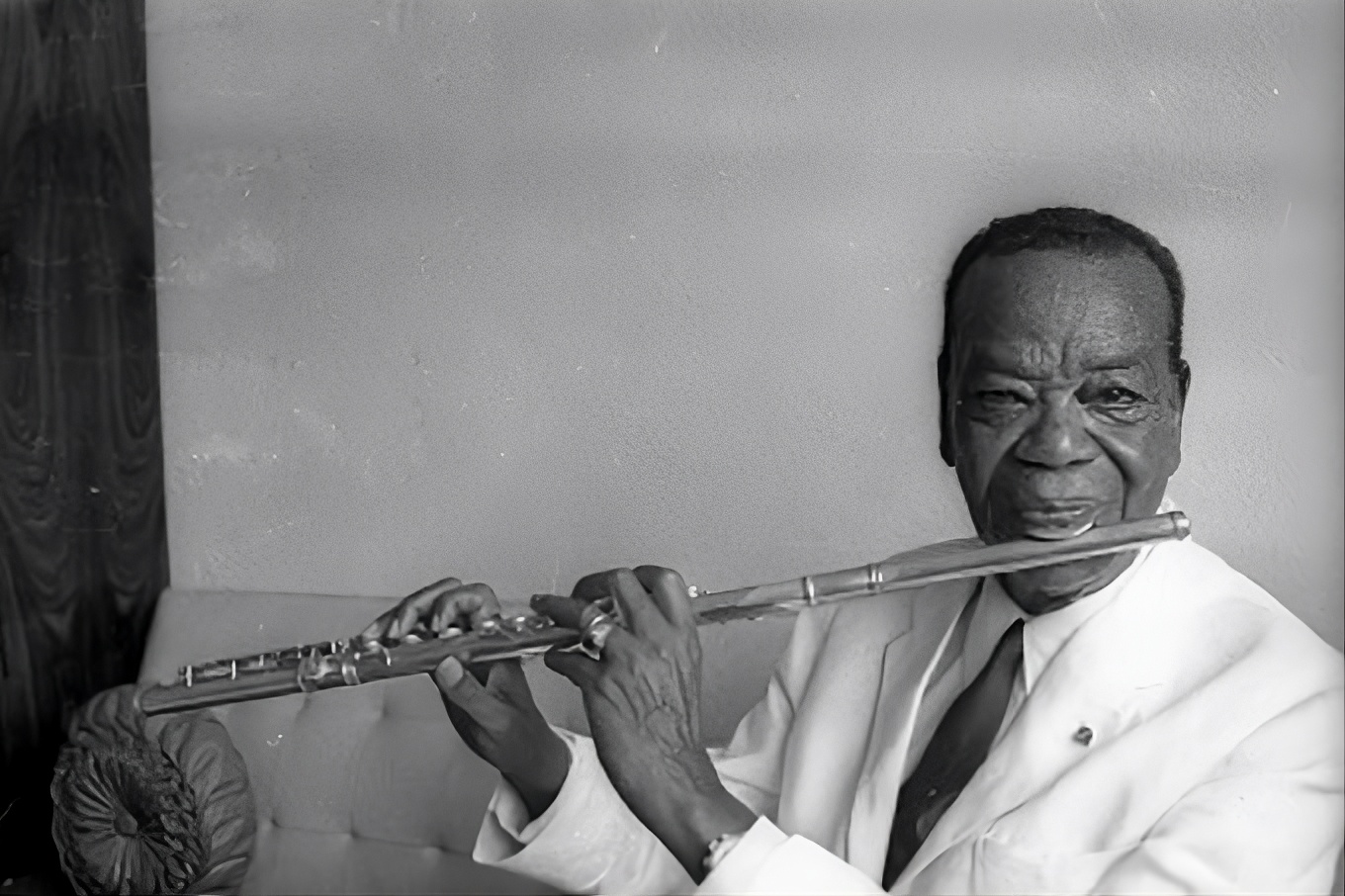
Alfredo da Rocha Vianna Filho, known as Pixinguinha (Rio de Janeiro, 1897 – Rio de Janeiro, 1973), was a Brazilian composer, arranger, conductor, flutist, and saxophonist, widely recognized as the most significant figure in choro and one of the most important personalities in the entire history of Brazilian popular music. A composer of dozens of choros among the most performed in the genre — including Carinhoso, Lamentos, Um a Zero, and Ingênuo — Pixinguinha was also the first major professional arranger of Brazilian popular music, the creator of the modern Brazilian orchestral arrangement, and the leader of ensembles that brought Brazilian music abroad for the first time.
His relevance to choro is absolute and multidimensional: Pixinguinha not only composed works that defined the canon of the genre but synthesized, in a single trajectory, all its dimensions — the heritage of 19th-century choro learned at home, the Afro-Brazilian syncopation absorbed in the circles of Baiana aunties, the harmonic and contrapuntal sophistication developed as an arranger for record companies, and the instrumental virtuosity that placed him among the greatest flutists and saxophonists of his generation. The National Choro Day, celebrated on April 23, honors the day of his birth.
Musical Training and Context
Pixinguinha grew up in the Catumbi neighborhood of Rio de Janeiro, in a large and deeply musical family. His father, Alfredo da Rocha Vianna, was a telegraph employee and amateur flutist, who kept a vast collection of choro sheet music and frequently hosted musical gatherings in his home, known as the "Pensão Viana." Among the regulars at these circles were musicians like Irineu de Almeida and Quincas Laranjeiras, along with the young Heitor Villa-Lobos.
In this environment of total musical immersion, Pixinguinha learned the cavaquinho from his brothers and then moved to the flute, an instrument in which he quickly developed a virtuosity that impressed his contemporaries. His training was essentially practical and auditory, built on choro circles, cabarets in Lapa, and film orchestras — and he distinguished himself from other chorões of his time precisely by his early mastery of musical reading and writing, a rare skill among popular musicians of the time that would be decisive for his career as an arranger.
As a teenager, Pixinguinha frequented the home of the Baiana Tia Ciata, one of the epicenters of Afro-Brazilian musical and cultural life in early 20th-century Rio de Janeiro — an environment where musicians like Donga and João da Baiana circulated, and where carioca samba was born. This experience was crucial for Pixinguinha to incorporate rhythms and the spirit of African-rooted music into the choro language, an element that made his work unique within the tradition.
Musical Style
Pixinguinha's style is the result of a singular synthesis: it converges the structural heritage of 19th-century choro, the rhythmic richness of Afro-Brazilian music, the harmonic sophistication akin to jazz, and a melodic and contrapuntal inventiveness that has no parallel in his generation.
Melodic Language: Pixinguinha's melodies are both singable and instrumentally challenging. They possess a lyrical quality — often melancholic or introspective — that contrasts with the rhythmic vivacity of the support. This tension between the inner singing of the melody and the swing of the accompaniment is one of the most recognizable marks of his language.
Harmonic Language: Compared to his contemporaries in choro, Pixinguinha’s harmony is remarkably sophisticated, with elaborate progressions and resolutions that transcend the simpler tonal vocabulary of the genre. This sophistication reflects the depth of his practical learning and his ability to listen and assimilate over decades of activity — qualities that were decisive for his work as an arranger for record companies, where he raised the standard of Brazilian popular arrangements.
Counterpoint and Polyphony: One of Pixinguinha’s most original contributions to choro is the systematic use of counterpoint — a technique he inherited directly from his mentor Irineu de Almeida, who played the ophicleide with independent counter-melodies in the recordings of Choro Carioca. In the famous duo with flutist Benedito Lacerda (starting in the mid-1940s), Pixinguinha played the tenor saxophone not in unison or simple harmony, but in elaborate and independent counter-melodies — lines that converse, respond to, and complete the main melody with rare inventiveness. This practice would influence the entire subsequent tradition of choro ensembles.
Rhythm and Syncopation: The rhythmic element in Pixinguinha goes beyond the conventional syncopation of choro. He incorporated rhythmic patterns from Afro-Brazilian music — batuque, cateretê — and jazz, creating a richer and more varied pulse than that of his predecessors. His rhythmic sensitivity was so acute that he could improvise freely without ever losing the thread of the form.
Instrumentation: Pixinguinha was primarily a virtuoso of the transverse flute. His migration to the tenor saxophone, which began in the mid-1940s, was motivated primarily by practical considerations: it resulted from an agreement with Benedito Lacerda, who proposed to Pixinguinha — then facing financial difficulties — a partnership in recordings and sheet music editions, on the condition that Pixinguinha take up the sax and give the flute to Lacerda, avoiding direct competition on the same instrument. From this arrangement was born one of the most fruitful duos in the history of choro. As an arranger, he was one of the few popular musicians of his time capable of writing parts for all instruments in an orchestra — working with pen and ink with the rigor of a classical professional.
Typical Forms: He primarily composed choros in ternary form (AABBACCA), waltzes, and sambas. His choros follow the formal structure inherited from the tradition, but the internal sophistication of each section — harmony, melody, voice leading — distinctly sets them apart from the average production of the genre.
Important Works
Below is a selection of representative compositions by Pixinguinha, which exemplify his style and are present in the fundamental repertoire of choro:
| Title | Genre | Notes |
|---|---|---|
| Carinhoso (c. 1928) | Choro/Song | One of the most performed works in Brazilian music; received lyrics from João de Barro in 1937, recorded by Orlando Silva. |
| Lamentos (1928) | Choro | Piece of profound melancholic lyricism; one of the most celebrated in the genre. |
| Um a Zero | Choro | Composed in honor of Brazil's first victory over Uruguay in football; became a classic of the repertoire. |
| Ingênuo | Choro | Frequently recorded in the duo with Benedito Lacerda; a masterful example of Pixinguinha's counterpoint. |
| Rosa (1917) | Waltz | One of the first compositions recorded by Pixinguinha; a national success when re-recorded by Orlando Silva in 1937. |
| Sofres Porque Queres (1917) | Choro | Among the first original compositions registered on disc; a piece of lively and rhythmic character. |
Musical Example
"Carinhoso" is possibly the most well-known composition by Pixinguinha in Brazil and around the world, and offers a privileged entry into his sonic universe. In the instrumental version — prior to the addition of lyrics — it is worth noting how the melody describes an expressive arc of uncommon lyrical amplitude for choro, with an almost vocal quality that brings it closer to modinha and samba-canção. The harmony, more chromatically elaborate than usual in the genre, supports this expressiveness with progressions that anticipate the vocabulary of bossa nova. In the recordings with Benedito Lacerda, Pixinguinha's tenor sax weaves counterpoints that function as an independent second voice — a dialogue that transforms the piece from a melody with an accompaniment into a small polyphonic work.
Influences and Relationships
Influences on Pixinguinha:
- Joaquim Callado and 19th-century choro — Pixinguinha's father kept original scores by Callado; the gatherings at home were the composer's primary school.
- Irineu de Almeida — Direct teacher and mentor of Pixinguinha; an ophicleide player who integrated him into his ensemble and taught him the craft of being a professional choro musician.
- Afro-Brazilian music and the Baiana aunties — Frequenting Tia Ciata's house and interacting with African-rooted traditions were crucial for the rhythmic richness of his work.
- American jazz — Contact with American musicians in Paris (1922) left notable marks on his harmony and use of the saxophone.
- Ernesto Nazareth and Chiquinha Gonzaga — The previous generation of carioca composers provided the melodic and formal vocabulary that Pixinguinha inherited and transformed.
Musicians and traditions influenced by Pixinguinha:
- Benedito Lacerda — Duo partner and co-protagonist of one of the richest phases of recorded choro; their joint recordings set a performance standard that would influence generations.
- Jacob do Bandolim — Explicitly acknowledged the debt of modern choro to Pixinguinha; the ensemble Época de Ouro extensively recorded his repertoire.
- Brazilian orchestral arrangement — His work as an arranger for Odeon and RCA Victor established the foundations of modern Brazilian popular arrangement; composers like Noel Rosa owed the sound of their recordings to Pixinguinha's work.
- Flute tradition and ensemble choro — The performance model in ensembles, featuring counter-melodies and improvisation over formal structure, is largely a direct heritage from Pixinguinha.
Groups and partnerships:
- Os Oito Batutas (1919–1922) — The first Brazilian popular group to gain international recognition; it had a six-month season in Paris in 1922 and subsequent tour in Argentina.
- Orquestra Típica Pixinguinha-Donga (1928) — An ensemble organized with sambista Donga for recordings with Odeon.
- Orquestra Victor Brasileira — Pixinguinha was hired by RCA Victor in 1929 to conduct and arrange; a period of intense activity as an orchestrator.
- Program O Pessoal da Velha Guarda — Participation in the radio program by broadcaster Almirante, dedicated to preserving the repertoire of choro and classical popular music.
Legacy
The legacy of Pixinguinha is the most vast and multifaceted in the history of choro. As a composer, virtuoso instrumentalist, innovative arranger, and unifying figure — in each of these dimensions he left a mark that reconfigured Brazilian popular music.
As a composer, his works fixed melodic, harmonic, and formal parameters that choro adopted as canonical references. Pieces like Carinhoso, Lamentos, and Ingênuo are performed today by musicians from a variety of backgrounds and styles — from traditional choro to jazz, from classical chamber music to popular repertoires — without ever losing their expressive strength.
As an arranger, Pixinguinha was pioneering in a broad sense: his orchestrations introduced an unprecedented level of technical sophistication into Brazilian popular music, and his work with Odeon and RCA Victor in the 1920s and 1930s sonically shaped the so-called golden age of Brazilian popular music.
The tour of Os Oito Batutas in Paris in 1922 — which faced racist attacks in the Brazilian press questioning whether Black musicians should represent the country abroad — was a historic cultural gesture, affirming Afro-Brazilian music as a legitimate and sovereign expression of national identity.
April 23 — Pixinguinha's birth date — was established as National Choro Day, a tribute that synthesizes the unanimous recognition of his figure's centrality to the genre. His personal archive has been under the care of the Instituto Moreira Salles since 2000, ensuring the preservation of scores, photographs, and documents covering more than six decades of musical activity.
Sources
The following sources are relevant for studying Pixinguinha and the musical context in which he operated:
- CABRAL, Sérgio. Pixinguinha: vida e obra. Rio de Janeiro: FUNARTE, 1978. — A reference biography and considered the most complete primary source about the life and career of the composer.
- CAZES, Henrique. Choro: do Quintal ao Municipal. São Paulo: Editora 34, 1998. — A fundamental work on the history of choro, extensively covering Pixinguinha's journey and that of Os Oito Batutas.
- DINIZ, André. Pixinguinha: o gênio e o tempo. Florianópolis: Casa da Palavra, 2010. — A biographical and analytical study of the composer’s work.
- SILVA, Marília T. Barboza da; OLIVEIRA FILHO, Arthur L. de. Filho de Ogum Bexiguento. Rio de Janeiro: FUNARTE, 1979. — A biography of Pixinguinha with testimonies from contemporaries and historical documentation.
- MENEZES BASTOS, Rafael José de. "Les Batutas, 1922: uma antropologia da noite parisiense". Revista Brasileira de Ciências Sociais, v. 20, n. 58, 2005. — An in-depth academic analysis of the cultural impact of the Oito Batutas' tour in Paris.
- TINHORÃO, José Ramos. História Social da Música Popular Brasileira. Editora 34, 1998. — A historical and social context of carioca popular music during Pixinguinha's time.
- Enciclopédia Itaú Cultural — Entry on Pixinguinha with detailed chronology and bibliographic references.
- Collection of the Instituto Moreira Salles (IMS) — Holds Pixinguinha's personal archive since 2000, including handwritten scores, photographs, and recordings. Available partially at: pixinguinha.com.br
Note: The IMS collection is the most important primary source for research on Pixinguinha. For firsthand biographical data, it is recommended to consult the composer's testimonies at the Museum of Image and Sound of Rio de Janeiro, conducted in 1966 and 1968.
Suggested course
Move from editorial context into guided study with synchronized score and structured steps.
All courses
Browse the public course catalog connected to the content hubs.