Choropedia
Luciana Rabello - Brazilian Cavaquinist
Luciana Rabello is a renowned Brazilian cavaquinist, composer, and music producer known for her contributions to choro music.
Introduction
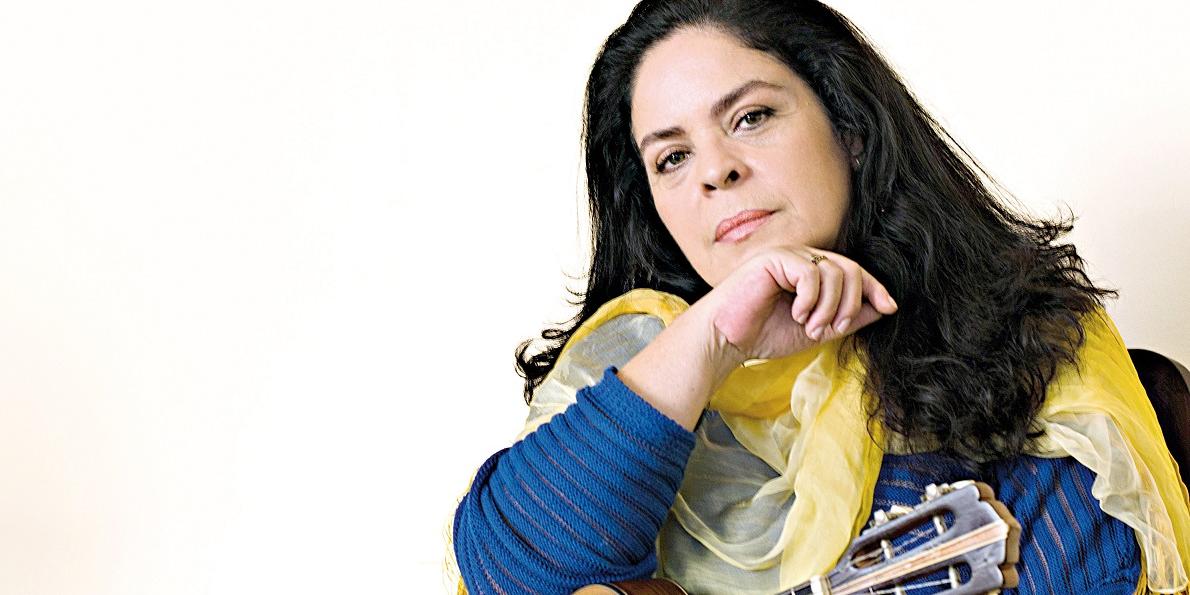
Luciana Maria Rabello Pinheiro (Petrópolis, January 24, 1961 —) is a Brazilian cavaquinist, composer, and music producer, considered one of the leading national references in cavaquinho and a central figure in the preservation, dissemination, and institutionalization of choro in recent decades. A self-taught musician on the instrument that made her famous, Luciana began her professional career at the age of 15 with the historical group Os Carioquinhas and has built a career over more than four decades that combines instrumental virtuosity with her work as a record producer, educator, and researcher.
Her importance to choro goes beyond performance: Luciana Rabello is a co-founder of the Escola Portátil de Música and Acari Records — the first Brazilian record label specialized in choro — the creator of the Festival Nacional de Choro, and one of the key people responsible for the systematic mapping of the historical choro repertoire. Directly inheriting the tradition of the great cavaquinists of classical choro, she cites Canhoto and Jonas Pereira da Silva — both from the environment of the Regional de Benedito Lacerda and the Época de Ouro ensemble — as her greatest references on the instrument.
Musical Education and Context
Luciana Rabello grew up in a family environment conducive to music. At the age of six, she learned guitar from her maternal grandfather, José de Queiroz Baptista, who was her first formal influence in her training. Between the ages of nine and fourteen, she studied piano and music theory with Maria Alice Salles, a classical school teacher whose training provided her with a solid technical foundation and musical literacy—elements that are rare among cavaquinists of her generation and would mark her later role as an arranger, composer, and educator. She studied with this teacher for five years.
The cavaquinho, the instrument for which she would be recognized, was learned in a self-taught manner. Her main references on the instrument were the masters Canhoto and Jonas Pereira da Silva, both from the Época de Ouro ensemble—a lineage that places her directly in the tradition of classical carioca choro. She began composing at the age of thirteen, and by fifteen, she entered the professional market.
The context of her formation is that of choro, which was undergoing a generational renewal in the 1970s: a tradition that had traversed decades of relative ostracism and was then finding in young musicians like Luciana, her brother Raphael Rabello, and the guitarist Maurício Carrilho a new generation eager to carry it forward with rigor and its own identity.
Musical Style
Luciana Rabello’s style on the cavaquinho combines the legacy of the instrument’s great masters with a distinctive technical approach of her own, developed through self-directed study and her direct contact with the oral tradition of choro.
Rhythmic language and the levada: One of Luciana Rabello’s most well-documented technical contributions is the development of a specific levada for the cavaquinho — a rhythmic-harmonic accompaniment pattern — which she created by transferring to her instrument the characteristics of guitarist Meira’s levada, known as "teleco-teco." This adaptation is not a simple transfer: it involves rethinking the attacks, the distribution between low and high strings, and the rhythmic articulation within the particularities of the cavaquinho. This pattern is taught by Luciana to her students and was performed exemplarily by her daughter Ana Rabello in the recording of the choro Alumiando, cited as a practical reference for this technique.
Composition: As a composer, she moves between choro, samba, waltz, and song. She developed her compositional talent in partnerships with Raphael Rabello, Cristóvão Bastos, and the poet and lyricist Paulo César Pinheiro, to whom she is married. Her first solo CD (2000) presented 12 previously unreleased tracks, eight of them her own compositions. Her second album, Candeia Branca (2014), contains 14 original tracks, 13 of them written in partnership with Paulo César Pinheiro.
Interpretive profile: Her work as an instrumentalist is marked by technical rigor, understated musicality, and deep roots in the tradition of classical choro. She is described by her peers as a reference for accompaniment-oriented cavaquinho playing — a role that, in choro, requires rhythmic precision, harmonic knowledge, and the sensitivity to serve the ensemble without imposing oneself.
Important Works and Projects
Luciana Rabello’s output includes both original compositions and large-scale projects for the preservation and dissemination of choro:
| Work / Project | Year | Notes |
|---|---|---|
| LP "Os Carioquinhas no Choro" | 1977 | Debut album with the group; released by Som Livre. |
| LP "Tributo a Jacob do Bandolim" | 1980 | Recorded with Joel Nascimento’s ensemble; included Radamés Gnattali’s Suíte Retrato. |
| First solo CD | 2000 | 12 previously unreleased tracks, eight of them her own; featuring Maurício Carrilho, Cristóvão Bastos, and Celsinho Silva. |
| Acari Records | 2000 | Record label co-founded with Maurício Carrilho; the first in Brazil specialized in choro. |
| Escola Portátil de Música (EPM) | 2000 | Co-founded with Maurício Carrilho and Pedro Aragão at Sesc de Ramos; a choro education project. |
| "Princípios do Choro" Collection | — | 15 CDs released by Acari Records; landmark teaching material for the genre. |
| "Choro Carioca – Música do Brasil" | 2007 | Box set with 9 CDs and 74 composers; the result of the "Inventário do Repertório do Choro," mapping more than 8,000 works between 1870 and 1920. |
| "Candeia Branca" | 2014 | Second solo CD; 14 original tracks, 13 in partnership with Paulo César Pinheiro. |
Musical Example
The choro "Alumiando" is often cited as a practical reference for the cavaquinho levada developed by Luciana Rabello. In the recording, performed by her daughter Ana Rabello under her mother’s guidance, one can observe the technique of distinguishing between attacks on low and high strings — a central element of the levada that Luciana adapted from the guitar practice of master Meira to the cavaquinho. The result is an accompaniment that, while preserving the rhythmic swing characteristic of choro, gains a richer and more differentiated articulation than the instrument’s traditional levada, making it a pedagogical and interpretive model of reference.
Influences and Relationships
Influences on Luciana Rabello:
- Canhoto — Cavaquinho player of Benedito Lacerda’s Regional; her greatest direct reference on the instrument.
- Jonas Pereira da Silva — Cavaquinho player in the group Época de Ouro; her second major reference in the classical tradition of the instrument.
- Meira — Guitarist whose "teleco-teco" levada on the guitar inspired Luciana to develop her own levada adapted to the cavaquinho.
- José de Queiroz Baptista — Maternal grandfather and first guitar teacher; the starting point of her musical formation.
- Maria Alice Salles — Piano and music theory teacher; responsible for the foundation of musical literacy that distinguishes Luciana among the cavaquinho players of her generation.
Musicians and projects influenced by Luciana:
- Ana Rabello — Daughter and student; a cavaquinho player who directly continues the technical tradition developed by Luciana, including the levada adapted from guitarist Meira.
- Generations of choro musicians from the Escola Portátil de Música — Hundreds of instrumentalists trained through the project she co-founded, fostering new groups and new voices in Brazilian choro.
Central collaborators and partnerships:
- Raphael Rabello (brother) — Career partner since Os Carioquinhas; co-composer and a central figure in her trajectory until his death in 1995.
- Maurício Carrilho — Longtime partner; co-founder of Acari Records and the Escola Portátil de Música.
- Radamés Gnattali — Composer who dedicated to her the piece Variações sem tema, for cavaquinho and piano — a tribute that attests to the recognition of her stature as an instrumentalist among the great names of Brazilian music.
- Paulo César Pinheiro — Husband and principal compositional partner; the poet and lyricist with whom she signs most of her original work.
Performance context:
- She has performed on albums and in concerts by Caetano Veloso, Chico Buarque, Elizeth Cardoso, Elton Medeiros, Francis Hime, Gilberto Gil, João Nogueira, Nana Caymmi, Nara Leão, Paulinho da Viola, Baden Powell, Altamiro Carrilho, Toquinho, and others.
- In 1980, she toured Italy, France, and Switzerland accompanying Toquinho, with performances at the Teatro Sistina (Rome) and the Olympia (Paris), receiving critical acclaim in Europe and being invited to return in 1982.
Legacy
Luciana Rabello’s legacy extends across three complementary dimensions: performance, cultural production, and music education.
As an instrumentalist, she helped establish the cavaquinho as both a high-level solo and ensemble instrument within choro, contributing to raising the prestige of an instrument historically relegated to the background in public perception.
As a producer and cultural entrepreneur, her initiatives had a structural impact on Brazilian choro. The Acari Records (2000) introduced in Brazil the model of a record label dedicated exclusively to the genre, making possible dozens of albums that otherwise would hardly have found space in the market. The Escola Portátil de Música (2000) became one of the most important centers for training new choro musicians in Rio de Janeiro, bringing together masters and beginners in a model of oral and formal transmission that recaptures the spirit of the old choro gatherings. The "Inventário do Repertório do Choro," which resulted in the box set Choro Carioca – Música do Brasil (2007), represented an unprecedented effort of historical preservation, recovering more than eight thousand works by composers active between 1870 and 1920 — most of them previously unpublished.
As an educator, Luciana Rabello transmits a direct technical lineage that goes back to the great masters of classical cavaquinho, ensuring that this specific vocabulary — including the levada she herself developed from the guitar tradition — remains alive and evolving in the hands of new generations.
Sources
The information in this entry is based on the following sources. Given the relative scarcity of academic literature published specifically about Luciana Rabello, direct consultation of the institutional archives indicated below is recommended for in-depth research:
- Enciclopédia da Música Brasileira (Art Editora / Publifolha) — Biographical entry on Luciana Rabello.
- Escola Portátil de Música (EPM) Archive — Institutional documentation on the foundation and activities of the project.
- Acari Records — Discographic catalog and liner notes of the albums released by the label, including the Princípios do Choro collection and the box set Choro Carioca – Música do Brasil.
- Instituto Casa do Choro — Biographical records and documentation on instrumentalists and ensembles in Brazilian choro.
- CAZES, Henrique. Choro: do Quintal ao Municipal. São Paulo: Editora 34, 1998. — Historical contextualization of choro and the generations of instrumentalists to which Luciana belongs.
- Museu da Imagem e do Som do Rio de Janeiro (MIS-RJ) — Records of the festival "Chorando no Rio" (2001) and other events documented in the audiovisual archive.
Note: For research on Luciana Rabello’s original work, direct consultation of the Acari Records catalog and the liner notes of her solo albums is recommended — especially the first CD (2000) and Candeia Branca (2014) — as they contain detailed information on authorship, partnerships, and the context of each composition.
Suggested course
Move from editorial context into guided study with synchronized score and structured steps.
All courses
Browse the public course catalog connected to the content hubs.