Choropedia
João Pernambuco - Brazilian Guitarist and Composer
João Pernambuco connected northeastern music to Rio's choro.
Introduction
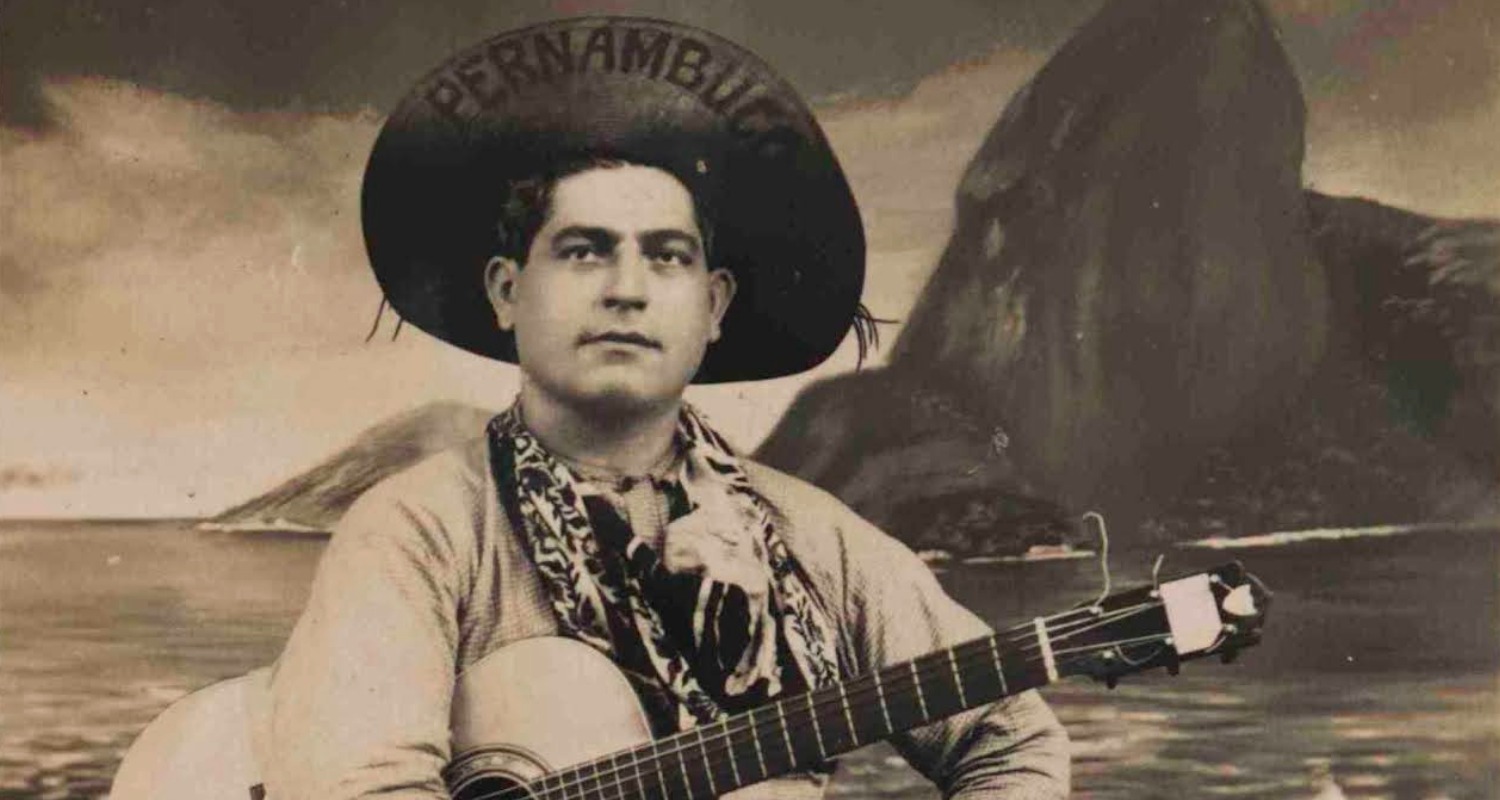
João Teixeira Guimarães, known as João Pernambuco (Jatobá, PE, November 2, 1883 – Rio de Janeiro, RJ, October 16, 1947), was a guitarist and composer who holds a singular position in the history of Brazilian popular music. Born in the backlands of Pernambuco, he brought to Rio de Janeiro a cultural heritage that encompassed folk songs of country guitarists, emboladas, cocos, and toadas — a repertoire he was able to merge with the urban language of choro and carioca song, creating a personal body of work of enormous significance.
His trajectory is marked by a constant movement between two worlds: the rural Northeastern universe, with its singers and improvisers, and the musical environment of the streets, festivals, and boarding houses of early twentieth-century Rio de Janeiro, where he lived alongside names such as Pixinguinha, Donga, Catulo da Paixão Cearense, and Quincas Laranjeiras. This encounter between traditions became the axis of his entire work and his role as organizer of ensembles that left a lasting mark on Brazilian music history.
João Pernambuco's importance goes beyond his compositions. He was also a decisive human and cultural link, serving as a bridge between Northeastern and carioca musicians and facilitating the arrival in Rio de Janeiro of groups such as the Turunas Pernambucanos and the Turunas da Mauricéia. His role as an intermediary between these musical communities helped shape the Brazilian popular music scene in the first decades of the twentieth century.
Musical Formation and Context
João Pernambuco was born in Jatobá, a town in the backlands of Pernambuco. After his father's death in 1891, his mother remarried and moved with her eleven children to Recife. In the state capital, the young João began attending the fairs and musical gatherings at the Market and the Pátio de São Pedro, where he mingled with famous country guitarists, singers, and improvisers of the Northeastern oral tradition — among them Bem-te-vi, Mandapolão, Manuel Cabeceira, the blind Sinfrônio, Fabião das Queimadas, and Cirino Guajurema. By the age of twelve he was already playing the viola. He never attended formal school, but possessed a solid popular culture absorbed directly from the oral tradition of the sertão and Recife.
In 1904, at the age of twenty, he moved to Rio de Janeiro carrying his guitar and a broad knowledge of Northeastern musical culture. He first found work in a foundry, then as a cobblestone layer for the city government, always reserving his evenings for musical gatherings, mainly in the Lapa neighborhood. It was in this milieu that he earned the nickname "João Pernambuco," because he was always telling stories and tales from his homeland.
Pernambuco's musical life intensified when he moved into a rooming house at Rua do Riachuelo, 268, where Donga and other musicians also lived. There he met Pixinguinha, Catulo da Paixão Cearense, the guitarist Sátiro Bilhar, and the writer Afonso Arinos. Around 1910, Senator Pinheiro Machado, an admirer of his talent, secured him a position as an attendant at a school in Largo do Estácio, which allowed him to devote more time to music. He also began teaching guitar at the Cavaquinho de Ouro music shop, alongside Quincas Laranjeiras, and regularly attended carnival dances and the Festa da Penha, the traditional venue where new songs were launched for the following year's carnival.
Musical Style
João Pernambuco's style emerges from the crossroads of the Northeastern oral tradition and the urban instrumental language of Rio de Janeiro. He did not merely transplant Northeastern genres into the carioca environment — he transformed them into raw material for a personal guitar writing that combined rustic elements from the sertão with the sophistication of choro ensembles.
Northeastern roots and urban vocabulary: Pernambuco was steeped in the repertoire of cocos, emboladas, toadas, and sertaneja songs, genres he had known since childhood in Recife. Upon arriving in Rio, this material encountered the polka, the maxixe, choro, and the waltz. The result was a body of work that sounds at once regional and cosmopolitan — solo guitar pieces that carry the rhythmic and melodic imprint of the Northeast, yet are structured within the harmonic and formal language of urban carioca music.
The guitar as a complete instrument: his solo guitar compositions explore the instrument across its full range. Pieces such as Sons de Carrilhões reveal a mastery of harmonics, singing bass lines, and timbral effects that anticipate techniques later systematized by subsequent generations of guitarists. Villa-Lobos reportedly declared that "Bach would not be ashamed to sign his studies" — a statement that, regardless of its literal accuracy, reflects the recognition of Pernambuco's compositional quality even in classical music circles.
Ensemble organizer: beyond his roles as composer and soloist, Pernambuco was the creator of the Grupo de Caxangá, a Northeastern-inspired ensemble that became a highlight of Rio's carnivals from 1914 onward. The group's instrumental lineup was typically urban — guitars, cavaquinhos, tambourines — but its repertoire, costumes, and sertanejo nicknames adopted by each member created a representation of the rural world within the urban setting. This ensemble model directly influenced Pixinguinha's formation of the Oito Batutas.
Important Works
| Title | Notes |
|---|---|
| Sons de Carrilhões | Solo guitar choro; the most celebrated piece in his catalogue, recorded by virtually every major Brazilian guitarist, from Dilermando Reis to Turíbio Santos. Part of the essential guitar repertoire in Brazil. |
| Luar do Sertão | Toada composed with Catulo da Paixão Cearense, based on the folk theme "Engenho de Humaitá." One of the best-known songs in Brazilian music, whose melodic authorship sparked a legal dispute won by Pernambuco. |
| Caboca di Caxangá | Toada (or tango) with lyrics by Catulo; a major hit of the 1914 carnival and the piece that gave its name to the Grupo de Caxangá. A landmark in the rise of the "sertaneja trend" in Rio de Janeiro. |
| Graúna | Guitar choro that belongs to the instrument's classic repertoire; recorded by Turíbio Santos and other performers on albums dedicated to Pernambuco's work. |
| Interrogando | Jongo for solo guitar, recorded by the composer himself in 1930 for Columbia and later by Dilermando Reis. |
| Dengoso | Choro recorded in 1930; a piece that showcases the melodic fluency and rhythmic richness of his guitar writing. |
| Magoado | Choro recorded by Odeon in 1926, among his earliest recordings as a soloist. |
| Pó de Mico | Choro recorded in 1930 for Columbia; a recurring piece on albums dedicated to the composer. |
Musical Example
Sons de Carrilhões is probably the most natural entry point into João Pernambuco's work. The piece uses guitar harmonics to evoke the sound of bells — a timbral effect that, combined with melodic bass lines and open-position passages, produces a sonority that is at once lyrical and ingenious. It is not a conventional choro: it is a composition that reveals a distinctive guitar-based thinking, in which the instrument does not merely accompany or deliver a melody, but produces texture, color, and simultaneous movement.
Another revealing listen is Graúna, which shows Pernambuco's more cantabile side — a choro with a flowing melody and organic development, demonstrating the ease with which he made the Northeastern tradition dialogue with the form of carioca choro. The 1930 Columbia recordings — including Interrogando, Dengoso, and Pó de Mico — offer a direct portrait of the composer as performer, with his firm touch and rhythmic articulation shaped by the experience of sertão country guitarists.
Influences and Relationships
Influences on João Pernambuco:
- Northeastern singers and country guitarists — His musical formation was entirely oral, alongside figures such as Fabião das Queimadas, Cirino Guajurema, and the blind Sinfrônio, masters of the tradition of desafios, cocos, and emboladas.
- Rio de Janeiro's musical milieu — Living among chorões and urban musicians in Lapa, on Rua do Riachuelo, and at the Festa da Penha shaped his instrumental language and compositional writing.
- Catulo da Paixão Cearense — A decisive partner, with whom he co-authored fundamental songs and performed at prominent Rio de Janeiro residences, including those of Afonso Arinos and Rui Barbosa.
Musicians and traditions influenced by João Pernambuco:
- Grupo de Caxangá and Oito Batutas — The ensemble created by Pernambuco for the 1914 carnival was the direct precursor of Pixinguinha's Oito Batutas, which inherited its instrumental format, part of its repertoire, and several of its members.
- Turunas Pernambucanos and Turunas da Mauricéia — Pernambuco served as a "bonding element" between Northeastern and carioca musicians, facilitating these groups' arrival in Rio de Janeiro and their integration into the capital's music scene.
- Meira (Jayme Florence) — A Pernambuco-born guitarist who came to Rio with the Voz do Sertão ensemble and became a reference in rhythm guitar accompaniment, continuing the tradition of musical exchange between the Northeast and Rio that Pernambuco had initiated.
- Later guitarists — His solo guitar works have been recorded and reinterpreted by names such as Dilermando Reis, Turíbio Santos, Baden Powell, Antônio Rago, Caio Cezar, and Leandro Carvalho, confirming the lasting presence of his compositions in the instrument's repertoire.
Legacy
João Pernambuco's legacy operates on at least three levels. As a composer, he left pieces that became an indispensable part of the Brazilian guitar repertoire — Sons de Carrilhões, in particular, is one of the most recorded works in the history of the guitar in Brazil. As a musician and cultural catalyst, he was primarily responsible for introducing into the urban carioca milieu a body of Northeastern-rooted repertoire that would nourish decades of musical creation — from the "sertaneja trend" of the 1910s and 1920s to developments that came much later. As a link between musical communities, he served as a bridge between the sertão and the city, between Pernambuco and Rio de Janeiro, between the oral tradition and the nascent recording industry.
There is something remarkable in the fact that a self-taught, illiterate musician who arrived in Rio de Janeiro as a factory worker produced a body of work that earned praise attributed to Villa-Lobos and continues to be performed and studied more than a century later. This speaks not only to Pernambuco's individual talent, but to the richness of the musical environment that shaped him — both the sertão of the cantadores and the Rio de Janeiro of the chorões — and to the capacity of Brazilian popular music to generate, from improbable encounters, a language that proves enduring.
Sources
- Dicionário Cravo Albin da Música Popular Brasileira — Primary source for biographical data, artistic trajectory, discography, works, and professional relationships. Available at: dicionariompb.com.br/artista/joao-pernambuco.
- Instituto Casa do Choro — Digital Archive — Source for musical formation, association with Northeastern country guitarists, participation in the Grupo de Caxangá and the Oito Batutas, and historical contextualization. Available at: acervo.casadochoro.com.br/cards/view/601.
- BITTAR, Iuri Lana. Master's Thesis (UFRJ) — Academic source for João Pernambuco's role in the formation of the Grupo de Caxangá, Oito Batutas, Turunas Pernambucanos, and Turunas da Mauricéia, as well as his role as a cultural bridge between Northeastern and carioca musicians in Rio de Janeiro.
- LEAL, José de Souza; BARBOSA, Arthur Luiz. João Pernambuco, arte de um povo. Rio de Janeiro: Funarte, 1982 — Reference biography, cited across multiple academic and encyclopedic sources.
- TABORDA, Marcia Ermelindo. Violão e Identidade Nacional: Rio de Janeiro 1830/1930. Doctoral Thesis, UFRJ, 2004 — Source for the context of the guitar and the regionalist-nationalist movement in Rio de Janeiro, including the "O que é nosso" competition organized by the Correio da Manhã newspaper.
- TABORDA, Marcia. "As abordagens estilísticas no choro brasileiro (1902–1950)." In: Historia Actual Online, 2010 — Source for Pernambuco's role in the Grupo de Caxangá and his relationship with the Oito Batutas.
Suggested course
Move from editorial context into guided study with synchronized score and structured steps.
All courses
Browse the public course catalog connected to the content hubs.