Choropedia
Jacob do Bandolim - Choro Pioneer
Jacob do Bandolim was a central figure in choro, transforming the mandolin with his technical mastery and expressive style.
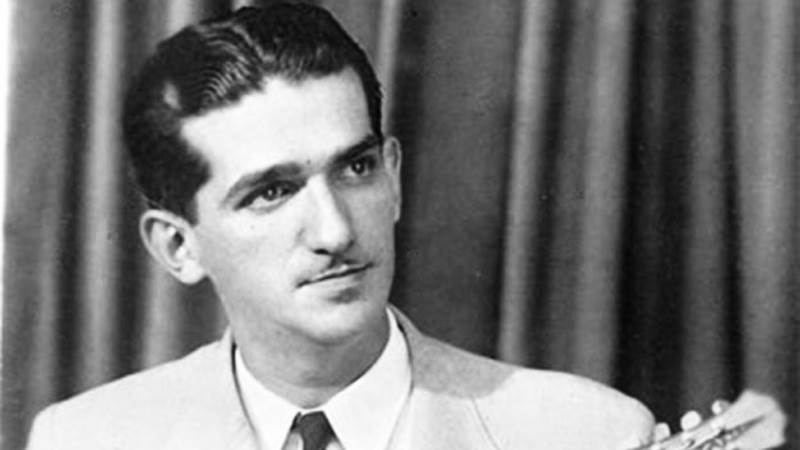
Jacob do Bandolim (Rio de Janeiro, 14 February 1918 – Rio de Janeiro, 13 August 1969) was one of the central figures of choro in the twentieth century. Mandolinist, composer, arranger, researcher, and methodical collector, he raised the mandolin (bandolim) to a new level of technical and expressive achievement and helped establish standards of interpretation and accompaniment that remain decisive in the musical language of the genre.
Few musicians have shaped the modern idea of excellence in choro as profoundly as Jacob do Bandolim. His work distils some of the most admired qualities of the genre: rigorous intonation, clean phrasing, steady pulse, ensemble refinement, and deep respect for musical form. At the same time, his activity as composer and arranger helped crystallize repertoires and performance practices that became the reference point for subsequent generations.
His importance is not reducible to virtuosity. Jacob also acted as a repertoire organizer, student of the tradition, and documentary guardian of Brazilian urban popular music. His presence in the history of choro is therefore double: he was simultaneously a great performer and a great architect of musical memory.
Training and Musical Context
The son of Francisco Gomes Bittencourt and Rackel Pick, Jacob was born in Rio de Janeiro and discovered music as a young boy. His first instrument was the violin, but difficulty with the bow led him to attempt playing with hairgrips, until he moved to the mandolin — an instrument with the same tuning — on which he developed almost entirely as a self-taught musician. By the age of fifteen he was already performing on the radio, and in 1948 he decided to deepen his studies in notation and music theory with Dalton Vogeler.
Jacob's epistolary autobiography offers a particularly vivid image of this early formation. In a letter to Radamés Gnattali, he recalls himself at fifteen buying "a cheap mandolin and a rudimentary method book" at the Marani & Lo Turco shop in Maranguape, determined to master the instrument. The passage reveals in equal measure the self-taught impulse and the almost programmatic determination that would mark his entire career.
Like many chorões of his generation, Jacob did not live exclusively from music. Throughout his life he held various positions and worked as a police clerk (escrivão de polícia), a post he occupied until his death. This circumstance appears in academic studies as part of a deliberate choice not to submit entirely to the demands of the music market — above all, the routine of accompanying radio singers or performing in an improvised and unrehearsed manner.
This point also helps to explain his well-known aversion to the term regional. Research on the guitar ensemble he assembled links this discomfort precisely to the image of under-rehearsed groups assembled to "fill gaps" in radio programming. His response to that model was not to distance himself from traditional choro, but to reformulate it in terms of greater discipline, study, and precision.
His most decisive entry into the discography came in two stages. In 1941 he recorded at the invitation of Ataulfo Alves, and in 1947 he made his debut as a soloist on 78 rpm with the choro Treme-treme and the waltz Glória. From that point on, the mandolin once again occupied a prominent position as a solo instrument in Brazilian popular music.
Musical Style
Jacob do Bandolim's style is distinguished by the combination of tonal clarity and expressive density. Musicological research on his interpretive approach identifies as its central traits his sonority, rhythmic precision, fluency in musical discourse, and a highly characteristic manner of introducing new elements without disrupting the identity of the piece. His technique unites technical finish with an architectural sense of musical structure.
Ornamentation: Jacob developed an extremely personal language in this area. Among the resources identified in his recordings are mordents, appogiaturas, anticipations, and a very precise tremolo, used above all on long notes and phrase endings. An ANPPOM study observes that this manner of executing the tremolo — with variations of dynamics and rubato — came to be recognized as a kind of "Brazilian tremolo."
Expressive resources: Jacob's expressiveness also draws on rubato, portamento, glissando, vibrato, staccato, and percussive articulations. Rather than treating choro as a uniform flow, he shapes the phrase through small contrasts of attack, duration, and intensity. The same research identifies him as one of the pioneers of a more elaborate use of dynamics in choro, especially in contrasts between piano and mezzo-forte.
Ensemble approach: This individual refinement extends to his work with accompanying musicians. The ensemble model that Jacob consolidated established a paradigmatic standard for recorded choro in the high-fidelity era of the 1960s. Academic literature identifies in the Conjunto Época de Ouro a model of guitar accompaniment that influenced and perpetuated the identity of the genre.
Jacob and the repertoire of others: Part of what Jacob wrote as an arranger was absorbed into the interpretive practice of works such as Brejeiro by Ernesto Nazareth and Ingênuo by Pixinguinha and Benedito Lacerda — which shows that his influence extends to the very manner in which the choro repertoire is performed, and not only to his own compositions.
Key Works
Over the course of his career, Jacob composed and recorded more than a hundred pieces, including choros, sambas, waltzes, modinhas, and frevos. A significant portion of this repertoire became core material of modern choro.
| Title | Notes |
|---|---|
| Treme-treme | The landmark of his debut as a soloist on disc, in 1947. |
| Doce de Coco | Recorded in 1951; repeatedly consolidated as a repertoire classic. |
| Noites Cariocas | Recorded in 1957; central to his mature output. |
| Isto é Nosso | Recorded in 1957; central to his mature output. |
| Vibrações | A work permanently associated with his name and with subsequent choro practice. |
| Assanhado | A work permanently associated with his name and with subsequent choro practice. |
| Receita de Samba | A work permanently associated with his name and with subsequent choro practice. |
| Santa Morena | A work permanently associated with his name and with subsequent choro practice. |
| O Voo da Mosca | A work permanently associated with his name and with subsequent choro practice. |
A Listening Guide
If a single entry point into Jacob's musical world must be chosen, Vibrações is perhaps the most eloquent. The piece distils the most cantabile side of his language: notes sustained by a controlled tremolo, clear phrasing, economical ornamentation, and an accompaniment that functions not merely as a harmonic foundation but as a partner in musical breathing. It is a performance that helps explain why Jacob became a reference not only as a soloist but as an organizer of ensemble sound.
A second essential listening experience is his reinterpretation of Ernesto Nazareth's repertoire. Studies of his interpretive style identify Jacob as one of those responsible for bringing Nazareth's work definitively into the roda de choro. In this sense, his contribution was less that of a straightforward interpreter of historical repertoire and more that of a mediator between Nazareth's pianistic tradition and the instrumental practice of twentieth-century choro.
Influences and Relationships
Influences on Jacob:
- Self-taught formation on the mandolin — The absence of a formal teacher defined his approach to the instrument from the outset, making self-discipline and the pursuit of precision permanent features of his musical development.
- Dalton Vogeler — With whom he deepened his studies in notation and theory in 1948, completing the technical foundation that would underpin his work as a composer and arranger.
- Regional do Canhoto — The ensemble with which he recorded for many years before forming his own definitive group, and which forms part of his accompaniment lineage.
Musicians and traditions influenced by Jacob:
- Pixinguinha — The IMS describes Jacob as a great interpreter and close friend of Pixinguinha. Through his profile as a rigorous researcher, Jacob recorded works by the composer that became fundamental to the history of Brazilian music, including pieces that had not even been given titles before he recorded them.
- Ernesto Nazareth — The IMS states that Jacob played an important role in the rediscovery of Nazareth's work, helping to bring that repertoire definitively into choro practice and linking two fundamental lineages of Brazilian instrumental music: the tradition of urban popular piano and the chamber-like formation of the regional de choro.
- Radamés Gnattali — The Suíte Retratos, written for Jacob, mandolin, regional, and orchestra, was recorded in 1964 and became a landmark of his career. In his letter to Radamés, Jacob records the change of approach the work demanded of him: "more than rehearsing, one must study" — a phrase that illuminates his perfectionism with more precision than any anecdote from behind the scenes.
- Conjunto Época de Ouro — Founded in 1961, with Dino Sete Cordas, César Faria, Carlos Leite, Gilberto d'Ávila, Jorginho do Pandeiro, and Jonas, the ensemble consolidated an accompaniment paradigm that influenced generations of chorões.
Legacy
The legacy of Jacob do Bandolim is broad because it operates on several fronts simultaneously.
As a performer, he established a standard of sonority, precision, and finish that continues to be the reference point for mandolinists. After Jacob, playing the mandolin in Brazil came to mean, in one way or another, entering into dialogue with that standard.
As a composer, he left a classical choro repertoire — more than a hundred works, a significant portion of which forms the core canon of the genre.
As an arranger and ensemble director, he helped consolidate a new paradigm of accompaniment, identified by academic literature in the Conjunto Época de Ouro as a model that influenced and perpetuated the identity of recorded choro.
As a researcher and collector, he produced records and organized materials that became fundamental to the memory of Brazilian urban popular music. Beyond his discography, he left behind manuscripts, scores, photographs, recordings, and documents that continue to feed research, critical editions, and the transmission of repertoire. The Instituto Jacob do Bandolim and the archives connected to the MIS, the IMS, and the Casa do Choro continue to treat his work as living heritage.
Perhaps the best synthesis of Jacob lies in this fertile tension between rigour and vitality. He did not merely preserve choro: he helped define how choro could sound when treated with the highest artistic demands.
Sources
- Dicionário Cravo Albin — Entry "Jacob do Bandolim." Primary biographical source for dates, professional trajectory, discography, and landmarks such as Doce de Coco, Noites Cariocas, Isto é Nosso, and Retratos.
- Casa do Choro — Entry "Jacob do Bandolim." Essential source for his self-taught formation, first recording, studies with Dalton Vogeler, creation of his definitive ensemble, and assessment of his importance as researcher and collector.
- ANPPOM — "Jacob do Bandolim: um estilo interpretativo no choro" [Jacob do Bandolim: An Interpretive Style in Choro]. Primary basis for the technical and expressive features of his performance: sonority, rhythmic precision, fluency, ornamentation, tremolo, rubato, dynamics, and innovation within the tradition.
- Rádio Batuta / Instituto Moreira Salles — "Vibrações – O som de Jacob do Bandolim" [Vibrações – The Sound of Jacob do Bandolim] and "Pixinguinha e Jacob do Bandolim." Important sources for his historical centrality, relationship with Pixinguinha, and role in the rediscovery of Nazareth's work.
- Diário do Congresso Nacional — Letter from Jacob to Radamés Gnattali, reproduced by Hermínio Bello de Carvalho. Documentary source for the "cheap mandolin" recollection and the formulation "more than rehearsing, one must study."
- SIMPOM/UNIRIO — Study on the guitar ensemble of Jacob's group. Source for his rejection of the term regional and the Época de Ouro as an accompaniment paradigm in choro.
- Choro Patrimônio / UFPel — Record from the Acervo do Instituto Jacob do Bandolim. Supplementary source for the documentary dimension of his archive: manuscripts, scores, photographs, and sound recordings.
Editorial note: The Casa do Choro entry gives the date of death as 13.09.1969, but the Dicionário Cravo Albin, ANPPOM, and IMS all converge on 13.08.1969. This entry adopts 13 August 1969 as the date corroborated by the most consistent sources.
Suggested course
Move from editorial context into guided study with synchronized score and structured steps.
All courses
Browse the public course catalog connected to the content hubs.