Choropedia

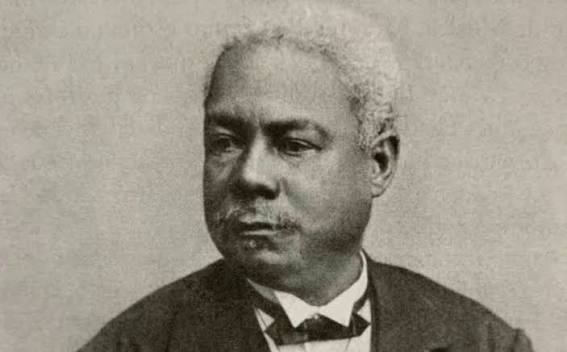
Henrique Alves de Mesquita: Pioneer of Brazilian Music

Explore the life and work of Henrique Alves de Mesquita, a key figure in Brazilian urban music and a pioneer of the Brazilian tango.

Henrique Alves de MesquitaBrazilian musicchorotangoAfro-Brazilian dance

images (1)

Henrique Alves de Mesquita was born in Rio de Janeiro on March 15, 1830, and died in the same city on July 12, 1906. A composer, conductor, organist, trumpeter, and teacher, he belonged to the first generation of Brazilian musicians to receive institutional training, work professionally in the theater, and participate in the transformation of urban dances into musical genres with identities of their own.¹

Mesquita is frequently described as the creator of Brazilian tango, a genre that played a fundamental role in the development of choro’s rhythmic language. This claim, however, requires some caution. Historiographical tradition attributes the first use of the expression “Brazilian tango” to Olhos matadores, composed in 1868 and published in 1871. Since the original score has not yet been located, more recent studies consider Ali Babá, published in 1872, to be the earliest known documentary example of this designation.²

Mesquita’s importance does not rest solely on this possible primacy. His work reveals a composer positioned at the intersection of several musical worlds: the concert hall, the church, the conservatory, revue theater, popular dances, and the handwritten notebooks of early choro musicians.

Musical Education and Historical Context

Henrique Alves de Mesquita was born into a family of limited means in the area around the former Ladeira do Castelo, in central Rio de Janeiro. A Black musician of modest origins, he built his career within a slaveholding society in which access to institutional musical education was profoundly unequal.³

He began his musical studies with cellist and composer Desidério Dorison. In 1847, while still young, he made a public appearance performing a trumpet fantasy. The following year, he entered the Liceu Musical, where he studied with the Italian conductor Gioacchino Giannini, later continuing his education at the Rio de Janeiro Conservatory of Music.

In 1853, together with the musician Antônio Luís de Moura, he founded the Liceu Musical e Copistarista, an establishment that offered lessons, music-copying services, piano tuning, orchestral organization, and instrument sales. The initiative shows that Mesquita already understood music not only as an art, but also as a professional activity integrated into an expanding market.

During the 1850s, he composed works such as O retrato, Ilusão, Corrupio, Saudades de Mme. Charton, and Os beijos de frade. The last of these, classified in different sources as either a lundu or a polka-lundu, demonstrates his early interest in musical forms circulating between the stage, the salon, and popular spaces.

In 1856, he completed his studies in counterpoint and organ, received a gold medal, and became the first student from the Conservatory to be awarded its travel scholarship. In July 1857, he sailed for France with a stipend granted by the imperial government.⁴

Paris, Musical Theater, and the Return to Rio

In Paris, Mesquita studied harmony with François Bazin, a professor at the Paris Conservatory and a composer associated with the French tradition of comic opera. During this period, he wrote symphonic and religious works, dances, and theater music, including the quadrille Soirée Brésilienne and the overture L’Étoile du Brésil.

His experience in France deepened his command of orchestral writing and the structures of musical theater. At the same time, it brought Mesquita into direct contact with operetta, opéra-comique, quadrilles, and ballroom dances that circulated intensely among Paris, Lisbon, Havana, and Rio de Janeiro.

In 1863, his stay in France was interrupted by an arrest. Known diplomatic correspondence records an accusation of an “offense against public morality,” but the judicial case itself has not yet been located. The exact circumstances of the episode therefore remain uncertain, despite interpretations and narratives published in later years. Mesquita was convicted and returned to Brazil in July 1866.⁵

Back in Rio de Janeiro, he worked as a trumpeter at the Alcázar Lírico, an important theater modeled on French venues. He subsequently established himself as a composer and conductor for theater companies. Beginning in 1869, he served as musical director of the Teatro Fênix Dramática, taking part in a period of major expansion for operettas, fantasy plays, revues, and musical comedies.

For many years, it was believed that his opéra-comique Une Nuit au Château had first been performed in Paris. Recent research based on contemporary newspapers indicates that the work premiered in Rio de Janeiro on May 30, 1870, and should not be confused with another composition attributed to Mesquita, Noivado em Paquetá. This revision illustrates how parts of his career are still being reconstructed.⁶

Mesquita also pursued a long career as an educator and church musician. In 1872, he became a professor of solfège and harmony at the Conservatory. Between 1872 and 1886, he served as organist at the Church of São Pedro. In 1890, he began teaching brass instruments at the National Institute of Music, where he remained until his retirement in February 1904.

Musical Style

Henrique Alves de Mesquita’s music emerged from the meeting between European conservatory training and the soundscape of nineteenth-century Rio de Janeiro. His catalogue includes sacred music, orchestral overtures, operas, operettas, theater numbers, waltzes, polkas, quadrilles, lundus, cateretês, and tangos.

Academic Training and Theatrical Language

Mesquita mastered counterpoint, harmony, instrumentation, and orchestral writing. His output, however, was not confined to concert music.

In the theater, he developed a direct musical language designed to accompany characters, scenes, dances, and rapid changes of atmosphere. This experience gave his compositions formal clarity, dramatic sensitivity, and considerable rhythmic variety.

In his works, the technique he acquired at the Conservatory does not appear as a layer separate from urban music. Instead, it functions as a means of organizing materials already circulating through the streets, dance halls, churches, and theaters of Rio de Janeiro.

Dance, Syncopation, and Urban Circulation

Nineteenth-century Rio de Janeiro received genres from different parts of the Atlantic world. European polkas, Cuban habaneras, Spanish dances, Afro-Brazilian lundus, and rhythms associated with batuques coexisted and transformed one another.

Mesquita worked within this environment. Works preserved in public collections bear designations such as “lundu,” “polka-cateretê,” “tango,” “tango dos pretos,” and “characteristic tango.” These classifications did not form rigid categories. They often indicated combinations of musical form, rhythm, choreography, theatrical character, and social context.⁷

His contribution was decisive because he helped carry these rhythmic experiences into written music, printed scores, and professional ensembles.

Brazilian Tango

Mesquita’s Brazilian tango should not be confused with the Argentine tango that became established at a later date.

In late nineteenth-century Brazil, the word “tango” could refer to music associated with the habanera, lundu, syncopated polka, and various forms of urban dance. Composers and publishers also used the term to make certain dances more socially acceptable or commercially attractive.

The language associated with Brazilian tango became one of the foundations of both maxixe and choro. After Mesquita, composers such as Chiquinha Gonzaga and Ernesto Nazareth developed this repertoire further, expanding its pianistic, melodic, and harmonic complexity.

It is therefore more accurate to understand Mesquita not as the isolated inventor of a genre, but as one of the first composers to give written form, public circulation, and professional recognition to a musical language collectively developed within Rio de Janeiro’s urban environment.

Important Works

Work Approximate date Genre or instrumentation Significance
Os beijos de frade 1856 Lundu or polka-lundu One of the earliest examples of his engagement with Afro-Brazilian genres and urban dances
Soirée Brésilienne Paris period Quadrille A work connecting the European quadrille tradition with a Brazilian identity announced in its title
L’Étoile du Brésil 1861 Orchestral overture An example of the symphonic music written during his time in France
O vagabundo 1863 Opera One of his principal experiments in lyric theater
Olhos matadores 1868 / 1871 Brazilian tango Traditionally identified as the first work to receive this classification, although its score has not yet been located
Une Nuit au Château 1870 Opéra-comique A French-inspired theater work premiered in Rio de Janeiro
Trunfo às avessas 1871 Operetta Incorporates local references, Black characters, batuque, and elements associated with jongo
Ali Babá 1872 Operetta and tango Contains the earliest known documentary example of the designation “tango” in Mesquita’s work
A pêra de Satanás 1872 Musical theater and “tango dos pretos” An important document concerning the relationship between theater music, racial representation, and urban dance
A coroa de Carlos Magno 1873 Musical theater and ballet One of the most popular works in his theatrical repertoire
Batuque 1894 Characteristic tango His best-known instrumental composition and an important reference in the history of Brazilian tango and choro

Musical Example: Batuque

Among Henrique Alves de Mesquita’s instrumental works, Batuque has achieved the greatest longevity within the choro repertoire.

Written in duple meter and identified as a tango, the piece brings together characteristics that would become fundamental to Brazilian urban music: rhythmic drive, displaced accents, the repetition of short cells, and the alternation of contrasting sections.

Its title is also significant. In the nineteenth century, the word “batuque” could refer quite broadly to Black musical and choreographic practices. By using the term as the title of a published composition, Mesquita introduced into the music market a direct reference to Afro-Brazilian culture, even though it was mediated through the conventions of written music and the salon.

The work’s subsequent history helps explain its importance. Batuque was recorded by the Rio de Janeiro Fire Brigade Band in 1911, a crucial period in the establishment of the Brazilian recording industry. Decades later, it was recorded by Milton Calazans and Baptista Siqueira, the ensemble Época de Ouro, and the Camerata Carioca, the latter in an arrangement by Radamés Gnattali.⁸

A manuscript of the work also appears in Donga’s archive, while later arrangements were produced by musicians such as Radamés Gnattali, Luiz Otávio Braga, and Maurício Carrilho. Its circulation therefore spans several periods in the history of choro: the wind bands of the early twentieth century, the regional ensembles, the revival movement of the 1970s, and contemporary chamber-music writing.

Influences and Musical Relationships

Joaquim Callado

Joaquim Callado, frequently regarded as one of the founders of choro, studied composition and conducting with Mesquita in 1856. The lessons were interrupted by his teacher’s journey to France the following year, but this relationship places Mesquita directly within the musical education of one of the most important figures in the history of the genre.

Chiquinha Gonzaga

Mesquita and Chiquinha Gonzaga moved within the same theatrical and musical circles in Rio de Janeiro. In 1889, Chiquinha published the characteristic tango Só no Choro, dedicated to Henrique Alves de Mesquita.

The dedication indicates the recognition he received from a composer who would also help consolidate Brazilian tango, maxixe, musical theater, and the language of the earliest choro ensembles.

Ernesto Nazareth

In 1914, eight years after Mesquita’s death, Ernesto Nazareth published the characteristic tango Mesquitinha, dedicated to his memory.

Nazareth belonged to a later generation, but his rhythmic language developed many of the processes found in the Brazilian tango cultivated by Mesquita. The dedication establishes a line of continuity between the early theatrical tangos and the instrumental repertoire that came to occupy salons, cinemas, and music circles in the early twentieth century.

The Notebooks of Early Choro Musicians

Some of Mesquita’s music continued to circulate in manuscript form, even after printed editions became rare.

A copy of Soirée Brésilienne, recorded under the Portuguese title Soirê Brazileiro, was preserved in a notebook belonging to Theodoro Aguilar. Another copy appeared in an old choro notebook associated with Alfredo Viana, Pixinguinha’s father.

These documents show that Mesquita’s music did not remain confined to theater or Conservatory archives. It was incorporated into the practical repertoire of the musicians who formed the first generations of choro.

Legacy

Henrique Alves de Mesquita occupied a singular position in nineteenth-century Brazilian music.

He was a Black musician with academic training, international experience, and continuous involvement in theater, church music, education, and instrumental ensembles. He participated in the professionalization of Brazilian musicians and helped create pathways through which urban dances could circulate as published, arranged, and publicly performed works.

A recent survey records more than two hundred compositions attributed to Mesquita. The Casa do Choro digital archive currently contains dozens of works, versions, and arrangements, while the Brazilian National Library Foundation preserves scores documenting the diversity of his output. He is also the patron of Chair No. 16 of the Brazilian Academy of Music.¹⁰

For many years, his career was reduced to the claim that he had “invented Brazilian tango.” Although this association helped preserve his name, it also obscured the breadth of his work.

Mesquita composed operas, operettas, sacred music, overtures, dances, and theatrical numbers. He taught important musicians, conducted professional companies, and actively participated in the musical life of both the Brazilian Empire and the first years of the Republic.

From the orchestra pit to the church organ, from the Conservatory classroom to the notebooks of choro musicians, his music passed through some of the principal spaces in which Brazil’s urban musical language was formed.

To understand Henrique Alves de Mesquita is to recognize that choro did not originate in a single work or a single genre. It formed gradually through the circulation of musicians, rhythms, dances, scores, and social experiences. Mesquita stood at the center of this process.

Sources

  • Instituto Casa do Choro. Digital archive of Henrique Alves de Mesquita.
  • Dicionário Cravo Albin da Música Popular Brasileira. Entry on Henrique Alves de Mesquita.
  • AUGUSTO, Antônio José. Henrique Alves de Mesquita: da pérola mais luminosa à poeira do esquecimento. Rio de Janeiro: Folha Seca, 2014.
  • FERREIRA, Fábio Guedes Nin. “Henrique Alves de Mesquita, o tango e o contexto do Rio de Janeiro.” Proceedings of the Research Colloquium of the Graduate Program in Music at UFRJ.
  • LEITE, Victor Cassemiro. “Limpando a poeira do esquecimento: Henrique Alves de Mesquita e sua opéra-comique Une Nuit au Château.” Proceedings of the Brazilian National Association for Research and Graduate Studies in Music, 2024.
  • Brazilian National Library Foundation. Digitized sheet-music collection.
  • Chiquinha Gonzaga Digital Archive.
  • Instituto Moreira Salles. Ernesto Nazareth 150 Years Project.
  • Brazilian Academy of Music.

Suggested course

Move from editorial context into guided study with synchronized score and structured steps.

All courses

Browse the public course catalog connected to the content hubs.