Choropedia
First Generation of Choro
Explore the first generation of choro musicians and their impact.
Introduction
The first generation of choro was not born as a formal "school," with a manifesto, a classroom and a textbook. It was born in the living friction between the parlor, the theater, the street, the domestic dance, the informal roda, the printed score, the sharp ear and the skilled hand on the instrument. This is why speaking of the "First Generation: Empire" requires care: choro, during this period, was not yet exactly a consolidated musical genre, but a Brazilian way of playing polcas, valsas, lundus, modinhas, quadrilhas, schottisches, tangos and habaneras. What we now call choro began as accent, social practice and instrumental language before it settled as a musical category.
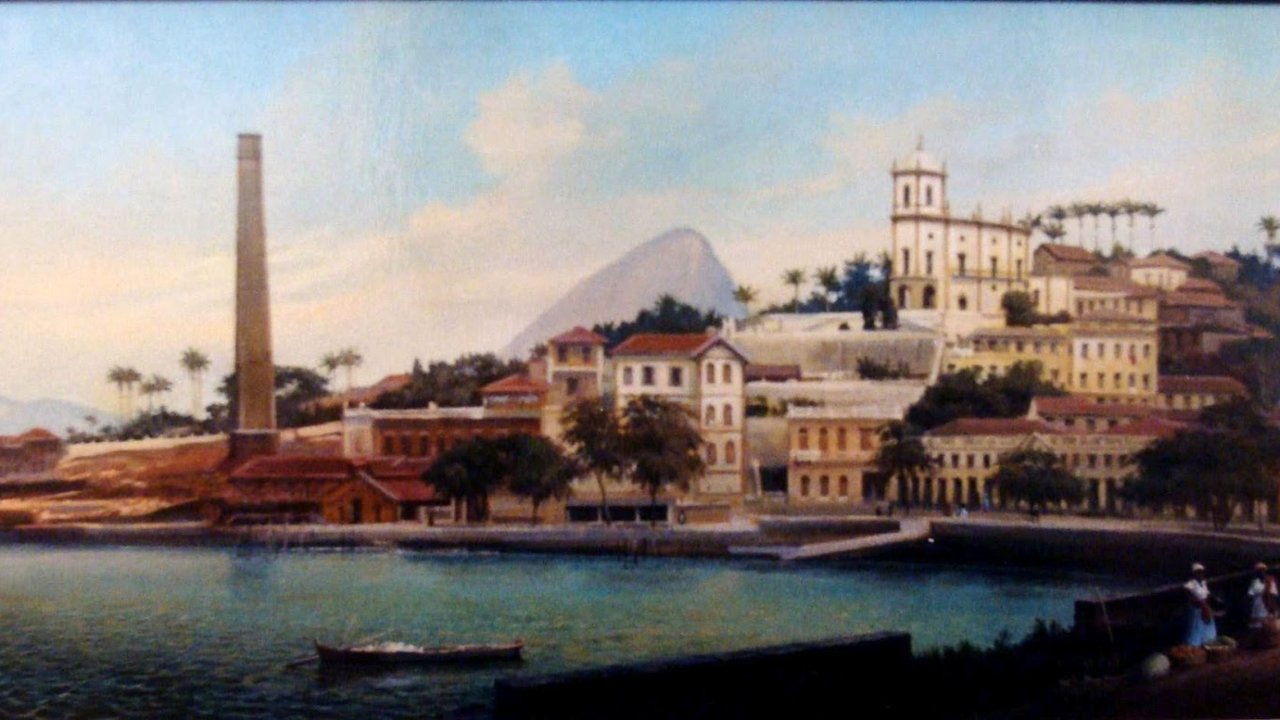
This generation took shape above all in the Rio de Janeiro of the second half of the nineteenth century, still under the Empire, in a city shaped by urban transformation, the circulation of printed scores, the expansion of the piano in domestic settings, the growth of publishing houses, musical theaters, bands, festivities and popular sociability. Iphan, in the process of registering choro as a Cultural Heritage of Brazil, identifies this environment as the result of the transformation of three great repertoire fields: music linked to African diasporas along the Brazil-Portugal axis, such as lundus and modinhas; European ballroom dances, such as polcas, valsas and quadrilhas; and Afro-Atlantic genres linked to Hispanic America and Europe, such as habanera, tango and contradança.
What We Call the "First Generation of Choro"
The expression "first generation" should be understood here as a historical and pedagogical category. It brings together musicians who participated in the formation of the choro language before its full consolidation in the twentieth century. It is not a closed list, nor a genealogy without gaps. It is a founding nucleus: Henrique Alves de Mesquita, Joaquim Antônio da Silva Callado, Chiquinha Gonzaga, Viriato Figueira, Sátiro Bilhar and Ernesto Nazareth.
There is an important subtlety: not all of them belong to exactly the same moment. Mesquita predates choro proper, but prepares part of the musical terrain. Callado and Viriato stand at the heart of the nineteenth-century genesis. Chiquinha operates between the parlor, the theater and the street, helping to expand the language. Sátiro represents the informal school of the violão and the roda. Nazareth, although his best-known work extends into the First Republic, synthesizes at the piano many elements born in this first phase: the Brazilianized polca, the lundu, the tango brasileiro (Brazilian tango), the syncopation and the urban swing of Rio de Janeiro.
Choro Before It Was "Choro"
Before it was called a genre, choro was a way of playing. The Dicionário Cravo Albin observes that around 1870, choro emerged in Rio de Janeiro as a Brazilianized way of interpreting the music and dances of the time, especially polcas and lundus. This point is decisive: the first chorões were not simply composing "choros" in the modern sense. They were creatively deforming foreign and popular materials, adding syncopation, rubato, variations, baixarias (bass-line counterpoint), ornamentation and a phrasing that made the music speak with a different body.
The polca was one of the central matrices of this process. Iphan's technical dossier shows that the polca, as it circulated through Brazil, underwent changes in character, title, rhythm and social use. In the Brazilian environment, it acquired syncopated accents and modes of accompaniment that would become fundamental to choro. The document itself emphasizes that the polca was the genre most cultivated by chorões of the nineteenth century and has remained an essential element of the repertoire and the levadas (rhythmic patterns) to this day.
This birth, therefore, was not an isolated individual invention. It was a collective combustion. But certain names served as larger sparks.
Henrique Alves de Mesquita: the Link Between Theater, Parlor and Urban Language
Henrique Alves de Mesquita (1830–1906) belongs to the generation before the establishment of choro, but his presence is fundamental to understanding the terrain in which the genre germinated. A composer, conductor, organist, trumpeter and teacher, Mesquita worked in imperial Rio de Janeiro and in the theatrical milieu, having studied at the Conservatório de Música and also received training in Paris. He is historically recognized as the creator of the term "tango brasileiro," having classified his composition "Olhos Matadores" as such in 1868, published in 1871.
His importance for the first generation of choro lies not merely in a single piece or a label. It lies in his role as mediator between institutional musical training, light theater, dance, urban repertoire and future chorões. Mesquita was the teacher of Joaquim Antônio da Silva Callado and of Anacleto de Medeiros, two central names in Brazilian instrumental popular music. This places him as a direct ancestor of the choro language — not necessarily as a chorão himself, but as a kind of bridge between the literate world of the Conservatório and the musical vitality of the city.
Joaquim Callado: the "Choro Carioca" and the Establishment of a Formation
Joaquim Antônio da Silva Callado, also spelled in older sources as Calado (1848–1880), is generally presented as a leading figure in the implantation of choro. The Dicionário Cravo Albin states that he can be considered the creator of choro for incorporating the flute into the violões and cavaquinhos, forming the ensemble known as "O Choro de Calado": a solo flute, two violões and a cavaquinho. The Casa do Choro also records that Callado created the Choro Carioca ensemble, identified as the first with this basic instrumental formation.
The importance of this formation is enormous. The flute took on the principal melody; the violões sustained harmony, bass lines and countermelodies; the cavaquinho articulated rhythm, chords and brightness. What was born there was a small portable orchestra, flexible, capable of circulating among homes, festivities, dances and rodas. Choro found in this formation a minimal architecture: melody, harmony, contraponto (counterpoint), swing and improvisation.
Callado also symbolizes the transition from ballroom dance to a more autonomous instrumental practice. His polcas, lundus and concert pieces reveal an environment in which the dance repertoire was beginning to gain its own listening audience. The Casa do Choro records "Querida por Todos", dedicated to Chiquinha Gonzaga, as his first success, and mentions that in 1873 he presented the "Lundu Característico" as a concert piece.
More than "inventing" choro single-handedly, Callado organized a practice. He gave body to a way of playing, brought musicians together, consolidated a formation and helped transform the Brazilianized polca into an instrumental language. He is less the myth of the "sole father" and more the image of an architect who drew the plan of a house where many people still live.
Chiquinha Gonzaga: the Piano, the Theater and the Street
Chiquinha Gonzaga (1847–1935) is one of the decisive figures of Brazilian popular music. A pianist, composer and conductor, she is described by the Dicionário Cravo Albin as one of the founders of MPB. Her presence in the first generation of choro shows that this history is not confined to the male rodas of flute, cavaquinho and violão. The domestic piano, the revista theater, printed music and urban circulation are also part of the genre's foundation.
Her first great success was the polca "Atraente", from 1877, composed at the piano, improvised during a party in honor of Henrique Alves de Mesquita. The work was published by the establishment of Artur Napoleão and Leopoldo Miguez and achieved great editorial success. This episode reveals a central feature of the first generation: improvisation, sociability, piano, score publishing and popular taste walked together.
Chiquinha also expanded the presence of popular music on stages and in the streets. In 1897, she composed the tango "Gaúcho", later known as "Corta-Jaca", launched in the play Zizinha Maxixe. In 1899, she composed "Ó Abre Alas", frequently cited as the first marchinha de carnaval (carnival march), dedicated to the cordão Rosa de Ouro. Her work shows how choro, tango brasileiro, maxixe, theater and carnival were in intense dialogue before genre boundaries became more rigid.
In the history of choro, Chiquinha occupies a place of expansion: she brought to the piano and to the theater the same syncopated energy that circulated in the rodas. Her music helped legitimize the popular in public space, even when that popular unsettled the elites. She did not merely compose pieces: she opened doors, windows and a few strategic holes in the wall.
Viriato Figueira: the Heir to the Flute and the Brilliance of the Wind
Viriato Figueira da Silva (1851–1883) is a fundamental figure for the immediate continuation of Callado's lineage. A flutist and composer, he was born in Macaé and studied at the Conservatório de Música in Rio de Janeiro with Joaquim Callado, with whom he became a close friend. The Casa do Choro records that Viriato was one of the first musicians in Brazil to distinguish himself as a saxophone soloist, in addition to his work as a flutist.
The Dicionário Cravo Albin considers him one of the great masters of choro. He joined the orchestra of the Teatro Fênix Dramática, directed by Henrique Alves de Mesquita, and achieved success with the polca "Só para Moer", published in 1877 and still remembered in the chorões' repertoire. His career shows how the first generation organized itself through networks of learning, friendship, theatrical work and musical circulation.
Viriato represents the virtuosic and expressive dimension of the flute in nascent choro. If Callado helped establish the formation, Viriato extended and expanded the lineage of the wind soloist, carrying forward a repertoire of polcas and pieces that circulated between score, memory and roda (jam session).
Sátiro Bilhar: the Violão as School of the Street
Sátiro Lopes de Alcântara Bilhar (1848–1926, according to the Dicionário Cravo Albin) belongs to an indispensable dimension of the first choro tradition: that of the popular violão, of orality, of bohemia and of variation. A guitarist and composer, he worked as a telegraph operator on the Estrada de Ferro Central do Brasil and was much beloved among colleagues and chorões.
His importance lies not merely in his catalogue of compositions, but in his way of playing. The Dicionário Cravo Albin records that, although he was not considered a virtuoso in the conventional sense, his peculiar execution drew more attention than the repertoire itself. Donga reportedly recalled that Sátiro played few pieces, but transformed them in many ways, according to the house, the setting and the occasion. His polca "Tira Poeira" reached the modern repertoire in recordings by Jacob do Bandolim.
Iphan's dossier also mentions Sátiro Bilhar as a popular representative of the violão, linked to the "escola das ruas" (school of the streets), an informal network of teaching and transmission that ran through the twentieth century. This fact is crucial: choro was not preserved only by conservatories, publishers or records. It was also preserved by masters of the street corner, the living room, the bar, the backyard, the ear and the hand.
Ernesto Nazareth: the Piano Between the Parlor and the Roda
Ernesto Nazareth (1863–1934) is a special case within the first generation. Chronologically, his work projects forcefully into the First Republic, but his language is born of the same nineteenth-century matrices: polca, lundu, tango brasileiro, maxixe, salon music and urban syncopation. The Casa do Choro records that Nazareth, at the age of fourteen, composed his first polca-lundu, "Você Bem Sabe", and that he became nationally known in 1893 with the tango "Brejeiro".
The Instituto Moreira Salles observes that "Brejeiro," published in 1893, was one of the landmarks of the tango brasileiro and one of the most performed compositions in Brazilian music. The IMS also notes that Nazareth worked as a pianist in cinema waiting rooms, especially the Cine Odeon, where he played for an audience that often came solely to hear him. From that experience was born "Odeon", one of his most famous tangos.
Nazareth is essential because he translated to the piano a part of the rhythmic character and cunning of the chorões. According to the Casa do Choro, he himself reportedly linked his tangos to having listened to the polcas and lundus of Viriato, Callado and Paulino Sacramento, wishing to transpose that rhythmic quality to the piano. For this reason, his work should not be seen as "classical" or "popular" in separate boxes. It is a contact zone: parlor and street, score and ear, refined form and syncopated swing.
How This Generation Founded Choro
The first generation founded choro through an accumulation of practices. Callado consolidated an instrumental formation. Chiquinha brought the language to the piano, the theater and public circulation. Viriato expanded the lineage of wind soloists. Sátiro Bilhar embodied the informal school of the violão, of variation and oral transmission. Mesquita prepared part of the urban and theatrical vocabulary that would nourish the genre. Nazareth systematized at the piano a Brazilian writing made of syncopation, formal elegance and swing.
Choro was born when these practices began to recognize themselves as a distinctive way of playing: not merely performing a polca, but "crying" the polca; not merely accompanying a melody, but conversing with it; not merely reading the score, but transforming it in the body of the instrument. This is why the first generation should be understood less as a gallery of busts and more as a network: teachers, students, friends, bohemians, publishers, theaters, parlors, rodas and handwritten notebooks.
Iphan emphasizes that, before the full consolidation of the record and before radio, the transmission of choro depended on networks of musicians, copyists, manuscript scores and informal practices. Many repertoires by Callado, Viriato and other chorões reached us through these notebooks and albums preserved by popular instrumentalists.
Characteristics of the First Generation
The first generation of choro bears several central marks:
Fluidity of genres: Polca, lundu, valsa, tango brasileiro, quadrilha, modinha and maxixe blend together before choro establishes itself as a stable category.
Centrality of imperial Rio de Janeiro: The city was a meeting point between court, theater, publishers, domestic festivities, bands, urban popular classes and new forms of musical sociability.
Instrumentation in formation: Flute, cavaquinho and violões gained a decisive role, but the piano was also fundamental in domestic, editorial and theatrical circulation.
Creative accompaniment: The violões and cavaquinhos did not merely "mark" the harmony. They created levadas, responses, baixarias, syncopations and internal pathways.
Improvisation and variation: The score was a starting point, not a cage. The chorão needed to vary, respond, ornament and adapt.
Informal transmission: Conservatories and publishers were important, but the decisive school was also the street, the home, the roda and the ear.
Conclusion
The first generation of choro is the moment when Brazilian urban music begins to find a distinctive instrumental voice. It does not yet have all the contours of modern choro, but it already contains its vital elements: the singing melody, the syncopation, the conversation between instruments, the taste for variation, the balance between writing and orality, the mixture of parlor and street.
Henrique Alves de Mesquita, Callado, Chiquinha Gonzaga, Viriato Figueira, Sátiro Bilhar and Ernesto Nazareth did not found choro in the same way. Each opened a different door. Mesquita prepared the theatrical and formative terrain. Callado drew the formation. Chiquinha expanded the idiom to the piano, the stage and the city. Viriato carried forward the virtuosic wind. Sátiro made the violão a living school. Nazareth transformed urban syncopation into pianistic architecture.
Choro was born this way: not as a foundation stone, but as a multiple spring. One thread came from the polca, another from the lundu, another from the modinha, another from the theater, another from the hands of the violonistas. When those threads crossed in nineteenth-century Rio, a music emerged that seemed small in format but immense in intelligence. A music that learned to walk crying, dancing and laughing from within.
Sources
- Dicionário Cravo Albin da Música Popular Brasileira — Entries on choro, Joaquim Callado, Chiquinha Gonzaga, Henrique Alves de Mesquita, Viriato, Sátiro Bilhar and Ernesto Nazareth. Available at: dicionariompb.com.br
- Instituto Casa do Choro — Author archive, with entries on Callado, Viriato and Ernesto Nazareth. Available at: casadochoro.com.br
- Instituto Moreira Salles — Archive and biography of Ernesto Nazareth. Available at: ims.com.br
- Iphan — Technical dossier and notice of registration of choro as a Cultural Heritage of Brazil.
Suggested course
Move from editorial context into guided study with synchronized score and structured steps.
All courses
Browse the public course catalog connected to the content hubs.