Choropedia
Ernesto Nazareth: Brazilian Composer
Discover Ernesto Nazareth, the composer bridging popular and classical music with his choro masterpieces.
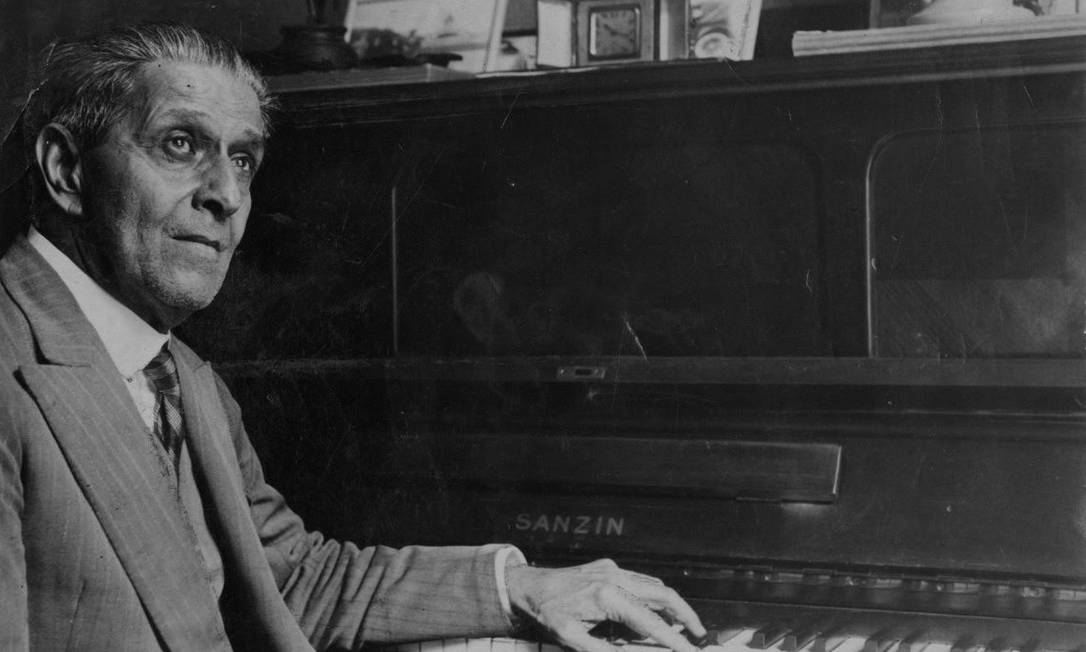
Introduction
Ernesto Nazareth (Rio de Janeiro, March 20, 1863 – February 1, 1934) was one of Brazil's most important composers and pianists, whose work occupies a central place in the tradition of urban popular music from Rio de Janeiro. Active at the turn of the twentieth century, Nazareth built a repertoire of tangos, waltzes, and polkas that masterfully combined European forms with the rhythm and spirit of Afro-Brazilian music, forging a voice of his own — at once refined and deeply popular.
His relevance to choro is manifold: although Nazareth identified primarily as a solo salon pianist, his music shares the same rhythmic and melodic foundations as instrumental choro — syncopation, the interplay between tension and flow, unassuming virtuosity. A transitional figure between the choro of the late nineteenth century and the popular music of the twentieth, Nazareth influenced generations of composers and performers and remains to this day a constant presence in choro ensembles' repertoires.
Early Life and Musical Formation
Born into a middle-class family in Rio de Janeiro, Ernesto Nazareth showed early musical aptitude and developed largely as a self-taught musician. The foundation of his pianistic learning came from his own mother, who introduced him to the European piano repertoire and aesthetic — especially Chopin, whose influence is audible in his waltzes and in the poetic quality of his melodic lines. The composer Francisco Mignone once remarked that Nazareth had "nothing of the scholarly" about him and was above all an "intuitive" musician, comparing him in this respect to Villa-Lobos — an assessment that highlights how his musicality sprang from a sharp ear and natural talent rather than from any systematic academic training.
The Rio de Janeiro of his formative years was a musically effervescent environment defined by the meeting of cultures. European polkas, mazurkas, and schottisches shared the space of parties and soirées with dances of African origin — lundum, batuque — and with the earliest expressions of instrumental choro, led at the time by Chiquinha Gonzaga and Joaquim Callado, among others. This cultural melting pot was the soil in which Nazareth developed his style, absorbing the sensibility of the European piano repertoire he knew alongside the rhythmic swing of the popular music that surrounded him.
Throughout his professional life, he worked as a pianist in the waiting rooms of silent cinemas — most notably the Cine-Odeon — and also performed and promoted his work at sheet-music establishments such as Casa Carlos Gomes and Casa Stephan (located in the Galeria Cruzeiro). This simultaneous presence in commercial and popular circuits was decisive in the dissemination of his compositions.
Musical Style
Ernesto Nazareth's style is defined by the fusion of European formal structures with Brazilian rhythmic sensibility. His most characteristic traits include:
Melodic language: Nazareth's melodies tend toward lyricism, with singable, expressive contours. They make frequent use of ornamental chromaticism, appoggiaturas, and inflections that evoke both European Romantic pianism and the melismatic quality of Brazilian popular music.
Harmonic language: Nazareth handles tonal harmony with considerable sophistication for the popular music of his time, employing unexpected modulations, modal borrowings, and progressions that reveal an intimate familiarity with the Classical-Romantic repertoire. At the same time, his cadences and resolutions carry a distinctly Brazilian idiomatic flavor, far removed from pure academicism.
Rhythm and syncopation: The most immediately recognizable element in his music is its syncopated rhythm, a direct heir to the Africanization of Brazilian urban dance. In his tangos brasileiros, the left hand maintains a bass pattern that anchors the tango-habanera rhythmic cell, while the right hand articulates syncopations and off-beats with fluid ease. This balance between a steady pulse and rhythmic displacement is the central mark of his musical idiom.
Instrumentation and texture: Nazareth composed predominantly for solo piano, and his writing efficiently exploits the instrument's possibilities: octave basses, arpeggiated accompaniments, ornamentation in the melodic line. Nevertheless, many of his pieces have been and continue to be transcribed and adapted for choro ensembles (flute, guitar, cavaquinho, pandeiro), working remarkably well in those arrangements.
Typical forms: The vast majority of his works fall into the binary or ternary forms of dance music: tango brasileiro (his preferred designation, as an alternative to maxixe, a label he rejected), waltz, polka, and choro. Binary-form pieces with repeats and a trio section are the most frequent, following the structure AABBACCA or close variants.
Innovations and distinctive features: Nazareth rejected the "maxixe" label for his music, preferring to present his tangos as an expression of Brazilian popular music in its most legitimate form — a stance that reflects his commitment to elevating the popular to the status of serious art, worthy of concert halls. This attitude was pioneering in its recognition of the aesthetic value of urban popular music.
Important Works
The following is a selection of compositions by Ernesto Nazareth that are representative of his style and frequently found in choro and Brazilian popular music repertoires:
| Title | Genre | Notes |
|---|---|---|
| Odeon (1909) | Tango brasileiro | One of his best-known pieces internationally; recorded and performed worldwide. |
| Brejeiro (1893) | Tango brasileiro | Considered one of his seminal works; features characteristic syncopations with great vivacity. |
| Apanhei-te, Cavaquinho | Tango brasileiro | Humorous title and irresistible rhythm; has become an essential piece in the choro repertoire. |
| Turbilhão de Beijos | Waltz | An example of Nazareth's lyricism in his waltzes; Romantic harmony and expansive melody. |
| Labirinto | Tango brasileiro | Elaborate modulatory structure; the title is suggestive of the piece's harmonic complexity. |
| Escorregando | Tango brasileiro | Festive and rhythmically charged character; widely popular in choro jam sessions. |
Musical Example
"Odeon" (1909) is perhaps Ernesto Nazareth's most representative work for introducing a listener to his style. While listening, it is worth noticing how the left hand at the piano establishes a steady, insistent rhythmic pattern — the tango-habanera cell — while the main melody glides over this foundation with syncopations and small delays that create a constant sense of swing. In the central section (trio), the key changes and the character of the piece shifts, becoming more lyrical and introspective, before returning to the animated mood of the opening section. This alternation between rhythmic vitality and melodic lyricism distills, in just a few minutes, the whole art of Nazareth.
Influences and Relationships
Influences on Nazareth:
- Frédéric Chopin — A primary reference for his pianistic writing, particularly in the lyrical treatment of melody and the expressive use of harmony in his waltzes.
- European salon music — Polkas, mazurkas, and schottisches of the nineteenth century shaped the forms he adopted and transformed.
- Chiquinha Gonzaga and Joaquim Callado — Pioneers of Rio choro who established the musical environment in which Nazareth came of age.
- Afro-Brazilian urban tradition — Lundum, batuque, and the popular dances of Rio de Janeiro provided the rhythmic substrate of his entire output.
Composers and musicians influenced by Nazareth:
- Darius Milhaud — The French composer, who lived in Rio de Janeiro between 1917 and 1919, was a fervent admirer of Nazareth — so much so that he used the entire theme of Brejeiro in his piece Scaramouche, without crediting the Brazilian composer.
- Heitor Villa-Lobos — A declared admirer of Nazareth, whose syncopations and popular chromaticism left perceptible traces in Villa-Lobos's piano works. The relationship between the two was one of mutual admiration: Villa-Lobos dedicated his Choros No. 1 (guitar, 1920) to Nazareth, who returned the gesture three years later by dedicating the concert study Improviso (1923) to his friend.
- Generations of chorões — Pianists, flutists, and guitarists in Brazilian choro have incorporated his repertoire as a cornerstone of the popular instrumental canon.
Circulation and professional context:
- Nazareth performed as a pianist in the waiting rooms of the Cine-Odeon and other silent cinemas in Rio de Janeiro, bringing his music to a wide and diverse audience.
- His presence at Casa Carlos Gomes and Casa Stephan (Galeria Cruzeiro) was instrumental in the sale, promotion, and circulation of his compositions.
Legacy
Ernesto Nazareth's legacy stands among the most significant in Brazilian music. His work occupies a singular position: belonging at once to the tradition of the erudite salon piano and to the world of choro and urban popular music, without being fully reducible to either.
In the modern choro repertoire, his pieces stand as inescapable classics. The ensemble Época de Ouro, led by Jacob do Bandolim, was among those responsible for cementing his repertoire through landmark recordings, and any musician devoted to choro will inevitably pass through Nazareth. The rhythmic and harmonic richness of his tangos makes them equally prized by classical pianists and popular ensembles alike.
Historically, Nazareth was among the first artists to approach Brazilian popular music with the seriousness of a major art form — performing it in concert settings and refusing labels that diminished it. This stance anticipated debates that would define Brazilian musical culture throughout the twentieth century.
Recognized by figures such as Villa-Lobos and Darius Milhaud, and studied by musicologists and performers across successive generations, Ernesto Nazareth remains an indispensable reference for anyone seeking to understand the formation of Brazil's urban musical identity. His final public performance took place on February 26, 1932, in Santana do Livramento — he played leaning against the piano, as his advancing deafness had left him barely able to hear what he was playing. It is an image that captures, with singular force, the absolute devotion of a life given entirely to music.
Sources
The following sources are relevant to the study of Ernesto Nazareth and the musical context in which he worked:
- MACHADO, Cacá. O enigma do homem célebre: ambição e vocação de Ernesto Nazareth. Instituto Moreira Salles, 2007. — An in-depth biographical and analytical study relating Nazareth's trajectory to Machado de Assis's short story O homem célebre. An essential reference for researchers.
- APPLEBY, David P. The Music of Brazil. University of Texas Press, 1983. — Contextualizes Brazilian music during Nazareth's period.
- BÉHAGUE, Gerard. Music in Latin America: An Introduction. Prentice-Hall, 1979. — Overview of Latin American music with references to the Rio de Janeiro tradition.
- TINHORÃO, José Ramos. Música Popular: Um Tema em Debate. Editora 34, 1997. — Critical analysis of Brazilian urban popular music, including the choro and tango brasileiro period.
- TINHORÃO, José Ramos. História Social da Música Popular Brasileira. Editora 34, 1998. — A fundamental reference for the historical and social context of Nazareth's music.
- TABORDA, Márcia. Research on choro and instrumental music from Rio de Janeiro in the nineteenth and twentieth centuries. — Academic work relevant to the study of the period.
- Acervo da Fundação Nacional de Artes (FUNARTE) — Sheet music, historical recordings, and documentation on Ernesto Nazareth.
- Enciclopédia da Música Brasileira (Art Editora / Publifolha) — Biographical and discographical entries on the composer.
Note: For access to original scores, the collections of the Biblioteca Nacional do Brasil (Rio de Janeiro) and the Fundação Nacional de Artes (FUNARTE) are recommended.
Suggested course
Move from editorial context into guided study with synchronized score and structured steps.
All courses
Browse the public course catalog connected to the content hubs.