Choropedia
Donga: Key Figure in Samba and Choro
Donga was a crucial composer and guitarist in Brazilian music, known for 'Pelo Telefone' and participation in Oito Batutas.
Introduction
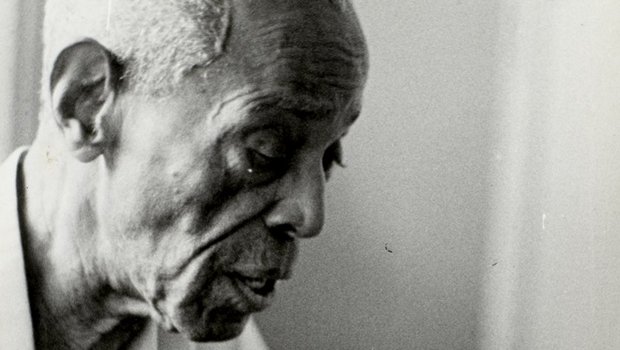
Ernesto Joaquim Maria dos Santos (Rio de Janeiro, April 5, 1890 – Rio de Janeiro, August 25, 1974), known as Donga, was a composer and guitarist of decisive importance in the history of Brazilian popular music. His name is inescapable both in the early consolidation of urban samba and in the formation of the musical environment in which choro developed during the first decades of the twentieth century.
Musical Formation and Environment
Donga was born in Rio de Janeiro, son of Pedro Joaquim Maria and Amélia Silvana de Araújo. His father played the bombardino in his spare time, and his mother, known as Tia Amélia, hosted samba gatherings and musical meetings linked to the world of the Bahian women of the Cidade Nova neighborhood. This domestic environment was decisive for his formation, placing him from an early age at the intersection of popular sociability, celebration, dance, and musical practice.
His first instrument was the cavaquinho, learned during adolescence by listening to musicians such as Mário Álvares. In 1907, he began studying guitar with Quincas Laranjeiras, one of the central names in the history of the instrument in Rio de Janeiro. This foundation helps explain why Donga should not be remembered merely as "the author of Pelo Telefone," but also as an instrumentalist deeply embedded in the networks through which choro circulated.
The bibliography connected to the choro tradition also places Donga among the musicians who lived in the area around Rua do Riachuelo, in an environment of boarding houses frequented by figures such as Pixinguinha and João Pernambuco. This detail helps illuminate the collective, urban, and everyday character of these musicians' formation — far removed from the notion of isolated trajectories.
Donga Between Samba and Choro
The most celebrated episode of his career is the composition of "Pelo Telefone," in partnership with Mauro de Almeida, registered at the National Library on November 27, 1916. The work became consecrated as the first recorded samba and a symbolic landmark in the history of the genre. At the same time, its origin remains surrounded by historiographic debate, since the piece was born within the circuit of musical gatherings at the house of Tia Ciata, an environment of collective creation frequented by musicians such as João da Baiana, Pixinguinha, Caninha, and others.
This point deserves nuance. Part of the bibliography shows that Pelo Telefone was fixed by Donga as an authored work, but it retains marks of collective elaboration and of a musical practice that predated the rigid separation between composer, performer, and roda. Moreover, historical studies observe that the piece was performed in an amaxixado (maxixe-inflected) rhythm and that its great contribution was to disseminate the term samba among the urban and carnival-going public of the period. In other words, its importance lies less in single-handedly inaugurating a fully formed genre than in crystallizing, in a circulable and commercial form, materials that came from collective Afro-Carioca and popular practices.
Instrumental Activity and Ensembles
Around 1914, Donga joined the Grupo de Caxangá, an ensemble organized by João Pernambuco with a Northeastern Brazilian inspiration, in which he adopted the stage name Zé Vicente. The group is important not only for its repertoire and public performance, but also for having brought together musicians who would go on to play central roles in Brazilian popular music in the following decades.
In 1919, Donga participated in the creation of the Oito Batutas, an ensemble formed by him and Pixinguinha to perform initially in the lobby of the Cinema Palais, at the invitation of Isaac Frankel. As a guitarist, he took part in the group's historic trip to Paris in 1922. At the end of that same year, the ensemble traveled to Argentina, where it recorded twenty tracks for Victor of Buenos Aires in 1923. In 1926, he traveled to Europe again with the Carlito Jazz, accompanying the Bataclan revue company.
These episodes show that Donga participated directly in the early professionalization and internationalization of Brazilian urban popular music.
Shortly afterward, alongside Pixinguinha, he organized the Orquestra Típica Pixinguinha-Donga, responsible for recordings of choros, sambas, and maxixes for the Parlophon label in 1928. Among these recordings is the disc that paired Lamentos, by Pixinguinha, with Amigo do povo, by Donga. The reception at the time was not unanimous: part of the critical establishment perceived in these recordings an excessive influence of North American melodies and rhythms. Even so, this repertoire documents a crucial stage of experimentation in Brazilian urban music.
Donga in the Field of Choro
Although his public fame is frequently concentrated on samba, the archive of the Casa do Choro confirms Donga as an effective author within the choro tradition as well. Amigo do povo is explicitly catalogued as a choro in 2/4, and Donga's own trajectory places him alongside essential figures of the choristic tradition, such as Pixinguinha, João da Baiana, João Pernambuco, and the members of the Batutas.
Based on this body of evidence, it is more accurate to understand his presence in choro not as peripheral, but as a constitutive part of the same musical environment in which samba, maxixe, tango brasileiro, and choro still maintained porous boundaries.
For this same reason, his work serves as a reminder that, in the early decades of the twentieth century, genres were not yet fully stabilized according to the categories that would be applied later. Donga moved between sambas, choros, marchas, batucadas, emboladas, and canções, and this mobility is less a sign of indeterminacy than a historical mark of a period in which popular musicians operated with great fluidity across repertoires, instrumental roles, and performance spaces.
Notable Works
Among Donga's best-known works are "Pelo Telefone" (with Mauro de Almeida), "Amigo do povo," "Dona Clara (Não te quero mais)," "Canção dos infelizes," and "Patrão, prenda seu gado." The breadth of his output confirms a composer of wide-ranging activity across genres and one deeply rooted in the formation of Brazilian urban popular music.
Legacy
Donga's legacy can be read along two complementary lines. The first is aesthetic and historical: he stood at the center of networks of musical sociability that helped shape the urban language of early twentieth-century Rio de Janeiro. The second is institutional: by registering Pelo Telefone, printing sheet music, and inserting the work into the circuits of commercial distribution, Donga took part in a decisive transition between traditional collective practice and the modern circulation of song as cultural commodity. This reading does not erase the collective character of samba's origins, but it shows how certain musicians were decisive in transforming social practice into fixed, recorded, and commercialized repertoire.
In the following decades, Donga remained active in recordings and ensembles associated with the so-called velha guarda (old guard). The Casa do Choro further notes that much of his output was recorded by performers such as Carmen Miranda, Francisco Alves, Mário Reis, Sílvio Caldas, Augusto Calheiros, Aurora Miranda, and Almirante. Shortly before his death in 1974, an LP dedicated entirely to his compositions was released — a belated but eloquent gesture of recognition for a fundamental figure in Brazilian music.
Sources
- Dicionário Cravo Albin da Música Popular Brasileira — Entry on Donga, with detailed chronology, discography, ensembles, and works. Available at: dicionariompb.com.br
- Instituto Casa do Choro — Biographical entry and catalogue of works, including Pelo Telefone and Amigo do povo. Available at: casadochoro.com.br
- BITTAR, Iuri Lana. Master's dissertation (UFRJ). — Source for the context of the Grupo de Caxangá, the formation of the Oito Batutas, and Donga's role in the professionalization of popular music.
- SILVA, Flávio. "Pelo Telefone e a história do samba." Música Brasilis. — Source for the historiographic debate over the authorship and significance of the work.
- BORGES, Gabriel Caio Correa. "'Pelo Telefone' e a trajetória do samba entre a tradição e a modernidade." Boitatá. — Academic source for the analysis of the piece in the context of the transition between collective practices and the recording market.
- Portal Pixinguinha — 1928 chronology, with information on the Orquestra Típica Pixinguinha-Donga and the critical reception of Amigo do povo. Available at: pixinguinha.com.br
Suggested course
Move from editorial context into guided study with synchronized score and structured steps.
All courses
Browse the public course catalog connected to the content hubs.