Choropedia

Djalma de Andrade: Bola Sete

Discover the story of Djalma de Andrade, a key figure in Brazilian music.

Bola SeteDjalma de AndradeBrazilian musicchorosamba

bola sete

Introduction

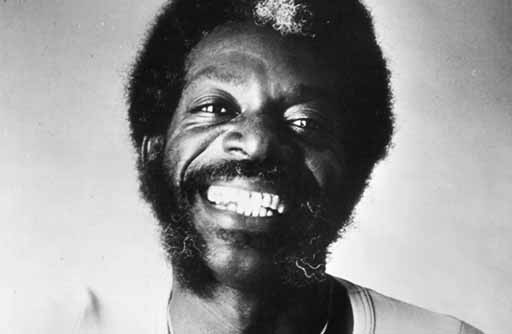
Djalma de Andrade, known artistically as Bola Sete (Rio de Janeiro, July 16, 1923 — Greenbrae, California, February 14, 1987), was a guitarist, electric guitarist, and composer. Formed in the world of samba, choro (the traditional Brazilian instrumental genre that emerged in late 19th-century Rio de Janeiro), the regionais (the small accompanying ensembles typical of Brazilian radio), and Rio's nightclubs, he later built one of the most striking international careers among Brazilian instrumentalists of his generation.

His importance to choro is tied to two complementary dimensions. The first is his direct activity in the genre during his Brazilian phase, spanning historic recordings in regional format, participation in central programs of Rádio Nacional, and a catalog of original choros such as Bola Sete no Choro, Sem Compromisso, and Tô de Sinuca. The second is the international projection of that language: by carrying resources of the Brazilian guitar into North American jazz, into concert halls, and into the solo guitar record, Bola Sete became one of the most important contemporary extensions of the instrumental tradition of choro outside Brazil. His work helps us understand that the history of choro is not limited to musicians who remained identified exclusively with the genre.


Training and Musical Context

Bola Sete was born in Rio de Janeiro and grew up in a family of modest means, but surrounded by musicians and string instruments. As a child, he began playing cavaquinho (a small four-string instrument akin to the ukulele) and later guitar. One of his relatives was the guitarist Jorge Santos, who would later join Waldir Azevedo's regional. His childhood unfolded between Rio's port district and the working-class suburb of Rocha Miranda, and the domestic contact with samba, choro, and string instruments was decisive in his early formation. Later, he expanded his studies and came into contact with the concert repertoire and with formal guitar techniques.

The artistic name Bola Sete ("Seven Ball") emerged during his first years of professional activity. There are different accounts of its origin, but the most recurrent versions link the nickname to billiards and to the black seven ball. The narratives do not entirely coincide; the safest statement is that the name became fixed early in his career, when Djalma was beginning to circulate through Rio's musical environments. As a young man, he frequented the Praça Tiradentes district, home to theaters, dance halls, cabarets, and variety houses — a circuit that brought together popular musicians, radio artists, regional instrumentalists, and professionals of the teatro de revista (the Brazilian revue theater).

During the 1940s, Bola Sete joined the ensemble tied to the program Trem da Alegria, led by Lamartine Babo, Yara Salles, and Heber de Bôscoli. The group, also called Trio de Osso, performed in important theaters in Rio de Janeiro and contributed to his entry into Rádio Nacional. On that station, he took part in programs central to the history of Brazilian popular music: on Um Milhão de Melodias, he was part of the plucked-string section of the Orquestra Brasileira led by Radamés Gnattali, alongside musicians such as Garoto and Zé Menezes; on Música em Surdina, directed by Paulo Tapajós, he worked alongside Zé Menezes and Chiquinho do Acordeon in a formation that preceded the Trio Surdina; and on Chorando as Mágoas, he accompanied Luiz Americano together with the guitarist Norival Guimarães.

Alongside his radio work, he performed in nightclubs in Copacabana and downtown Rio, among them Casablanca, Beguin, Cangaceiro, Ma Griffe, Plaza, and Little Club — an environment that demanded a broad command of repertoire, a capacity for improvisation, and quick adaptation of arrangements. In some of those seasons, his singer was Dolores Duran, then still in the early phase of her career. Bola Sete turned that experience into an instrumental language marked by versatility and by an immediacy of communication with the audience — the base from which, later, he would build his international trajectory.


Musical Style

Bola Sete's style is defined by the productive coexistence of different traditions — choro, samba, baião (a rhythm and dance form from Northeastern Brazil), concert music, flamenco, jazz, and bossa nova — without that breadth translating into diluted eclecticism. Some of his most characteristic traits are:

The independence of voices: This is the central mark of his playing. Bola Sete could carry basses, chords, and melodic lines simultaneously, bringing the guitar close to the organization of a small ensemble. His use of the fingers allowed him to create distinct sonic planes and to sustain accompaniment and improvisation on the same instrument — a trait that places him in a lineage that runs through Garoto and anticipates the contemporary solo guitarist.

Melodic language: From choro, Bola Sete inherited the agile phrasing, the capacity for ornamentation, and the dialogue between melody and accompaniment. His phrases are long, expressive, and fluid, with a singing quality that brings the guitar close to the voice of an instrumental soloist. Even in jazz contexts, his articulation remains tied to the Brazilian guitar, with elements learned in the regionais and in Rio's nights.

Harmonic language: The harmony works with the vocabulary of choro and samba extended by procedures from jazz and concert music — reharmonizations, substitutions, chromaticism, more elaborate tensions and resolutions. The proximity to Radamés Gnattali's repertoire in Brazilian radio and the later collaboration with Vince Guaraldi widened that vocabulary without erasing its root.

Rhythm and syncopation: From samba and baião, Bola Sete absorbed accentuations, patterns of accompaniment, and a bodily relationship to the pulse. The rhythmic flexibility typical of choro manifests itself in the way he articulates phrases, prepares resolutions, and dialogues with other musicians, even in long improvisations.

Convergence of traditions: Flamenco and other guitar traditions appear in his attacks, rasgueados, and contrasts of dynamics. Jazz added room for improvisation, harmonic transformation, and spontaneous interaction. Concert music contributed to his exploration of timbres, arpeggios, independent voices, and longer forms of development. Each of these traditions adds to the Brazilian matrix without replacing it.

Instrumentation and texture: Bola Sete played both the nylon-string guitar and the electric guitar, and moved between solo guitar, the small ensemble (trio, quartet), the radio orchestra, and jazz formations with piano, double bass, and drums. This instrumental mobility allowed his language to adapt to very diverse contexts without losing identity.

Typical forms: The catalog articulates choros, sambas, baiões, original character pieces, adaptations of works from the international repertoire, and compositions of his late phase with long structures and freer thematic development. This formal diversity is characteristic of a musician who understood the Brazilian guitar as a matrix open to different artistic projects.

Innovations and distinctive aspects: Bola Sete's most singular contribution lies in demonstrating that the Brazilian guitar could dialogue with jazz without losing its own characteristics. In his hands, the instrument acted at once as soloist, accompanist, rhythm section, and small ensemble — a conception that influenced musicians of different generations and styles, and that still today offers a productive model for guitarists devoted to hybrid repertoires.


Important Works

Below is a selection of compositions and recordings representative of Bola Sete's trajectory, spanning original choros, historic encounters, and works from the international and contemplative phases:

Title Category Notes
Bola Sete no Choro (1948) Original choro One of his first recordings, with Arlindo on guitar, Pinguim on cavaquinho, and Pernambuco on pandeiro (the Brazilian tambourine); documents his ties to the regional.
Sem Compromisso (1952) Original choro Recorded with the Conjunto Todamérica; marks his activity as composer, performer, and instrumental leader.
Tô de Sinuca (1952) Original choro Recorded on the same disc as Sem Compromisso, with the Conjunto Todamérica.
Baião da Bahia (1953) Baião Original composition that reveals his interest in Northeastern rhythms.
Meditando (1953) Choro (by Garoto) Interpretation of Garoto's work, showing his allegiance to the modern tradition of the Brazilian guitar.
Bola Sete at the Monterey Jazz Festival (1967) Live album Recording of the concert with the Brazilian trio (Tião Neto and Paulinho da Costa) at the Monterey Jazz Festival.
Autêntico! (1966) Album Recorded with the Brazilian trio; gathers choro, samba, baião, and original compositions.
Tour de Force (1964) Solo album Mixes Brazilian, jazz, and concert repertoire.
The Solo Guitar of Bola Sete (1965) Solo guitar album Includes Choro nº 1 and Sons de Carrilhões, alongside European and Latin American works.
Ocean (1975) Late solo album Central work of his contemplative phase; Brazilian themes, open harmonies, and free improvisation.
Goin' to Rio (1973) Album Dedicated to Brazil and to Baden Powell.
Jungle Suite (1982) Original album Work of the final phase of his career.

Musical Example

Sem Compromisso is the most useful piece for introducing the listener to Bola Sete as a composer and to his deep tie to choro. Recorded in 1952 with the Conjunto Todamérica, the choro synthesizes central traits of his language: agile phrasing, ornamentation typical of the choro tradition, dialogue between melody and accompaniment, and a rhythmic sense that would remain throughout his later work. Alongside Bola Sete no Choro (1948) and Tô de Sinuca (1952), this recording documents the guitarist within the world of the regional, before his international career and the later association of his name with bossa nova and jazz.

To hear Bola Sete in his international maturity, the path is the live recording of the Monterey Jazz Festival (1967), with the Brazilian trio formed by Tião Neto on double bass and Paulinho da Costa on drums and percussion. In that performance, Brazilian themes, improvisation, passages of flamenco character, and moments of solo guitar articulate themselves in an unmistakable language — the matrix of choro reorganized in a transcultural artistic project. For the contemplative phase, the album Ocean (1975) offers the most representative entry into his conception of solo guitar.


Influences and Connections

Influences on Bola Sete:

  • Domestic environment of childhood — A family of modest means but surrounded by musicians and string instruments; his cousin Jorge Santos, a guitarist, was one of the early references.
  • Rio's choro and samba — Everyday practices that shaped his sonic matrix even before formal studies.
  • Garoto — Major reference of the modern tradition of the Brazilian guitar, whose work Bola Sete recorded and whose instrumental conception ran through his career.
  • Radamés Gnattali — Composer, arranger, and director of the Orquestra Brasileira on Um Milhão de Melodias, the context in which Bola Sete worked as part of the plucked-string section.
  • Concert repertoire and formal guitar techniques — Widened his exploration of timbres, arpeggios, independent voices, and longer forms.
  • Flamenco and international guitar traditions — Provided attacks, rasgueados, and contrasts of dynamics that add to the Brazilian matrix.

Dialogues and partnerships:

  • Zé Menezes, Chiquinho do Acordeon, Norival Guimarães — Partners in Rádio Nacional programs, especially on Música em Surdina and Chorando as Mágoas.
  • Luiz Americano — Soloist accompanied by Bola Sete on Chorando as Mágoas.
  • Dolores Duran — Singer accompanied during nightclub seasons in Rio, still in the early phase of her career.
  • Dizzy Gillespie — Trumpeter with whom Bola Sete recorded the album New Wave! (1962), combining jazz, samba, and bossa nova. The connection was decisive for his entry into the North American jazz circuit.
  • Vince Guaraldi — North American pianist with whom Bola Sete developed, between 1963 and 1966, one of the most important partnerships of his international career, with regular performances in California clubs and albums such as Vince Guaraldi, Bola Sete and Friends, From All Sides, and Live at El Matador.
  • Tião Neto and Paulinho da Costa — Double bassist and percussionist/drummer who formed, with Bola Sete, the Brazilian trio presented at the Monterey Jazz Festival in 1966 and on the album Autêntico!.

Performers, heirs, and admirers:

  • Carlos Santana — Placed Bola Sete among his main instrumental references, alongside guitarists such as Wes Montgomery and Gábor Szabó.
  • John Fahey — Grew close to the Brazilian musician and contributed to the circulation of some of his more experimental works.
  • Contemporary guitarists tied to the Brazilian guitar and to jazz — Continue to refer to his work as a model of productive transit between traditions.

Circulation context:

  • He worked in the fundamental environments of mid-20th-century Brazilian popular music: Rádio Nacional, nightclubs in Copacabana and downtown Rio, theaters of Praça Tiradentes, and seasons in South America (Chile, Peru, Uruguay, Argentina) and in Europe (Spain, Italy, France).
  • In the United States, he performed in Sheraton hotels and in cities such as New York, Washington, Chicago, Dallas, Los Angeles, and San Francisco, where he eventually settled. He took part in the Monterey Jazz Festival (1962 and 1966) and in the Brazilian music concert held at Carnegie Hall (1962).

Legacy

Bola Sete occupies a singular position in the history of the Brazilian guitar. Formed within the circuit of choro, samba, the regionais, and radio, he carried that experience into an international career built well beyond the commercial phenomenon of bossa nova. His work demonstrated that the Brazilian guitar could dialogue with jazz without losing its own characteristics — in his hands, the instrument acted at once as soloist, accompanist, rhythm section, and small ensemble, a conception that influenced musicians of different generations and styles.

His contribution to choro is organized in three complementary layers. The first is directly repertorial, with original compositions such as Bola Sete no Choro, Sem Compromisso, and Tô de Sinuca, recorded in regional format. The second is technical: the independence of voices, the phrasing tied to the tradition of instrumental choro, and the treatment of the guitar as a small ensemble still offer a productive model today. The third is symbolic: Bola Sete presented resources of the Brazilian guitar to audiences that were often unaware of the repertoire from which they came, carrying with him, to jazz festivals and concert halls, an instrumental conception formed in the world of the chorões (players of choro).

The recognition by figures such as Carlos Santana and John Fahey confirms the reach of his influence beyond the usual borders of Brazilian music. At the same time, over the decades he remained less known in Brazil than his relevance would warrant — a situation slowly being revised as his work is rediscovered by contemporary guitarists, researchers, and listeners.

His trajectory helps us understand that the history of choro is not limited to musicians who remained identified exclusively with the genre. Bola Sete carried into jazz, into the concert guitar, and into contemporary instrumental music an experience formed in the rodas (the choro circles), the regionais, the radio stations, and the nights of Rio de Janeiro. To listen to Bola Sete is to recognize an international extension of the Brazilian guitar: a musician who set out from choro, crossed different languages, and built a body of work that still defies classification.


Selected Discography

  • Bola Sete no Choro, 1948. — Original choro recorded in regional format.
  • Sem Compromisso / Tô de Sinuca, 1952. — Original choros with the Conjunto Todamérica.
  • Meditando / Baião da Bahia, 1953. — Combines Garoto's work with an original baião.
  • Aqui Está o Bola Sete, 1957. — One of the main albums of the Brazilian phase.
  • Bola Sete em Hi-Fi, 1958. — Repertoire recorded during the phase of international tours.
  • Bossa Nova, 1962. — First major album recorded in the United States.
  • New Wave!, with Dizzy Gillespie, 1962.
  • Vince Guaraldi, Bola Sete and Friends, 1963.
  • Tour de Force, 1964. — Mixes Brazilian, jazz, and concert repertoire.
  • The Solo Guitar of Bola Sete, 1965. — Includes Choro nº 1 and Sons de Carrilhões.
  • The Incomparable Bola Sete, 1965. — Original repertoire oriented toward Brazilian jazz.
  • Autêntico!, 1966. — Recorded with the Brazilian trio.
  • Bola Sete at the Monterey Jazz Festival, 1967. — Live recording.
  • Goin' to Rio, 1973. — Dedicated to Brazil and to Baden Powell.
  • Ocean, 1975. — Central work of his solo and contemplative phase.
  • Jungle Suite, 1982. — Original work of the final phase.

Sources

The following sources are relevant to the study of Bola Sete and the musical context in which he worked:

  • Instituto Casa do Choro. Acervo Memória do Choro, biographical records, scores, and documentation on Bola Sete. — Central documentation on his life, work, and trajectory, with biographical and discographic data.
  • Instituto Moreira Salles / Discografia Brasileira. Phonographic records of Bola Sete no Choro, Sem Compromisso, Tô de Sinuca, Baião da Bahia, and other discs of the Brazilian period. — Reference for the Brazilian phase and for the context of radio and recording in Brazil.
  • MELLO, Jorge Carvalho de. "Djalma de Andrade (Bola Sete)." Dicionário do Acervo do Violão Brasileiro. — Specialized entry on his activity as guitarist and composer within the context of the Brazilian guitar.
  • RAYS, Luís Gustavo Carvalho Alonso. A trajetória musical do compositor brasileiro Djalma de Andrade, Bola Sete. Master's thesis. Universidade Estadual de Campinas, 2006. — Reference academic study on the musician's trajectory and guitar language.
  • FEATHER, Leonard. The Encyclopedia of Jazz in the Sixties. New York: Horizon Press, 1966. — Reference on the North American jazz context in which Bola Sete worked.

Suggested course

Move from editorial context into guided study with synchronized score and structured steps.

All courses

Browse the public course catalog connected to the content hubs.