Choropedia
Dilermando Reis: Brazilian Guitar Legend
Explore the life and legacy of Dilermando Reis, a pivotal figure in Brazilian guitar music.
Introduction
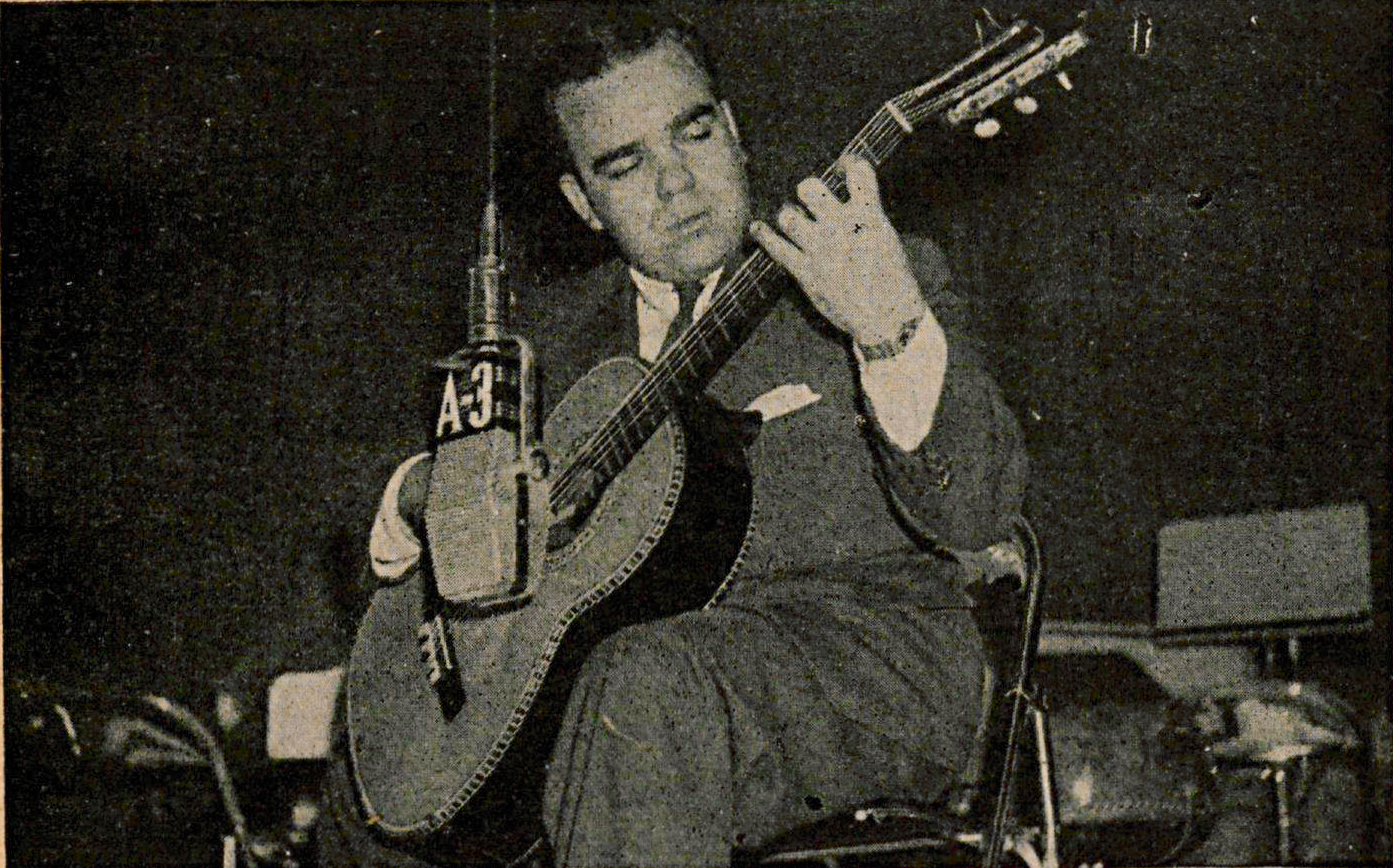
Dilermando dos Santos Reis (Guaratinguetá, São Paulo, September 22, 1916 — Rio de Janeiro, January 2, 1977), known as Dilermando Reis, was a guitarist, composer, arranger, and teacher, recognized as one of the most important figures in the history of the Brazilian guitar. His trajectory was deeply tied to radio, to the expansion of the recording industry, and to the consolidation of the guitar as a solo instrument in Brazil.
His importance to choro (the traditional Brazilian instrumental genre that emerged in late 19th-century Rio de Janeiro) is tied to three complementary dimensions. The first is composition: choros and valsas (Brazilian waltzes) such as Magoado, Noite de Lua, Se Ela Perguntar, Dois Destinos, Tempo de Criança, and Xodó da Baiana remain in the repertoire of students and concert performers, crossing generations. The second is interpretation: his recordings of Sons de Carrilhões, by João Pernambuco, and Abismo de Rosas, by Canhoto, became reference versions of the Brazilian guitar. The third is pedagogical and institutional: through the program Sua Majestade, o Violão on Rádio Nacional (1956–1969), and through a continuous teaching activity, Dilermando helped turn the guitar into a protagonist of Brazilian musical culture and formed performers such as Bola Sete and Darci Vilaverde.
Training and Musical Context
Dilermando began learning the guitar in early childhood with his father, Francisco Reis, an amateur guitarist and seresteiro (a performer of seresta, the Brazilian serenade tradition closely related to the modinha and cultivated in the early 20th century). The family environment brought the boy into contact with modinhas (sentimental Luso-Brazilian song forms), valsas, songs, and serenades, and his early learning happened mainly through observation, memory, and direct practice with the instrument — as was common among many popular musicians of the time.
At fifteen, he attended a performance by the guitarist Levino da Conceição, who was passing through Guaratinguetá. Dilermando became his student and began accompanying him at concerts and on tours, gaining a more systematic formation and widening his knowledge of the guitar repertoire. In 1933, he arrived in Rio de Janeiro in the professor's company. In the capital, he came close to João Pernambuco, a foundational name in the history of the guitar and of choro, and studied music theory with Bonfiglio de Oliveira, a trumpeter and composer who moved between popular music, the bands, and the symphonic world. This formation combined elements of different traditions — on one side, seresta, orality, and direct learning with popular guitarists; on the other, music reading, technical study, and contact with works of the European repertoire.
In his first years in Rio de Janeiro, Dilermando worked as a teacher in music instrument shops — establishments that also functioned as meeting places for musicians, composers, teachers, and students. In the mid-1930s, he began taking part in radio programs, initially accompanying singers on amateur competition broadcasts. During an interval, he was overheard playing solo by the radio broadcaster Renato Murce, who saw the potential for a program dedicated to solo guitar. The success of those appearances opened the way for his regular activity on the radio, and Dilermando went through some of the main Rio stations, among them Rádio Transmissora, Rádio Clube do Brasil, and later Rádio Nacional.
Although he became known primarily as a soloist, he continued to work as an accompanist — a dual activity characteristic of the musical market of the period. He also performed at the Cassino da Urca, one of the main entertainment venues in Rio de Janeiro before the prohibition of gambling in 1946. In that environment, he shared the stage with singers, instrumentalists, conductors, and artists tied to urban popular music, widening the network of contacts that would sustain his later trajectory.
Musical Style
Dilermando Reis's style is defined by the meeting of the seresta tradition, the vocabulary of instrumental choro, the heritage of the European concert guitar, and his own compositional voice, marked by melodic clarity and technical control. Some of his most characteristic traits are:
The flexible treatment of time: This is the central mark of Dilermando's language. In his recordings, the guitarist used small alterations of tempo, anticipations, and retards to bring out the contour of the phrases, drawing his interpretation close to the sung voice and to the practice of the old seresteiros. This controlled rubato, characteristic of the Brazilian romantic tradition, became an immediately recognizable signature.
Melodic language: The melodies are clearly defined, with singable design, expressive articulation, and a strong sense of song. There is a taste for the long line, for idiomatic guitar passages, for shifts between registers, and for contrasts between sections. Even when working with technically demanding forms, the fluency of the melodic discourse remains a priority.
Harmonic language: The harmony is tonal and clear, tied to the vocabulary of choro, the Brazilian valsa, the modinha, and the seresta. Unlike composers who sought to radically expand the harmony of the Brazilian guitar, Dilermando remained tied to already established popular forms, with careful writing of cadences, modulations, and harmonic preparations.
Rhythm and syncopation: In the choros, the pulse characteristic of the genre appears with precision and nuance, with syncopations, displaced accents, and dialogue between tension and resolution. In the valsas, the swing shifts to the articulation of the triple meter, with the same care in the treatment of inflections and breathing.
The independence between melody, bass lines, and inner accompaniment: One of the most notable features of his recordings. Even with the technical resources available in the 1940s and 1950s, one can hear a clear articulation between the different voices — the melody stands out without obscuring the bass, and the inner accompaniment fills the space with discretion and precision.
Technique in service of expression: His playing avoided technical display disconnected from musical content. Arpeggios, scales, slurs, and position shifts were used as expressive resources, integrated into the shaping of the phrase. Virtuosity, when it appears, is always subordinated to the song of the work.
Instrumentation and texture: The writing is for solo guitar and explores the instrument as a small popular orchestra: melody in the upper voice, active bass lines, intermediate voices, and harmonic motion that make the guitar suggest different sonic planes. Many pieces work well as guitar duos — a configuration Dilermando explored in his historic recordings with Meira.
Typical forms: The compositional catalog articulates choros, valsas, guarânias (Paraguayan–Brazilian song and dance forms), boleros, toadas (simple folk-song forms), maxixes (an urban Afro-Brazilian dance form of the late 19th century), sambas-canções (a slower, more lyrical form of samba), and character pieces. This formal diversity attests to a broad understanding of the Brazilian guitar, open to different genres of urban popular music.
Innovations and distinctive aspects: Dilermando's most singular contribution lies in the way he consolidated a lasting image of the Brazilian guitar: as soloist, as accompanist, popular, refined, and deeply tied to melody. His work shows that the modernization of the instrument did not necessarily require harmonic rupture or the expansion of the vocabulary, but rather quality of finish, adaptation of the repertoire, and a particular way of interpreting each melody.
Important Works
Below is a selection of compositions representative of Dilermando Reis's catalog, spanning choros, valsas, and works in partnership:
| Title | Genre | Notes |
|---|---|---|
| Magoado | Choro | Recorded on Dilermando's first disc in 1941; one of his best-known compositions. |
| Noite de Lua | Valsa | Recorded in 1941, on the same disc as Magoado. |
| Vê se te Agrada | Choro | Recorded in 1948, with accompaniment by Meira. |
| Dois Destinos | Valsa | One of the most widely disseminated valsas by the composer. |
| Tempo de Criança | Choro | A work present in the repertoire of different generations of guitarists. |
| Doutor Sabe Tudo | Choro | Recorded in 1949, with accompaniment by Meira. |
| Flor de Aguapé | Valsa | Released on disc alongside Doutor Sabe Tudo. |
| Xodó da Baiana | Choro | Recorded by Dilermando in 1950 and released in 1951. |
| Promessa | Valsa | Released on the same disc as Xodó da Baiana. |
| Se Ela Perguntar | Valsa | Partnership with Jair Amorim; one of his best-known works. |
| Uma Valsa e Dois Amores | Valsa | A piece frequently taken up by Brazilian guitarists. |
| Ausência | Valsa | Recorded by Dilermando in 1960. |
Musical Example
Magoado is the most useful piece for introducing the listener to Dilermando Reis's work as a composer. A choro in traditional structure, recorded on the guitarist's first disc in 1941 (alongside the valsa Noite de Lua), it synthesizes central traits of his language: a clearly defined melody, with a strong sense of song; idiomatic guitar passages, with arpeggios and shifts between registers; clear harmony and well-built cadences; and the flexible treatment of time that would become Dilermando's interpretive signature. The work remains in the repertoire of students, concert performers, and contemporary choro interpreters.
To hear Dilermando as an interpreter of the Brazilian repertoire, the path is through his recordings of Sons de Carrilhões, by João Pernambuco, and Abismo de Rosas, by Canhoto — versions that became references for the Brazilian guitar. The themed albums Dilermando Reis Interpreta Pixinguinha (1972) and Homenagem a Ernesto Nazareth (1973, with Dino 7 Cordas) also offer a rich entry into his conception of the Brazilian instrumental repertoire.
Influences and Connections
Influences on Dilermando Reis:
- Francisco Reis — Father, amateur guitarist and seresteiro, first musical reference and responsible for his initial contact with modinhas, valsas, songs, and serenades.
- Levino da Conceição — Guitarist with whom Dilermando studied from the age of fifteen, and with whom he traveled to Rio de Janeiro in 1933. Provided systematic training and an expansion of the guitar repertoire.
- João Pernambuco — Major reference of the Brazilian guitar and of choro, whose closeness in the early years in Rio was decisive. Dilermando would later record definitive versions of his work, among them Sons de Carrilhões.
- Bonfiglio de Oliveira — Trumpeter and composer, music theory teacher, responsible for the formal side of Dilermando's training.
- The tradition of the seresta and the modinha — Domestic and practical environment in which his sense of song, his conception of phrasing, and the flexible treatment of time characteristic of his interpretation were formed.
- European guitar repertoire — Works by Chopin, Tárrega, Beethoven, Debussy, and other composers that Dilermando transcribed, arranged, and incorporated into his repertoire.
Dialogues and partnerships:
- Meira (Jayme Florence) — One of the greatest accompanying guitarists in Brazilian music and historic partner of Dilermando in recordings and performances. In the duo, Dilermando generally took on the melody and solo passages, while Meira built the harmonic and rhythmic foundation — a division of roles that became a model for the guitar duo in choro.
- Dino 7 Cordas — Accompanied Dilermando in works dedicated to the traditional Brazilian repertoire, among them the album Homenagem a Ernesto Nazareth (1973).
- Renato Murce — Radio broadcaster who saw the potential of Dilermando's solo guitar and opened the way for his regular activity on the radio.
- Jair Amorim — Compositional partner on the valsa Se Ela Perguntar, one of his best-known works.
- Radamés Gnattali — Composer who dedicated to Dilermando the Concerto nº 1 para Violão e Orquestra, a gesture that confirms the recognition among peers.
Students and successors:
- Bola Sete — One of his most notable students, whose subsequent international career would carry the matrix of the Brazilian guitar into jazz and contemporary instrumental music.
- Darci Vilaverde — Guitarist formed under Dilermando's guidance.
- Maristela Kubitschek — Student, daughter of President Juscelino Kubitschek.
- Raphael Rabello, Marco Pereira, Paulo Bellinati, Turíbio Santos — Guitarists of later generations who took up his compositions in albums and performances, keeping his work alive in the contemporary repertoire of the Brazilian guitar.
Circulation context:
- He worked in the fundamental environments of mid-20th-century Brazilian music: music instrument shops, the Cassino da Urca, Rádio Transmissora, Rádio Clube do Brasil, and Rádio Nacional, as well as recording studios, theaters, and concert halls.
- He was responsible for the program Sua Majestade, o Violão ("His Majesty, the Guitar"), on Rádio Nacional between 1956 and 1969 — one of the longest-running guitar-dedicated programs in the history of Brazilian radio.
- He also organized an orchestra of ten guitars, an important experience for the valuing of the instrument in collective formations.
Legacy
Dilermando Reis holds a position of reference in the history of the Brazilian guitar. His activity as soloist, composer, accompanist, arranger, transcriber, and teacher covers practically all the possible dimensions of the craft, and his work crosses the border that would separate popular and concert music, radio and recital hall, seresta and printed score.
As a composer, he created a repertoire that continues to be studied, recorded, and presented in concerts. Magoado, Noite de Lua, Se Ela Perguntar, Dois Destinos, Tempo de Criança, and Xodó da Baiana are part of the vocabulary of any Brazilian guitarist. As a performer, he established reference versions of works by João Pernambuco, Canhoto, Ernesto Nazareth, and Pixinguinha — versions that became, for many listeners, the very sound of those pieces.
As a radio and record artist, he presented the solo guitar to a broad audience in a period before television, helping to turn the instrument into a protagonist of Brazilian musical culture. The program Sua Majestade, o Violão summarizes the position achieved: long associated with serenades, popular rodas (musical circles), and informal accompaniment, the guitar now appeared as the protagonist of a national program. As a teacher and editor, he broadened the possibilities for formation and circulation of the repertoire, and his teaching activity formed performers who would become central names of the Brazilian guitar in the following decades.
The recognition by peers was explicit. Radamés Gnattali dedicated to him the Concerto nº 1 para Violão e Orquestra, and guitarists of later generations — Raphael Rabello, Marco Pereira, Paulo Bellinati, Turíbio Santos — took up his compositions in albums and performances, keeping his work alive in the contemporary repertoire.
Dilermando belongs to a lineage of instrumentalists who did not rigidly separate choro, seresta, accompaniment, and concert music. His story shows how the guitar gained space in radio, on record, in teaching, and on the stage without abandoning its tie to popular practices. More than a virtuoso, he was a builder of repertoire: his recordings preserved works from different periods, his compositions widened the literature of the instrument, and his activity helped define a lasting image of the Brazilian guitar — soloist, accompanist, popular, refined, and deeply tied to melody.
Selected Discography
- Magoado / Noite de Lua, 1941. — Dilermando's first disc for Columbia, with an original choro and valsa.
- Vê se te Agrada / Doutor Sabe Tudo, 1948–1949. — Recordings with accompaniment by Meira.
- Xodó da Baiana / Promessa, 1950–1951. — Disc with original choro and valsa.
- Ausência, 1960. — Recording of the valsa of the same title.
- Dilermando Reis Interpreta Pixinguinha, 1972. — Themed album with works such as Carinhoso, Lamentos, Segura Ele, Chorei, and Proezas de Solon.
- Homenagem a Ernesto Nazareth, 1973. — With Dino 7 Cordas; gathers Odeon, Brejeiro, Apanhei-te, Cavaquinho, Escorregando, and other works by the composer.
Over the course of his career, Dilermando recorded dozens of 78-rpm discs and numerous LPs, primarily for the Continental label, with repertoire that combined his own compositions, pieces by other Brazilian guitarists, popular songs, and transcriptions of the European repertoire.
Sources
The following sources are relevant to the study of Dilermando Reis and the musical context in which he worked:
- Instituto Casa do Choro. Biographical entry, catalog of works, and score archive of Dilermando Reis. — Central documentation on his life, work, and trajectory.
- Cravo Albin Dictionary of Brazilian Popular Music. Entry "Dilermando Reis." — Reference biographical and discographic entry, with detailed artistic trajectory and discography.
- Instituto Moreira Salles. Discografia Brasileira, iconographic archive, and Rádio Batuta. — Reference for the phonographic records and for the context of radio and recording in Brazil.
Suggested course
Move from editorial context into guided study with synchronized score and structured steps.
All courses
Browse the public course catalog connected to the content hubs.