Choropedia
Chiquinha Gonzaga: Pioneer of Choro
Chiquinha Gonzaga was a renowned Brazilian composer and pianist, pivotal in the choro genre.
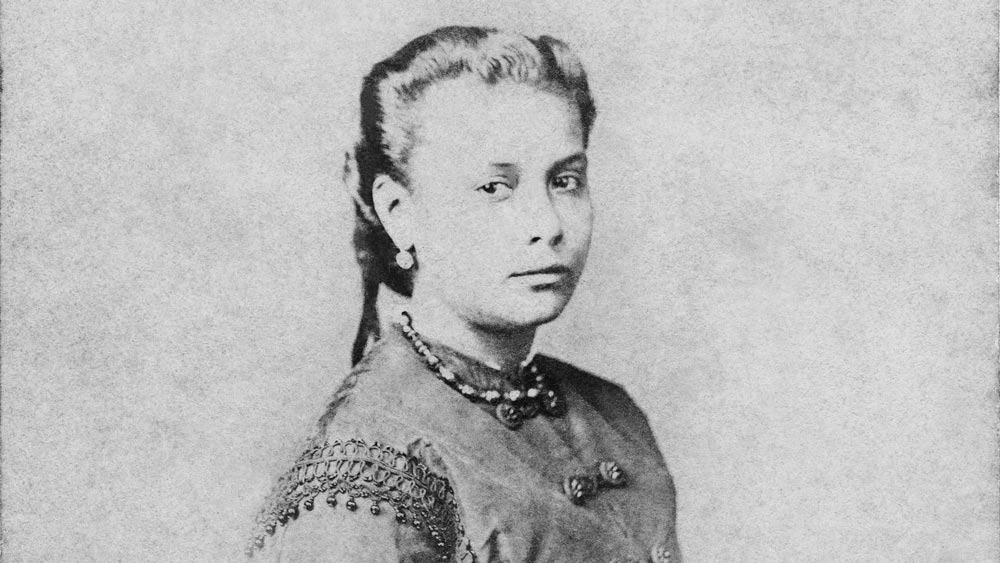
Introduction
Francisca Edwiges Neves Gonzaga (Rio de Janeiro, 17 October 1847 – Rio de Janeiro, 28 February 1935), known as Chiquinha Gonzaga, was a composer, pianist, and conductor whose trajectory spans more than five decades of musical production. A contemporary of Joaquim Callado and Ernesto Nazareth, Chiquinha occupied a singular position in the world of choro and carioca urban popular music: she was the first woman to work professionally among the chorões, breaking with the conventions of a patriarchal society that restricted women's participation in public musical life.
Her output encompasses more than 250 individual compositions across a wide range of genres — polkas, tangos, maxixes, waltzes, lundus, habaneras, fados, quadrilles, and marches — as well as scores for 77 theatrical works. Her importance extends beyond composition: Chiquinha was an abolitionist activist, a republican, and a pioneer in the defence of musicians' copyright.
Training and Musical Context
Chiquinha was born in Rio de Janeiro, the daughter of the military officer José Basileu Neves Gonzaga — who would reach the rank of field marshal and was a relative of the Duke of Caxias — and of Rosa Maria de Lima, the freed daughter of an enslaved mixed-race woman. Despite the social gap between her parents, José Basileu acknowledged Chiquinha as his legitimate daughter.
She began piano studies possibly under the maestro Elias Álvares Lobo, composer of the first Brazilian opera in Portuguese. Her first composition, Canção dos Pastores, was written at the age of eleven, with lyrics by her brother Juca.
At sixteen, in 1863, she was married by her father's order to the merchant navy officer Jacinto Ribeiro do Amaral. Her husband demanded that she give up music. After accompanying him on trips to the region of the Paraguayan War, where she witnessed violence and mistreatment, Chiquinha resolved to end the marriage at the close of the 1860s. She left home taking only her eldest son; her father disinherited her and considered her dead. From then on she lived modestly, supporting herself as a piano teacher and playing at dances. This radical decision — at a time when women were entirely dependent on their husbands — marked not only her personal biography, but the broader history of women's professional musicianship in Brazil.
Chiquinha in the World of Choro
Unlike Ernesto Nazareth, who kept his social distance from the chorões, Chiquinha was an active presence in the rodas and ensembles that defined the carioca choro world in the final decades of the Empire. Her pieces, more accessible in character, could be purchased and studied by middle-class young women for performances at saraus — which contributed to the social diffusion of the choro repertoire.
She was a member of the historic Choro do Callado, alongside Joaquim Callado. She also organized and led her own ensemble, the Grupo Chiquinha Gonzaga, formed by Antônio Maria Passos on flute, Nelson Santos Alves on cavaquinho, and Tute on seven-string guitar (violão de sete cordas). The group made recordings for Columbia (from 1911) and for Odeon (between 1913 and 1914), capturing polkas, tangos, waltzes, and habaneras.
The presence of Tute — one of the pioneers of the seven-string guitar in choro — is significant. The recordings made between 1911 and 1914 are among the earliest in which prominent baixarias (bass countermelodies) played on the guitars can be heard, documenting a practice that would become central to the language of choro accompaniment.
Musical Style
Although the piano could not follow the mobility of the pau e corda (chorões) through the city's parties and saraus, Chiquinha made a decisive contribution to bringing the instrument closer to the popular environment.
As a pianist and composer: while Ernesto Nazareth composed pieces of sophisticated virtuosity, Chiquinha's writing favoured accessibility and direct communication, supporting the wider circulation of her compositions. Though not virtuosic in the technical sense, she was an excellent pianist whose more spontaneous and natural creative approach tended to be underestimated in comparison with Nazareth's elaboration.
In musical theatre: between 1885 and 1933 she scored 77 theatrical works, bringing popular genres onto the stage and helping to legitimize choro and related genres in the theatrical environment. She was the first woman to compose the complete score for a theatrical work in Brazil.
Key Works
| Title | Genre | Notes |
|---|---|---|
| Atraente | Polka | Her first major success; published in 1877. Sold thousands of copies across multiple editions. |
| Corta-Jaca (also known as Gaúcho) | Tango-maxixe | Composed for the play Zizinha Maxixe. In 1914, First Lady Nair de Tefé performed it at the Palácio do Catete, causing a scandal and a ministerial crisis. |
| Ó Abre Alas | March | Composed in 1899 for the Cordão Rosa de Ouro. Recognized as the first Brazilian carnival march (marchinha). |
| Lua Branca | Modinha | Derived from a number in the burlesque Forrobodó (1912), which Chiquinha scored in 48 hours. |
| Sabiá na Mata | Choro | Composed specifically for a concert of one hundred guitars at the Teatro São Pedro. |
| Sultana · Catita | Polkas | Representative of her writing in the genre. |
| Plangente | Waltz | An example of her lyrical output. |
| Cubanita | Habanera | Shows the breadth of her engagement with Hispanic-derived genres. |
Musical Theatre
Between 1885 and 1933, Chiquinha scored 77 theatrical works. In 1885, with A Corte na Roça, she became the first woman to compose the complete score for a theatrical work in Brazil. In the same year she conducted an orchestra augmented by the Military Police Band during the production of A Filha do Guedes, becoming a pioneer as a woman conducting a popular orchestra in the country — the press of the time called her "Offenbach in skirts."
The play A Mulher-Homem (1885) was the first to bring maxixes, polkas, and other popular rhythms onto the stage, opening the way for choro and related genres in the theatrical environment. The enormous success of Forrobodó (1912) — more than two thousand performances across Brazil — confirmed her position as the leading composer of musical theatre of her generation.
Activism and Social Transgression
Chiquinha's trajectory is inseparable from her political commitments. She participated actively in the abolitionist campaign alongside figures such as Lopes Trovão, Quintino Bocaiúva, and José do Patrocínio. In 1888, she used the proceeds from the sale of the scores to Caramuru to purchase the freedom of the enslaved musician Zé Flauta. She took part in the Campanha do Vintém, a fund-raising effort for the liberation of enslaved people, going so far as to face the threat of arrest.
After abolition she committed herself to the republican cause. In 1917 she was one of the founders of the SBAT (Sociedade Brasileira de Autores Teatrais — Brazilian Society of Theatre Authors), becoming a pioneer in the institutional struggle for the copyright of composers and theatrical writers.
In 1886 she promoted a campaign for the rehabilitation of the guitar (violão), organizing gatherings of guitarists from different carioca neighbourhoods and mounting a concert for one hundred guitars at the Teatro São Pedro — a gesture that anticipates the recognition of the guitar as a legitimate concert instrument by several decades.
Influences and Relationships
Influences on Chiquinha:
- Elias Álvares Lobo — Her possible first piano teacher; a reference point within the Brazilian erudite tradition.
- Joaquim Callado and the chorão environment — Membership in the Choro do Callado and direct contact with the founding core of the genre.
- The world of saraus and the carioca theatre — Spaces that shaped her accessible language and her ability to reach a broad public.
Key musical relationships:
- Tute — Seven-string guitarist in the Grupo Chiquinha Gonzaga; his participation in the 1911–1914 recordings documents a formative stage of choro accompaniment.
- Antônio Maria Passos and Nelson Santos Alves — Flute and cavaquinho in the Grupo Chiquinha Gonzaga.
- Radamés Gnattali — Honoured Chiquinha in 1956 by dedicating the fourth movement of the Suíte Retratos to Corta-Jaca, placing her alongside Pixinguinha, Ernesto Nazareth, and Anacleto de Medeiros as a founding pillar of choro.
Legacy
Chiquinha Gonzaga died on 28 February 1935, on the eve of carnival, at the age of 87, in her apartment on Praça Tiradentes in Rio de Janeiro.
Her legacy operates on three dimensions. As a composer, she left more than 250 individual works and 77 theatrical scores, with pieces that remain in the active repertoire of choro and carnival. As a historical protagonist, she was the first woman to work professionally among the chorões, to compose a complete theatrical score, and to conduct a popular orchestra in Brazil — each of these "firsts" is also an act of social rupture. As an activist, her fight for abolition, for the republic, and for copyright shows an artist who understood music as a political field as much as an aesthetic one.
The Instituto Moreira Salles has held her archive since 2005, comprising more than a thousand scores — most of them in manuscript — as well as photographs, letters, librettos, and newspaper clippings, totalling more than 24,000 digitized pages. The date of her birth, 17 October, is celebrated as the National Day of Brazilian Popular Music.
Sources
- Dicionário Cravo Albin da Música Popular Brasileira — Entries for Chiquinha Gonzaga and the Grupo Chiquinha Gonzaga. Primary source for biographical data, chronology, discography, and works catalogue.
- Instituto Casa do Choro — Biographical entry and catalogue of 221 works by the composer.
- Instituto Moreira Salles — Guardian of the Chiquinha Gonzaga archive since 2005; more than a thousand digitized scores, photographs, letters, and documents.
- BITTAR, Iuri Lana. Master's dissertation (UFRJ). — Source for the context of the seven-string guitar in the Grupo Chiquinha Gonzaga and Tute's role as a pioneer of the instrument.
- TABORDA, Marcia E. "As Abordagens Estilísticas no Choro Brasileiro" [Stylistic Approaches in Brazilian Choro]. — Source for the mapping of choro groups in the early twentieth century, including the Grupo Chiquinha Gonzaga.
- CAZES, Henrique. Choro: Do Quintal ao Municipal [Choro: From the Backyard to the Concert Hall]. São Paulo: Editora 34, 1998. — Reference for the historical context of choro and Chiquinha Gonzaga's relationship with the chorões.
Suggested course
Move from editorial context into guided study with synchronized score and structured steps.
All courses
Browse the public course catalog connected to the content hubs.