Choropedia
Carolina Cardoso de Menezes - Brazilian Pianist
Carolina Cardoso de Menezes was a Brazilian pianist and composer known for her contributions to choro and samba.
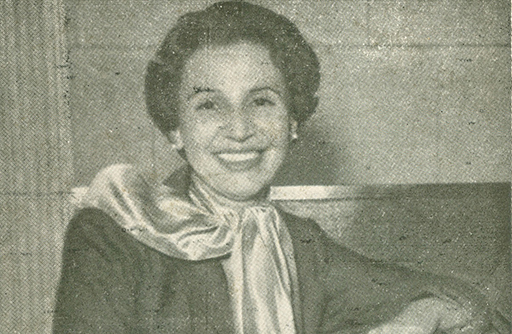
Introduction
Carolina Cardoso de Menezes (Rio de Janeiro, May 27, 1913 – Rio de Janeiro, December 31, 2000) was a Brazilian pianist, composer and arranger with a long career in choro, samba, radio and the recording industry.
Rooted in the tradition of the pianeiros (popular Brazilian pianists who played in theaters, movie houses and dance halls), she developed a language in which the piano simultaneously takes on the functions of bass, harmony, melody, countermelody and rhythm. Her career spanned more than seven decades of Brazilian music, from the earliest years of radio to the concert halls of the late twentieth century.
Formative years
Carolina was born into a family of musicians. Her father, Oswaldo Cardoso de Menezes, was a popular pianist and composer, while her mother, Mercedes Gertrudes, known as Dona Sinhá, also played piano at family gatherings.
She began playing as a child, at first by ear. At thirteen she started formal studies with Zaíra Braga and later studied with Gabriel de Almeida and Paulino Chaves. She attended the Instituto Nacional de Música (National Institute of Music), where she completed the Theory and Solfège course in 1930, and studied harmony with her cousin Newton Pádua. She also received a few lessons from Chiquinha Gonzaga, a friend of the family.
Her radio debut came in 1928, at the age of fifteen, on Rádio Sociedade do Rio de Janeiro. Two years later she joined the station professionally after winning a competition for pianists.
In 1929 she took part in the recording of the samba Na Pavuna, by Almirante and Homero Dornelas, performed by the Bando de Tangarás. In 1931 she made her first recordings as a soloist, cutting works such as Good-bye, Ela me trata bem, Comigo mesma and Eu passo.
Radio and recordings
Throughout the 1930s Carolina worked at leading Rio de Janeiro stations, among them Rádio Sociedade, Rádio Educadora, Rádio Philips, Rádio Mayrink Veiga and Rádio Club.
In 1935 she was hired by Rádio Tupi, where she worked as a soloist, an accompanist and the host of a daily program. In 1949 she became a soloist at Rádio Nacional, one of the country's most important stations during the Radio Era.
At Rádio Nacional she hosted the weekly program Carolina e seu piano for many years; its opening theme was her own composition Preludiando. She remained with the station until her retirement in 1968.
Alongside her career as a soloist, she accompanied singers and took part in numerous recording sessions, becoming a constant presence in Brazilian radio and studios for several decades.
The piano and choro
Carolina habitually described herself as a pianeira, identifying with the tradition of popular Brazilian pianists who worked in movie houses, theaters, dance halls and entertainment venues.
In her playing, the left hand takes on a fundamental role, alternating bass notes, chords and rhythmic displacements, while the right hand develops syncopated melodies, octaves, ornaments and countermelodies. Her manner of playing allowed the instrument to reproduce on its own the functions that, in a roda de choro (choro circle), would normally be distributed among several musicians.
Carolina also absorbed procedures close to stride piano, adapting the left-hand leaps to the rhythmic vocabulary of samba and choro.
Her interpretations were never limited to reproducing the printed score. Introductions, melodic variations, changes of articulation and rhythmic reorganizations were part of her way of playing, lending a personal stamp even to works by other composers.
This can be heard especially in her recordings devoted to Ernesto Nazareth. In 1952 she released Carolina Cardoso de Menezes interpreta Ernesto Nazareth and, in 1957, Carolina toca Nazareth, bringing her own language closer to the tradition of Brazilian popular piano that the composer represents.
Composer
Carolina's output spans a range of Brazilian popular genres, including choros, sambas, waltzes, fox-trots, baiões (a northeastern dance genre), boleros and marchas (carnival marches).
Among her choros are Comigo é assim, Eu sou do barulho, Expressinho, Pombo-correio, Regressando, Curió dengoso and Derrapando na Gávea.
She also composed Preludiando, used as the opening theme of her program on Rádio Nacional, as well as works such as Caboclinha, written with her father Oswaldo Cardoso de Menezes, Tudo cabe num beijo, with Oswaldo Santiago, Gibi Bacurau, Lembrança de Noel, with Armando Fernandes, and Brasil Rock.
In later work she recorded pieces such as Duas Américas and Bachianas Cariocas nº 1.
Major works
Among her compositions are:
- Comigo é assim
- Eu sou do barulho
- Expressinho
- Pombo-correio
- Regressando
- Curió dengoso
- Derrapando na Gávea
- Preludiando
- Caboclinha
- Tudo cabe num beijo
- Gibi Bacurau
- Lembrança de Noel
Selected discography
- Carolina Cardoso de Menezes interpreta Ernesto Nazareth – 1952
- Carolina toca Nazareth – 1957
- Reminiscências
- Sucessos em desfile
- Lembrando Carmen Miranda
- Carolina viaja pelas cidades do mundo
- Boite Carolina
- Tapete mágico
- Um mundo de músicas
- Carolina no samba
- Os pianeiros – 1986
- Fafá e Carolina, with Fafá Lemos – 1989
- Preludiando – 1997
Sources
- Instituto Casa do Choro. Archive and documentation on Carolina Cardoso de Menezes.
- Dicionário Cravo Albin da Música Popular Brasileira. Entry "Carolina Cardoso de Menezes."
- Instituto Piano Brasileiro. Documentation on Carolina Cardoso de Menezes and Brazilian popular piano.
- Instituto Moreira Salles. Discografia Brasileira and archive of historical recordings.
- MADEIRA, Maria Teresa. Carolina Cardoso de Menezes, a pianeira. Doctoral dissertation, Universidade Federal do Estado do Rio de Janeiro, 2016.
Suggested course
Move from editorial context into guided study with synchronized score and structured steps.
All courses
Browse the public course catalog connected to the content hubs.