Choropedia
Brazilian Tango and Its Influence on Choro
Discover how 19th century Brazilian tango influenced choro with rhythmic language and key elements.
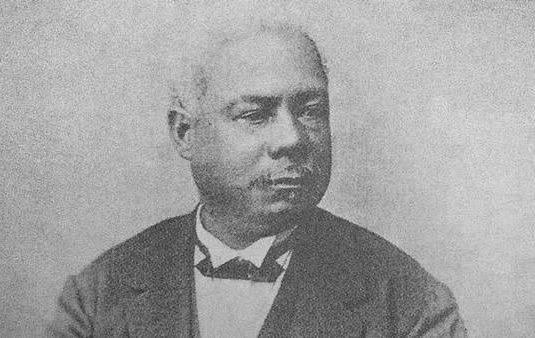
The nineteenth-century Brazilian tango as a matrix of choro: from Henrique Alves de Mesquita to its consecration with Ernesto Nazareth, its rhythmic language, its ostinatos, its bridges, the interpretive rubato, and its relationship with the maxixe.
Brazilian tango, choro, Ernesto Nazareth, Henrique Alves de Mesquita, Chiquinha Gonzaga, maxixe, ostinato, rubato, syncopation, baixaria, Brazilian music
Introduction
Before choro consolidated as a musical genre, different rhythms already circulated through the theaters, salons, music houses, and working-class neighborhoods of Rio de Janeiro. Polkas, waltzes, quadrilles, habaneras, and tangos were played, danced, and progressively transformed by Brazilian musicians.
Within this musical melting pot, the Brazilian tango (tango brasileiro) occupied a fundamental position. During the nineteenth century, it became one of the main spaces of encounter between European musical forms, Afro-Brazilian rhythms, and the particular way local musicians articulated syncopations, basses, melodies, and accompaniments.
Long before the term "choro" clearly identified a genre, many pieces that today belong to the repertoire of the chorões (choro musicians) were published as Brazilian tangos.
A Tango Different from the One We Know Today
When we speak of the Brazilian tango, we are not referring to the Argentine tango that would later become known worldwide.
The genre developed in Brazil during the nineteenth century arose from a different context. Foreign theater and dance companies presented in Rio de Janeiro numbers identified as Spanish tangos, Andalusian tangos, and habaneras. These rhythms began to be absorbed by local composers, who added to them syncopations, accents, bass movements, and ways of playing already present in Brazilian urban music.
The result was not a simple reproduction of the foreign repertoire. Gradually, a language of its own emerged.
The Brazilian tango became a music marked by its balanço (rhythmic swing), by rhythmic richness, by dialogues between melody and accompaniment, and by an interpretation that allowed great expressive freedom.
Henrique Alves de Mesquita and the Beginning of This Transformation
One of the fundamental figures in this history was Henrique Alves de Mesquita.
Mesquita was among the first Brazilian composers to draw on elements from the tangos presented by the theater companies and transform them through a Brazilian musical sensibility.
In his work, tango-habaneras and stylized tangos appear initially. As this language matured, his tangos came to display rhythmic characteristics increasingly close to what would be recognized as the Brazilian tango.
More than importing a musical form, Mesquita helped to "Brazilianize" it.
His accompaniments, syncopations, and bass movements pointed toward an urban music that was finding its own identity. This transformation opened the way for other composers, among them Chiquinha Gonzaga and, above all, Ernesto Nazareth.
Ernesto Nazareth and the Consecration of the Genre
If Henrique Alves de Mesquita was decisive for the early development of the Brazilian tango, Ernesto Nazareth was the composer who brought the genre to its highest point.
A large part of Nazareth's output was published with the designation "tango brasileiro." Within this universe are compositions that became pillars of the Brazilian instrumental repertoire, such as "Brejeiro," "Odeon," "Fon-Fon!," "Carioca," "Escorregando," "Floraux," and many others.
In Nazareth, the Brazilian tango achieved a singular combination of melodic sophistication, harmonic invention, formal clarity, and rhythmic strength.
His music occupies a very particular territory. It can be played by a pianist in a concert hall, yet it also fits perfectly into the sound of a choro regional (a traditional choro ensemble). It is written with great precision, but it demands swing, flexibility, and knowledge of the popular idiom.
Nazareth did not only compose Brazilian tangos. He created a musical universe in which the piano dialogued with the playing of the chorões, the pianeiros (popular pianists of early-twentieth-century Rio), and the popular ensembles of Rio de Janeiro.
The Brazilian Tango Within the Formation of Choro
The importance of the Brazilian tango does not end in the nineteenth century.
In the early twentieth century, composers directly connected to the consolidation of choro still used this classification. Pixinguinha, for example, called some of his compositions tangos that would later be incorporated into the repertoire of the chorões, such as "Sofres Porque Queres."
This shows that the boundaries between Brazilian tango and choro were never entirely rigid.
The names used on the scores could vary according to the period, the publisher, the composer, or the audience for whom the music was intended. More important than searching for absolute divisions is observing the musical elements that bring these repertoires together.
The Brazilian tango helped to form the rhythmic, harmonic, and interpretive vocabulary of choro. Its syncopations, its prominent basses, its introductions, and its expressive freedom remained present even when the word "choro" came to be used in a more defined way.
The Characteristic Rhythm of the Accompaniment
One of the most recognizable marks of the Brazilian tango lies in its accompaniment.
In many piano scores, the left hand presents a figure formed by a syncopation on the first beat, followed by two eighth notes on the second beat. The bass plays the low note, while the remaining notes of the chord appear as higher attacks.
On the piano, this design creates the sensation of alternation between bass and chord. On the guitars, it can be distributed between the low-register voice and the strokes of the accompaniment.
It is not merely a matter of executing a rhythmic cell correctly. The effect depends on articulation, accentuation, and the space left between the attacks.
When played in an overly straight manner, the accompaniment can lose its elasticity. When well articulated, it works like a small rhythmic mechanism, sustaining the melody without leaving it motionless.
The scores also present various variations of this pattern. Some include arpeggios, anticipations, changes in the distribution of the chords, or more active bass figures. Even with these transformations, the relationship between bass, syncopation, and chord remains an important reference for the genre.
The Bass Ostinato
Another recurring characteristic of the Brazilian tango is the use of ostinatos.
The ostinato is a short phrase repeated several times, generally in the low register. It can appear as an introduction, as a passage between sections, or as accompaniment for the beginning of the melody.
In some compositions, these basses became almost as well known as the theme itself.
This is what happens in pieces such as "Brejeiro," by Ernesto Nazareth, and "Corta-Jaca," by Chiquinha Gonzaga. The low-register design immediately establishes the character of the music and creates a foundation on which the melody begins to develop.
This conception would help prepare the ground for the future baixarias (the bass countermelodies characteristic of choro).
Three Parts and the Use of Bridges
Many Brazilian tangos, especially those by Ernesto Nazareth, present three contrasting parts.
A fairly recurrent form moves through sections A, B, and C, with repetitions and returns. However, Nazareth frequently used small bridges to lead the music from one part to another.
These bridges keep the form from seeming a simple sequence of blocks. They create expectation, reorganize the harmony, and prepare the arrival of the following section.
A bridge may link the second part to the third, lead the music back to the first, or prepare the conclusion. Even when it occupies only a few measures, it carries out an important narrative function.
The music seems to open a door, cross a harmonic corridor, and arrive at a new setting.
In the contemporary composition "Ernesto Nazareth," written in homage to the pianist, this tradition appears in a form organized in three parts, with a bridge responsible for articulating the passage to the final section.
The homage occurs not merely through superficial quotations. It is present in the very architecture of the composition.
Time That Breathes: Rubato and Interpretation
Perhaps one of the most delicate characteristics of the Brazilian tango is not fully notated in the score.
This resource is known as rubato.
In rubato, the performer flexes the tempo to highlight a phrase, a harmonic tension, or a change of character. It does not mean playing without pulse. The freedom occurs in relation to time, yet it remains tied to the musical structure.
In the Brazilian tango, this elasticity creates a kind of breathing. The music advances, hesitates, gains momentum, and returns to lean on the pulse.
For those who study the genre, the lesson is precious: the written notes and rhythms are only one part of the music. It is necessary to understand how the phrases breathe.
Accompaniment and Melody Moving Together
Another resource found in Nazareth's tangos is the rhythmic union between melody and accompaniment.
In certain passages, the accompaniment momentarily abandons its regular function and begins to perform the same rhythm as the melody. The result is a stronger collective marking, almost orchestral.
This procedure immediately changes the texture.
Instead of a melody floating over a constant base, all the instruments begin to move together. The passage gains weight, direction, and intensity.
In arrangements for choro ensembles, this effect can be achieved by the guitar, cavaquinho (a small four-string guitar), bandolim (the Brazilian mandolin), and other instruments playing coinciding attacks. It is an especially effective resource in transitions, phrase conclusions, and moments of crescendo.
From Tango to Maxixe
The Brazilian tango is also deeply connected to the emergence of the maxixe (a Brazilian urban dance and, later, a musical genre).
Initially, the maxixe was not necessarily understood as an independent musical genre. It was above all a way of dancing, a choreography applied to polkas, tangos, and other music performed in the working-class neighborhoods.
Over time, this dance came to influence musical composition and interpretation itself. Certain rhythms, accents, and ways of playing became associated with the maxixe, which gradually gained its own identity.
For this reason, Brazilian tango and maxixe frequently appear close to each other, both musically and historically.
It is not, however, a matter of claiming that every Brazilian tango is a maxixe. The two genres share elements, cross paths, and belong to the same environment of transformation in urban music, yet they have histories and characteristics that deserve to be observed with attention.
How to Recognize a Brazilian Tango?
There is no single formula capable of identifying every piece, but some elements help the listener: the presence of syncopations in the accompaniment; the alternation between basses and chords; the low ostinatos; the three-part form; the use of bridges; the rhythmic encounters between melody and accompaniment; and the flexibility of tempo in expressive passages.
Taken in isolation, none of these resources belongs solely to the Brazilian tango. The genre appears precisely in the combination of them.
It is also important to listen to different interpretations. A score played on the piano may reveal its original writing, while a recording with bandolim, cavaquinho, guitars, and pandeiro (a Brazilian frame drum) shows how this music was incorporated into the world of choro.
A Language That Remains Alive
The Brazilian tango should not be regarded merely as a historical curiosity or as an outdated stage before the emergence of choro.
Its language remains present.
It lives in the baixarias, in the syncopations of the accompaniments, in the introductions built on ostinatos, in the bridges between sections, and in the small rubatos performed by the players.
To study the Brazilian tango is to observe a moment in which the country's urban music was beginning to recognize its own voice.
Henrique Alves de Mesquita helped to begin this process. Ernesto Nazareth transformed it into a work of great depth. Chiquinha Gonzaga, Pixinguinha, and many other composers carried this universe forward.
In listening to these tangos, we hear more than a nineteenth-century genre. We hear some of the gears that set choro in motion.
Sources
CARRILHO, Maurício. Lecture given in the guitar course at the Escola Portátil de Música. Rio de Janeiro, [2020]. Author's class notes.
INSTITUTO CASA DO CHORO. Score collection of the Jacob do Bandolim Research Center. Rio de Janeiro. Available at: https://acervo.casadochoro.com.br. Accessed: 13 June 2026.
INSTITUTO MOREIRA SALLES. Ernesto Nazareth 150 anos. Coordination: Alexandre Dias, Paulo Aragão, and Bia Paes Leme. Rio de Janeiro, 2012. Available at: https://www.ernestonazareth150anos.com.br. Accessed: 13 June 2026.
Suggested course
Move from editorial context into guided study with synchronized score and structured steps.
All courses
Browse the public course catalog connected to the content hubs.