Choropedia
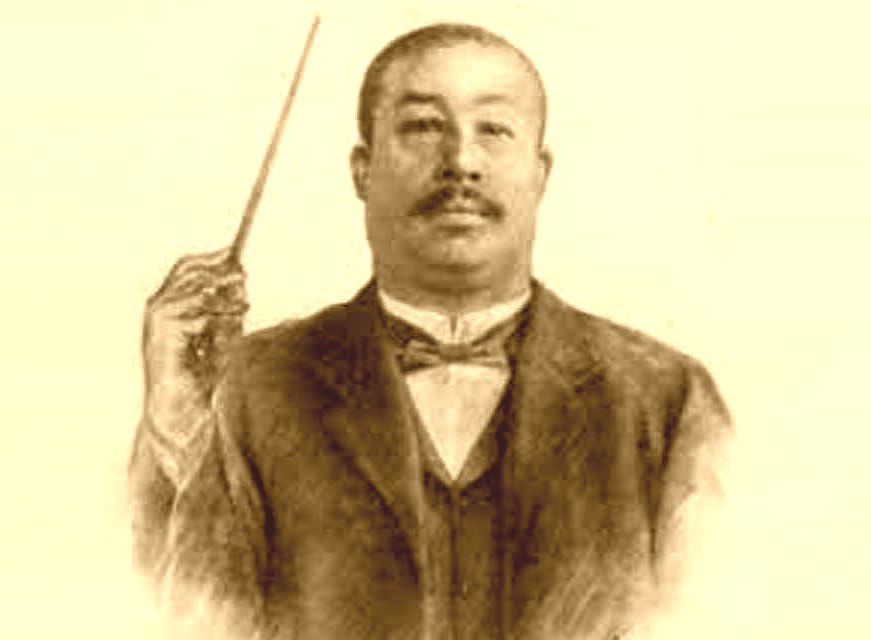
Anacleto de Medeiros - Brazilian Composer
Explore Anacleto de Medeiros, a key figure in the choro genre and Brazilian urban music.
Introduction
Anacleto Augusto de Medeiros (Paquetá, Rio de Janeiro, 13 July 1866 – Paquetá, 14 August 1907) was a Brazilian composer, conductor, and instrumentalist — one of the decisive figures in instrumental music in Rio de Janeiro at the turn of the twentieth century. His career is linked above all to the Fire Brigade Band of Rio de Janeiro (Banda do Corpo de Bombeiros), which he organized in 1896 and transformed into the musical benchmark of his era, and to his participation in some of the earliest commercial recordings made in Brazil, for the Casa Edison label in 1902, which gave the urban carioca repertoire a historical reach unusual for the period.
Anacleto's place in choro is singular: he was not merely an important composer of his generation, but a mediator between worlds that the historical narrative often holds apart — the wind band and the roda de choro, written composition and oral practice, ensemble discipline and the rhythmic looseness of urban carioca music. Radamés Gnattali placed him, alongside Pixinguinha, Ernesto Nazareth, and Chiquinha Gonzaga, among the four seminal figures of urban carioca music honoured in the Suíte Retratos (1956) — an eloquent acknowledgement of his enduring place in the tradition.
Training and Musical Context
The natural son of a freed enslaved woman, Anacleto began studying music at the age of nine with the Band of the Arsenal de Guerra (Arsenal of War) in Rio de Janeiro, under the guidance of the maestro Antônio dos Santos Bocot, composer and conductor of the institution. He was working as a typographer when he enrolled in the Conservatório de Música, where he graduated in 1886 — a contemporary of Francisco Braga — by which time he already had command of several wind instruments. Secondary biographical sources record a particular affinity for the soprano saxophone and a teaching diploma in clarinet, details not explicitly stated in the more concise institutional sources.
Before assuming the directorship of the Fire Brigade Band, Anacleto had already been establishing himself as a composer and organizer of instrumental ensembles. His name is associated with the Clube Musical Guttemberg, the Sociedade Recreio Musical Paquetaense, and civilian bands attached to factories in Bangu, Macacos, and Piedade. This trajectory reveals a musician of solid training, fully embedded in the popular musical life of the city and especially skilled in writing for and conducting wind ensembles.
In 1896, according to biographical tradition, Lieutenant-Colonel Eugênio Jardim invited him to organize and direct the Fire Brigade Band. The ensemble Anacleto built was described by the Casa do Choro as the finest band in the city, and it brought together musicians of considerable importance from the turn of the century, among them Irineu de Almeida, who would later become the young Pixinguinha's primary teacher. After Anacleto's death, the conductorship passed to Albertino Pimentel, a direct continuation of the lineage he had established.
In 1902, under his baton, the Fire Brigade Band took part in some of the earliest commercial recordings made in Brazil at the Casa Edison — a moment in which choro acquired a recorded existence, with all the consequences that entailed for the preservation and dissemination of the genre.
Musical Style
The work of Anacleto de Medeiros reveals a distinctive synthesis between the discipline of wind-band writing and the rhythmic flexibility of popular carioca music. His preserved catalogue consists primarily of polkas, schottisches, waltzes, dobrados (march-like pieces), and quadrilhas (quadrilles), alongside pieces that circulated in the choro world — reflecting a broad engagement with the most important urban dance genres of his time.
Melodic language: In the preserved repertoire, the melodies tend to be direct, singable, and clearly delineated, with a strong sense of phrase and good idiomatic adaptation to wind instruments. Where Nazareth would have chosen ornamentation, Anacleto's writing suggests clarity and balance — and it is precisely this transparency that appears to account for the immediate communicative power of pieces such as Três Estrelinhas.
Harmonic language: In general terms, Anacleto's harmony is rooted in the functional solidity of the nineteenth-century tradition, with diatonic progressions and straightforward modulations to the relative major or minor and to the dominant. The apparent simplicity is not a limitation: it supports the rhythmic swing and fluency of his dance pieces with precision, serving the purpose efficiently.
Rhythm and syncopation: The preserved repertoire suggests that, in his writing for wind band, European-derived material acquires a distinctly local inflection and rhythmic elasticity. The world of the chorões does not appear as something separate from the tradition of military and civic bands, but as a Brazilian extension of it — and this mediation was decisive in establishing a distinctively urban popular accent.
Instrumentation and band writing: The writing for wind sections, with structured countermelodies and an awareness of collective sound, distinguishes Anacleto's output from composers of choro who wrote for flute, guitar (violão), and cavaquinho in domestic salon settings. This texture gave his compositions a sonic projection that sets them apart and that was important in bringing choro to public performance contexts.
Typical forms: Schottisches, polkas, waltzes, dobrados, and quadrilhas — all within the binary form with repeated sections and trio inherited by the entire classical choro generation.
Key Works
| Title | Genre | Notes |
|---|---|---|
| Três Estrelinhas | Polka (2/4) | One of his most enduring works; remains active in the instrumental repertoire. Served as the thematic basis for the third movement of Radamés Gnattali's Suíte Retratos. |
| Iara / Rasga o Coração | Schottisch (2/2) | One of his most emblematic compositions; exemplifies the circulation of his music between instrumental piece and vocal song. Treated by the Casa do Choro as a central work in his catalogue. |
| Santinha | Schottisch | Representative of his more lyrical vein and the consistent presence of the schottisch in his output. |
| Benzinho | Schottisch | Festive in character; confirms the importance of dance repertoire in his work. |
| Não me olhes assim | Schottisch (2/2) | Representative of his clear and communicative writing style. |
| Cabeça de Porco | Polka (2/4) | A direct insertion into the urban instrumental repertoire of the period. |
| Os Boêmios / O Boêmio | Maxixe (2/4) | Shows the circulation of his music through genres neighbouring choro and the Brazilian tango. |
| A Despedida | Waltz (3/4) | The more cantabile and sentimental side of his output, distinct from the rhythmic character of the polkas and schottisches. |
A Listening Guide
"Três Estrelinhas" is among Anacleto's works with the strongest continued presence in the active choro repertoire and offers a useful entry point into his style. Catalogued as a polka in 2/4, what strikes the listener is the apparently simple combination of a direct melody with a rhythmic swing (balanço) that distinguishes it immediately from a European polka played literally. The syncopation appears naturally, and the melody carries a faint melancholic quality that contrasts with the festive character of the original dance form. This is the "Brazilian accent" that Anacleto introduced into European forms — and that Gnattali's Suíte Retratos recognized, decades later, as material worthy of orchestral tribute. Listeners wishing to hear the same process applied to a schottisch will find a useful contrast in Iara / Rasga o Coração (2/2), which operates within the same musical language in a different genre.
Influences and Relationships
Influences on Anacleto:
- Antônio dos Santos Bocot and the Arsenal de Guerra Band — His first teacher transmitted the technical mastery of wind instruments and the discipline of band writing that would define Anacleto's professional practice.
- Conservatório de Música (graduated 1886) — Formal training completed his technical and harmonic foundation, giving Anacleto compositional and arranging tools that few chorões of his generation possessed.
- The carioca civilian band environment — The Clube Musical Guttemberg, the Sociedade Recreio Musical Paquetaense, and the factory bands were the laboratory in which Anacleto developed, before the Fire Brigade Band, his particular approach to conducting and composing for wind ensembles.
Musicians and traditions influenced by Anacleto:
- Irineu de Almeida — Played in the Fire Brigade Band under Anacleto's direction and later became the young Pixinguinha's primary teacher, transmitting repertoire and techniques that passed through Anacleto's tradition.
- Villa-Lobos — According to documentation from the Casa do Choro, themes by Anacleto reappear in works by Villa-Lobos. The precise nature of these appropriations remains a matter of ongoing musicological inquiry.
- Radamés Gnattali — The Suíte Retratos (1956) honoured four seminal figures of urban carioca music; Anacleto was the third, with the movement based on Três Estrelinhas — a signal that his work was understood, decades after his death, as a founding element of the Brazilian musical tradition.
- Albertino Pimentel — Assumed the conductorship of the Fire Brigade Band after Anacleto's death, maintaining the continuity of the lineage he had built.
Legacy
The legacy of Anacleto de Medeiros can be read on three levels.
The first is compositional: several of his pieces continue to circulate in rodas, bands, recordings, and projects dedicated to recovering the historical choro repertoire. Três Estrelinhas and Iara remain living presences, not merely entries in reference works.
The second is institutional: his leadership of the Fire Brigade Band gave shape and prestige to a distinctly Brazilian way of performing and organizing popular music for wind ensembles. The Casa do Choro describes the band he built as the finest in the city, and the continuity he left behind — in musicians, repertoire, and a culture of ensemble playing — persisted long after his death.
The third is historical: his participation in the Casa Edison recordings of 1902 placed choro among the first Brazilian urban genres to acquire a recorded existence. This pioneering contribution was decisive for the preservation of a repertoire that, without the phonographic record, would have remained exclusively oral.
Anacleto died in Paquetá — the same island where he was born — at the age of forty-one. The symmetry of origin and death on the same island closes, with a neatness that life rarely offers, the trajectory of a musician who travelled the improbable distance from his mother's enslavement to the centre of Brazilian musical history.
Sources
- Instituto Casa do Choro — Entry "Anacleto de Medeiros" and text "150 anos do maestro Anacleto de Medeiros." Primary source for biographical data, work catalogue, and genre classifications.
- Musica Brasilis — musicabrasilis.org.br: sheet music archive for Anacleto de Medeiros.
- Rádio Batuta / Instituto Moreira Salles — Suíte Retratos, 3rd movement – Anacleto de Medeiros: documentation of the relationship between Três Estrelinhas and Gnattali's work.
- CAZES, Henrique. Choro: do Quintal ao Municipal [Choro: From the Backyard to the Concert Hall]. São Paulo: Editora 34, 1998. — Contextualizes the Fire Brigade Band and Anacleto's role in the dissemination of choro.
- SILVA, Marília T. Barboza da; OLIVEIRA FILHO, Arthur L. de. Filho de Ogum Bexiguento. Rio de Janeiro: FUNARTE, 1979. — Documents Irineu de Almeida's connection to the Fire Brigade Band and the chain of transmission to Pixinguinha.
- Instituto Moreira Salles — Historical recordings archive, including Casa Edison recordings by the Fire Brigade Band from 1902.
Note: Genre classifications follow the cataloguing of the Casa do Choro, which represents the most rigorous reference source currently available for Anacleto's catalogue. Discrepancies found in other sources should be verified against this primary archive.
Suggested course
Move from editorial context into guided study with synchronized score and structured steps.
All courses
Browse the public course catalog connected to the content hubs.