Choropedia
Alexandre Gonçalves Pinto – The 'Animal'
Learn about Alexandre Gonçalves Pinto, a key figure in choro music history.
Introduction
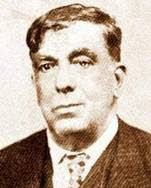
Alexandre Gonçalves Pinto, known as Animal (Rio de Janeiro, 1870–1950), was a singer, cavaquinho player (the cavaquinho is a small four-string instrument akin to the ukulele), guitarist, and postman. He was an intense presence in Rio's musical life between the end of the 19th century and the first decades of the 20th, taking part in balls, family gatherings, and rodas de choro (choro circles, where musicians gather to play together).
His main contribution to the history of Brazilian music was the book O Choro: reminiscências dos chorões antigos ("Choro: Reminiscences of the Old Chorões"), published in 1936. Written from the author's own experiences and memories, the volume became one of the fundamental sources for the knowledge of the first generations of chorões (players of choro, the traditional Brazilian instrumental genre that emerged in late 19th-century Rio de Janeiro) and of the musical practices of Rio de Janeiro at that time.
The World of the *Chorões*
Like many musicians of his time, Gonçalves Pinto combined his artistic activity with another trade. He worked as a postman in a context in which public employees, workers, and artisans regularly took part in musical ensembles, often without depending on music professionally.
Choro developed above all in spaces of conviviality: homes, neighborhood parties, recreational societies, balls, and community gatherings. Before the popularization of radio and the expansion of the recording industry, an instrumentalist's reputation was built by constant presence in those environments and by direct recognition from musicians, hosts, and audiences.
The rodas brought together people of different professions and social conditions. Some participants achieved national visibility, while others remained known only in the neighborhoods and groups they frequented. Many were identified by nicknames, such as Benigno Lustrador, Leopoldo Pé de Mesa, and Josino Facão.
These gatherings involved more than musical performance. Food, drink, and conversation were part of the experience, and musicians frequently played in exchange for the hospitality offered by the hosts. In Animal's memories, the music appears integrated into social life, into bonds of friendship, and into everyday celebrations.
"O Choro: reminiscências dos chorões antigos"
The book gathers approximately 400 profiles of figures tied to the world of choro between 1870 and 1936. Gonçalves Pinto combines biographical information, personal recollections, comments on musical skills, and episodes that reveal the personality and reputation of those portrayed.
Alongside names such as Ernesto Nazareth, Chiquinha Gonzaga, and Anacleto de Medeiros, there appear amateur instrumentalists, accompanists, party organizers, hosts, and frequenters of the rodas. The author also includes musicians considered lacking in skill, called at the time facões (literally "large knives," a period slang for weak instrumentalists).
That choice shows that his intention was not simply to build a gallery of great composers and performers. The book preserves the memory of a broad community, formed by all those who, in one way or another, kept the gatherings, the repertoire, and the musical relationships in circulation.
A Collective Musical Practice
In the world described by Gonçalves Pinto, the word "choro" did not indicate only a musical genre. It could designate the ensemble of musicians, the roda itself, the social gathering, or a particular way of interpreting different repertoires.
Polcas, valsas (Brazilian waltzes), quadrilhas (Brazilian square-dance form), schottisches, maxixes (an urban Afro-Brazilian dance form of the late 19th century), and Brazilian tangos coexisted at the same parties and were transformed by the forms of accompaniment, ornamentation, and interaction developed by the chorões.
The continuity of that practice depended as much on the most prominent instrumentalists as on the amateur musicians and on the people who offered space for the meetings. Even participants with simple or patched-up instruments could carry out important functions in their communities.
Many workers knew how to read and write music, copied compositions, organized handwritten notebooks, and exchanged scores. This circulation helped preserve works that predated the consolidation of commercial recordings and later provided important information for the identification of authors and repertoires of the 19th century.
In this way, O Choro records not only pieces of music or individual biographies, but a network of creation, interpretation, transmission, and cultural preservation.
The City and Its *Rodas*
Animal's memories reveal a musical life spread across different regions of Rio de Janeiro. The chorões moved to play in neighborhoods and localities such as Jacarepaguá, Botafogo, Gávea, the Zona Norte, and Paquetá.
The performances took place both in the homes of influential families and in suburban houses and parties organized by workers. The same repertoire could circulate through distinct social environments, adapting to the musicians and instruments available on each occasion.
The city, therefore, does not function only as a setting. Its neighborhoods, routes, homes, and spaces of sociability take a direct part in the formation of the musical environment narrated by the author.
Animal's Language
Alexandre Gonçalves Pinto's writing is spontaneous and close to orality. The original edition presents grammatical irregularities, typographical problems, slang, and popular expressions of the Rio de Janeiro of his time.
Although those characteristics may feel strange to today's reader, they make the book a singular document of the language, humor, and social codes of that milieu. The profiles do not follow a rigorous model: information about professions, instruments, and places frequented coexists with recollections, judgments, and personal episodes.
This informality gives the book the closeness of someone who wrote about people and situations he had known directly.
Historical Importance
When he published O Choro, Gonçalves Pinto was a retired postman without visibility in intellectual or journalistic circles. Still, he decided to record the memory of the musicians with whom he had shared his life over decades.
His initiative was decisive because many of the figures portrayed left no recordings, no published scores, and no biographical records. Without the book, a considerable part of their names, nicknames, professions, and trajectories would have disappeared.
The value of O Choro: reminiscências dos chorões antigos lies as much in the number of figures documented as in the point of view of its author. Gonçalves Pinto did not observe that universe from a distance: he wrote as a member of a musical community in which he had taken part and whose memory he helped to preserve.
Sources
The following sources were used as main references for the preparation of this article:
- Instituto Casa do Choro. Biographical entry "Pinto, Alexandre Gonçalves." — Information on birth, death, professional activities, instruments, engagement with the chorões, and the publication of O Choro.
- Instituto Moreira Salles. "A história do Animal: quatro perguntas para Pedro Aragão." — Information on the social context of the musicians, on Gonçalves Pinto's writing, on the repertoires, on the circulation of the rodas, and on the historical importance of his work.
- PINTO, Alexandre Gonçalves. O Choro: reminiscências dos chorões antigos. Rio de Janeiro, 1936.
- ARAGÃO, Pedro. O baú do Animal: Alexandre Gonçalves Pinto e O Choro. Rio de Janeiro: Folha Seca, 2013.
Suggested course
Move from editorial context into guided study with synchronized score and structured steps.
All courses
Browse the public course catalog connected to the content hubs.