Choropedia
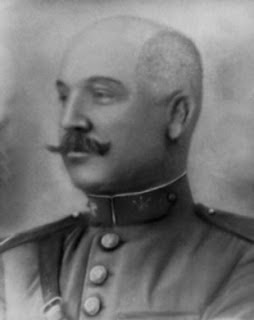
Albertino Inácio Pimentel
Learn about Albertino Inácio Pimentel, a key figure in Brazilian choro music.

Introduction
Albertino Inácio Pimentel (Rio de Janeiro, April 12, 1874 — Rio de Janeiro, August 6, 1929), known as Carramona, was a cornetist, composer, and bandleader tied to the world of the bandas de música (Brazilian civic and military brass bands), the ranchos carnavalescos (Rio's traditional carnival groups combining music, dance, costume, and pageantry), and the rodas de choro (choro circles, where musicians gather to play together). His trajectory unfolded in Rio de Janeiro between the era of Anacleto de Medeiros and the consolidation of Pixinguinha's work, and it helped ensure the continuity of Rio's musical tradition at a decisive moment in its history.
His importance to choro (the traditional Brazilian instrumental genre that emerged in late 19th-century Rio de Janeiro) is tied to three dimensions: his role as first cornet, deputy conductor, and later bandleader of the Banda do Corpo de Bombeiros do Rio de Janeiro (the Rio de Janeiro Fire Brigade Band), one of the foundational ensembles of the early Brazilian recording industry; an extensive compositional output, with more than seventy works spanning polcas, valsas (Brazilian waltzes), schottisches, quadrilhas (Brazilian square-dance form), mazurcas, dobrados (Brazilian march form for band), and choros; and an intense circulation between bands, carnival ranchos, and instrumental choro groups. In this triple presence (instrumentalist, bandleader, and composer), Carramona occupies a position of reference within the collective school of professional musicians that prepared the ground for the following generation.
Training and Musical Context
Albertino Pimentel began his musical training in the band of the Colégio dos Meninos Desvalidos de Vila Isabel (a Rio institution for underprivileged boys), a school that played an important role in training instrumentalists who found in the bands a possibility of musical education and professional insertion. Among the musicians formed in that environment was also Cândido Pereira da Silva, known as Candinho Trombone.
At the turn of the 20th century, the bandas functioned as centers of practical training. Their members had to master music reading, tuning, articulation, dynamics, and ensemble performance. Many of these instrumentalists simultaneously moved through theaters, public festivities, dance halls, carnival ranchos, and rodas de choro — and Carramona belongs to that generation of versatile musicians, formed in the collective rigor of the band and able to circulate through different environments of Rio's popular music.
After playing in different ensembles, he joined, in 1900, the Banda do Corpo de Bombeiros do Rio de Janeiro. He came to occupy the posts of first cornet and deputy conductor under the direction of Anacleto de Medeiros. That position indicates that, beyond acting as an instrumentalist, he already took on responsibilities related to the organization and musical direction of the group. With Anacleto's death in 1907, Carramona took over the band's direction — a choice that signaled the recognition he had already earned as a musician and deputy conductor, and that placed him at the head of an institution central to the meeting of popular repertoire, concert music, dobrados, urban dances, and compositions by the chorões (players of choro).
Alongside his work with the band, Carramona was tied to the world of the carnival ranchos, especially to the Ameno Resedá, of which he was an assiduous participant and for which he composed several pieces. The ranchos brought together music, dance, costume, storylines, and organized presentations — for composers, they represented an important space of creation and circulation, requiring works suited to the parades, staged scenes, and instrumental formations of these groups. He kept friendships with musicians such as Irineu de Almeida, Frederico de Jesus, and Captain João Jupyaçara Xavier, whose names run through his compositions and dedications.
Musical Style
Albertino Pimentel's style is defined by the meeting of writing for band, the language of Rio's chorões at the turn of the century, and a taste for the urban dances circulating in the city. Some of his most characteristic traits are:
The bridge between the band and the roda: This is the central mark of Carramona's language. His training and professional activity in the Banda do Corpo de Bombeiros gave his catalog the sonic density of wind ensembles, with dobrados and pieces intended for large formations. At the same time, many of his compositions circulated in smaller groups (flute, cavaquinho — a small four-string instrument akin to the ukulele — guitars, saxophone, trombone), revealing the closeness between writing for band and the instrumental language cultivated by the chorões.
Melodic language: The melodies work with the clear, singable design typical of the urban dances of the late 19th century, with well-articulated phrases and a taste for the expressive singing of wind instruments. There is room for ornamentation, variations, and melodic responses that translate the environment of the roda onto the band's printed page.
Harmonic language: The harmony works with the tonal vocabulary typical of the polcas, valsas, and schottisches of the turn of the century (dominants, modulations to neighboring keys, clear cadences), without gratuitous elaboration. The treatment is that of Rio's chorões of his generation, marked by clarity of motion and by functionality in the contexts of dance and parade.
Rhythm and syncopation: The characteristic pulse of choro manifests itself in syncopated accentuation, in melodic ornamentation, and in the rhythmic accompaniment proper to the Rio school of the turn of the century. Even when working with forms inherited from the European repertoire — polca, valsa, schottisch, mazurca — Carramona imprints on them the interpretive treatment developed in Rio de Janeiro.
The schottisch as an authorial signature: The constant presence of the schottisch in his work is particularly significant. The genre, which would later be associated with the Brazilian xote (a Northeastern Brazilian dance form derived from the schottisch), was widely cultivated by Rio's chorões at the turn of the century, and Carramona belongs to a generation of composers in which the schottisch occupied a central place, alongside the polca and the valsa. Works such as Botão de rosa, Queixas, and Sorriso de Judite attest to this line of force.
Instrumentation and texture: His output moves between writing for large wind ensembles — with dobrados and pieces intended for the bands — and compositions suited to the instrumental groups of choro. The preserved phonographic records show his music performed by full bands, by ensembles of flute, cavaquinho, and guitars, and by formations that include winds such as saxophone and trombone.
Typical forms: The catalog is dominated by the dance forms that were part of the chorões' repertoire at the turn of the 19th and 20th centuries: polcas, valsas, schottisches, quadrilhas, mazurcas, dobrados, and pieces identified directly as choro. This formal diversity is characteristic of the generation that bridged the school of Anacleto and the language consolidated by Pixinguinha.
Innovations and distinctive aspects: Carramona's most singular contribution lies in his position as an articulator between the world of the band and the world of the roda. His work shows that these two spheres — often read separately in the historiography of choro — were deeply interconnected at the turn of the century, and that the instrumental language of Rio's chorões fed both on the rigor of the bands and on the invention of the rodas.
Important Works
Below is a selection of compositions representative of Albertino Pimentel's catalog, spanning polcas, valsas, schottisches, choros, and dobrados:
| Title | Genre | Notes |
|---|---|---|
| Fantasia ao luar | Polca | Received verses by Catulo da Paixão Cearense and came to circulate as the modinha (sentimental Luso-Brazilian song form) Templo ideal. |
| Mimasinha | Valsa | Recorded by the Banda da Casa Edison in 1904, one of the earliest known phonographic records of his work. |
| Jurandy | Choro-polca | One of Carramona's compositions recorded in the early years of the recording industry. |
| Chora, Jesus | Choro | Tribute to the flutist and copyist Frederico de Jesus. |
| Choques e cheques | Choro | Part of the repertoire recovered in the collection Princípios do Choro. |
| Botão de rosa | Schottisch | One of the composer's pieces that remained in the chorões' repertoire. |
| Queixas | Schottisch | Recorded in the Princípios do Choro collection. |
| Raios de luar | Valsa | An example of the composer's valsa output. |
| Capitão Lustosa | Dobrado | Recorded by the Banda do Corpo de Bombeiros in 1909. |
| Jurema | Polca | Recorded by the Banda do Corpo de Bombeiros under the direction of Albertino Pimentel, in 1910. |
| Recorda-te | Valsa | Recorded by the Banda do Corpo de Bombeiros in 1912. |
| Albertina | Polca | Recorded by the Grupo Lulu O Cavaquinho in 1912, with flute, cavaquinho, and guitar. |
| Sorriso de Judite | Schottisch | Recorded by the Grupo do Pimentel in 1922, with guitar, cavaquinho, saxophone, and trombone. |
| Diva | Instrumental piece | Dedicated to the daughter of the flutist Frederico de Jesus. |
| Jupyaçara | Schottisch | Title tied to his friendship with Captain João Jupyaçara Xavier. |
Musical Example
Fantasia ao luar is the most useful piece for introducing the listener to Albertino Pimentel's work and to the typical circulation of instrumental compositions of that generation. Recorded as a polca, the piece began to circulate in recordings by different formations already in the first years of the 20th century, showing how an instrumental composition could take on new functions: it received verses by Catulo da Paixão Cearense and came to be known as Templo ideal, recorded by Mário Pinheiro in 1910, with guitar accompaniment, in the form of a modinha. This trajectory — from instrumental polca to sung modinha — synthesizes one of the fundamental dynamics of the chorões' repertoire at the turn of the century, in which pieces moved between genres, functions, and formations.
To hear Carramona in his role as bandleader-composer, the path is through the recordings of the Banda do Corpo de Bombeiros made under his direction, such as the dobrado Capitão Lustosa (1909), the polca Jurema (1910), and the valsa Recorda-te (1912). In these recordings, his work appears in the formation for which it was originally conceived, with the full sonic density of the winds.
Influences and Connections
Influences on Carramona:
- Anacleto de Medeiros — Bandleader and composer under whose direction Carramona worked as first cornet and deputy conductor in the Banda do Corpo de Bombeiros. Major reference of his professional formation and of the tradition of the bandas de música in Rio de Janeiro.
- The tradition of the bandas de música — The environment of the late 19th-century bands, with their demands of reading, tuning, articulation, and ensemble performance, formed Carramona's technical rigor and sonic vocabulary.
- The repertoire of Rio's chorões at the turn of the century — Polcas, valsas, schottisches, mazurcas, and quadrilhas in circulation in Rio de Janeiro, with the interpretive treatment developed by the chorões.
Dialogues and partnerships:
- Irineu de Almeida — Instrumentalist and composer, close friend, and part of the same network of musicians tied to the bands and to Rio's chorões in the early 20th century.
- Frederico de Jesus — Flutist and copyist honored in the choro Chora, Jesus; his daughter received the dedication of the piece Diva.
- Captain João Jupyaçara Xavier — Friend to whom Carramona presented, on January 1, 1912, a notebook of handwritten compositions — evidence of the circulation of the repertoire among musicians through personal copies, notebooks, and dedications. Jupyaçara's name appears as the title of a schottisch in his catalog.
- Catulo da Paixão Cearense — Poet who added verses to Fantasia ao luar, turning the instrumental polca into the modinha Templo ideal.
- Ameno Resedá — Carnival rancho of which Carramona was an assiduous participant and for which he composed several pieces.
Performers and successors:
- Banda do Corpo de Bombeiros do Rio de Janeiro — Ensemble that consolidated the circulation of his work on record and of which he himself was bandleader.
- Banda da Casa Edison, Grupo do Malaquias, Grupo Lulu O Cavaquinho, Grupo do Pimentel — Ensembles that recorded his work in the first decades of the 20th century.
- Mário Pinheiro — Singer who recorded Templo ideal (the modinha version of Fantasia ao luar) in 1910.
- Maurício Carrilho and the Princípios do Choro collection — Responsible, in 2002, for the systematic recovery of Carramona's repertoire within contemporary choro, with a volume entirely dedicated to his compositions.
Circulation context:
- He worked in the fundamental environments of Rio's popular music at the turn of the 19th and 20th centuries: bandas de música, ranchos carnavalescos, rodas de choro, theaters, public festivities, dance halls, and the earliest recordings of the Brazilian phonographic industry.
- His work circulated through scores, handwritten notebooks, personal dedications, and records, reflecting the characteristic modes of transmission of the repertoire in his time.
Legacy
Albertino Pimentel died in Rio de Janeiro on August 6, 1929, at fifty-five. Although he occupied prominent positions in his time — as successor to Anacleto de Medeiros at the head of the Banda do Corpo de Bombeiros and as the composer of an extensive body of work — his name received less attention in later narratives of Brazilian music than that of some of his contemporaries.
The preservation of manuscripts, scores, and records nevertheless makes it possible to reconstruct a trajectory of intense activity. Carramona was a band instrumentalist, a bandleader, a composer tied to carnival, a participant in the rodas de choro, and an author present in the first decades of Brazilian phonography. His work helps us understand the collective nature of the school of Rio's chorões at the turn of the century — an environment in which professionals trained in the bands moved simultaneously through theaters, ranchos, rodas, and recording studios.
His contribution to the history of choro should be understood less as an isolated break and more as an essential continuity. Carramona belonged to a generation that received the inheritance of Anacleto de Medeiros, Chiquinha Gonzaga, and Ernesto Nazareth and prepared part of the musical environment in which Pixinguinha and other composers of the following decades would come of age. To acknowledge him is also to acknowledge that the history of choro is organized not only by great individual names, but by a network of professional musicians who ensured the circulation, transmission, and renewal of the repertoire.
In 2002, his work received an album entirely dedicated to his compositions within the collection Princípios do Choro, released by Acari Records and Biscoito Fino. The repertoire includes pieces such as Chora, Jesus, Coralina, Queixas, Mimosa, Diva, Neréa, Raios de luar, Choques e cheques, Botão de rosa, Jurandy, Marília, Albertina, Sempre-viva, Pérola, and Convidativa. This systematic recovery broadens the understanding of the period between Anacleto de Medeiros and Pixinguinha, and returns to the repertoire of contemporary choro works that had spent decades in restricted circulation.
Carramona should therefore be recognized as one of the musicians who ensured the continuity of the tradition of the bands, took part in the formation of the chorões' repertoire, and helped guide this music into the era of recordings.
Reference Recordings
Albertino Pimentel's work survives in recordings made throughout the 20th century, both by ensembles of his own time and in later recovery efforts:
- Banda da Casa Edison. Recording of the valsa Mimasinha, 1904 — one of the earliest known phonographic records of his work.
- Mário Pinheiro. Recording of Templo ideal (the modinha version of Fantasia ao luar), with guitar accompaniment, 1910.
- Banda do Corpo de Bombeiros do Rio de Janeiro. Recordings under the composer's own direction, including the dobrado Capitão Lustosa (1909), the polca Jurema (1910), and the valsa Recorda-te (1912).
- Grupo Lulu O Cavaquinho. Recording of Albertina, with flute, cavaquinho, and guitar, 1912.
- Grupo do Pimentel. Recording of the schottisch Sorriso de Judite, with guitar, cavaquinho, saxophone, and trombone, 1922.
- CARRILHO, Maurício. Princípios do Choro, volume 5. Acari Records / Biscoito Fino, 2002. — Album entirely dedicated to the compositions of Albertino Pimentel, with pieces such as Chora, Jesus, Coralina, Queixas, Mimosa, Diva, Neréa, Raios de luar, Choques e cheques, Botão de rosa, Jurandy, Marília, Albertina, Sempre-viva, Pérola, and Convidativa.
Sources
The following sources are relevant to the study of Albertino Pimentel and the musical context in which he worked:
- Instituto Casa do Choro. Biographical entry and catalog of works by Albertino Pimentel. — Central documentation on his life, work, and trajectory.
- Instituto Moreira Salles. Portal da Discografia Brasileira, biographical and phonographic records of Albertino Pimentel. — Reference for the phonographic records and for the context of the early recording industry in Brazil.
- PINTO, Alexandre Gonçalves. O Choro: reminiscências dos chorões antigos. 2nd ed. Rio de Janeiro: Funarte, 1978. — Reference source on the generation of Rio's chorões of the early 20th century, written by a contemporary of the period.
- VASCONCELOS, Ary. Panorama da música popular brasileira na Belle Époque. Rio de Janeiro: Livraria Santana, 1977. — Panoramic study of the period in which Carramona worked.
- CARRILHO, Maurício. Princípios do Choro, volume 5. Acari Records / Biscoito Fino, 2002. — Phonographic record and editorial material associated with the recovery of the composer's work.
- ESTEVAM JÚNIOR, Osmário; VERZONI, Marcelo. "O Schottisch no Brasil no fim do século XIX." Anais do 15º Colóquio de Pesquisa do PPGM/UFRJ, 2020. — Study on the genre that occupies a significant place in Carramona's catalog.
Suggested course
Move from editorial context into guided study with synchronized score and structured steps.
All courses
Browse the public course catalog connected to the content hubs.