Choropedia
Abel Ferreira: A Central Figure in Choro
Discover the life and work of Abel Ferreira, a key figure in Brazilian choro, known for his clarinet and saxophone compositions.
Introduction
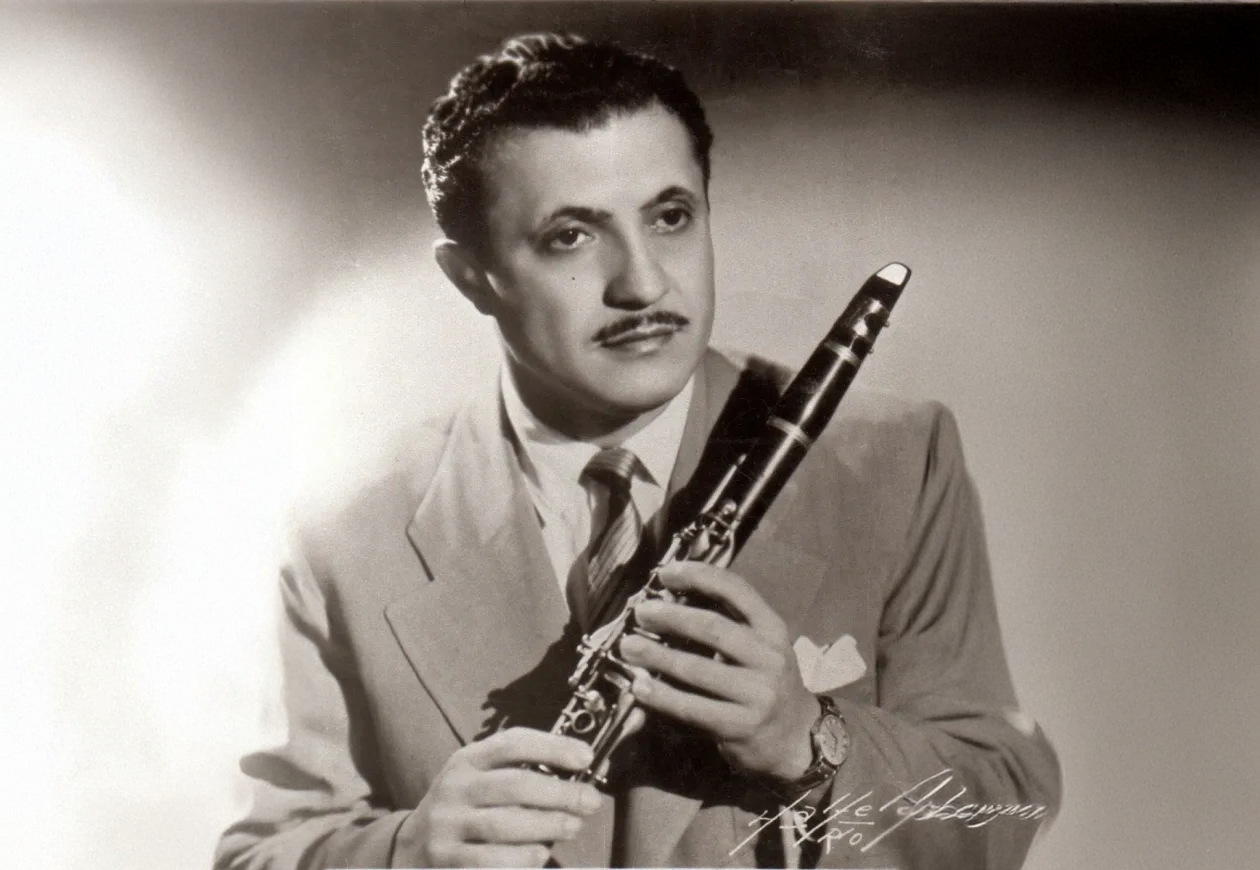
Abel Ferreira (Coromandel, 15 February 1915 – Rio de Janeiro, April 1980) was one of the central figures of choro in the twentieth century. A clarinettist, saxophonist, and composer, his work helped consolidate a genuine Brazilian school of wind playing, to the point that he is frequently placed alongside Pixinguinha and Luiz Americano among the great references of the genre's instrumental language. His body of work brings together lyricism, virtuosity, refinement of phrasing, and a diction deeply rooted in the vocabulary of choro.
In Abel, tradition and invention do not oppose each other: they breathe through the same tube.
Training and Musical Context
His musical formation began early, in a small-town environment strongly oriented towards attentive listening. His learning was largely self-taught, with initial guidance from musicians in his hometown — especially Hipácio Gomes and José Ferreira de Resende. As a young boy he passed through instruments such as the harmonica and the bamboo flute, arriving at the clarinet around the age of twelve; by fifteen he was already playing the saxophone. At seventeen he moved to Belo Horizonte, where he worked at Rádio Guarani and began to consolidate his professional life as an instrumentalist.
During the 1930s he moved through São Paulo and Uberaba, joined the orchestra of Maurício Cascapera, worked in radio, and accompanied Carmen and Aurora Miranda at a performance in Poços de Caldas. Back in Belo Horizonte, he played with J. França e sua Banda and with Pinheirinho e seu Regional, entering the professional circuit that linked radio, dance halls, and urban popular music. In 1942 he recorded his first disc for Columbia, capturing the choro Chorando Baixinho and the waltz Vânia, both of his own composition.
The move to Rio de Janeiro in 1943 was decisive. In the then federal capital he performed at the Cassino da Urca with the orchestra of Ferreira Filho, played in the orchestras of Vicente Paiva and Bené Nunes, and accompanied major singers of the radio era, including Francisco Alves, Orlando Silva, Sílvio Caldas, Marlene, and Emilinha Borba. In 1949 he joined Rádio Nacional, where he gained wide recognition as the leader of the Turma do Sereno. In 1952 he formed the Escola de Ritmos with Paulo Tapajós, with which he toured numerous Brazilian cities.
From the late 1950s to the mid-1960s his career acquired an international dimension. Abel performed in Portugal, joined the group Os Brasileiros on tours across Europe, travelled to the United States and Hawaii with Bené Nunes, visited Argentina with Waldir Azevedo, returned to Europe, and went on to visit the Soviet Union as well. This trajectory shows that his importance was not limited to the carioca choro circuit: he was also an ambassador for Brazilian instrumental music on foreign stages.
Musical Style
Abel Ferreira's importance resides not only in his professional biography, but in the singular quality of his language. Identified as the creator of a Brazilian school of wind playing, his phrasing, his articulation, and his expressive use of the clarinet helped establish interpretive models that became reference points for subsequent generations. Possessed of perfect pitch, well versed in music theory, and active as an arranger and pianist, Abel combined technical mastery with a warm, elegant, and immediately recognizable sound.
Instrumental language: analytical studies of his recordings identify recurrent procedures including ornamentation, chromaticisms, glissandi, portamentos, tuplets, rhythmic-melodic displacements, and an emphasis on melodic leaps of a sixth. These resources are integrated into choro phrasing, not as technical display — Abel did not play "over" the genre: he played from within the language.
Key Works
| Title | Notes |
|---|---|
| Chorando Baixinho | His best-known composition and the artistic signature of his performances. First recorded in 1942 with accompaniment by Pinheirinho e seu Regional. |
| Acariciando | One of the pieces most closely associated with his name in the choro repertoire. |
| Luar de Coromandel | A tribute to his hometown; a piece of strong melodic appeal. |
| Doce Melodia | An example of the more lyrical side of his writing as a composer. |
| Haroldo no Choro | A work that recurs in recordings dedicated to the composer. |
| Chorinho do Sovaco de Cobra | Composed in tribute to the roda at Penha, which he attended regularly. A testament to his organic relationship with the informal tradition of the genre. |
His catalogue comprises more than fifty works — choros, waltzes, maxixes, baiões, and other forms of Brazilian popular music — marked by strong, deeply singable melodic writing capable of uniting sophistication with communicative clarity.
Chorando Baixinho
Among all his compositions, Chorando Baixinho occupies a special place. According to Abel's own account, the piece was born between the late 1930s and the early 1940s, during a period in which he tried to step back from music and was going through a phase of intense personal and financial strain. On arriving home and finding his wife "crying softly" (chorando baixinho), he is said to have composed his first piece of music, which would later become a kind of artistic signature at his performances.
From a formal standpoint, the piece is structured in three sections: theme A in D minor, theme B in A minor, and theme C in D major — a trajectory from tonic minor through the relative dominant minor to the parallel major. Triads predominate, with occasional sevenths, few extensions, and a melodic design rich in chromaticisms, arpeggios, and expressive inflections. Simultaneously accessible and sophisticated, intimate and highly elaborated, it is a work that accounts for its own continued presence in the repertoire.
A Listening Guide
Chorando Baixinho is the most natural entry point into Abel Ferreira's world — and also the most revealing of his place in choro. What strikes the listener is not only the melody, but the way the clarinet carries it: with warmth, elegance, and an expressiveness that seems to arise from within the instrument rather than being imposed upon it. The lyricism of the piece does not conceal its sophistication: it is woven into it.
For the more virtuosic side of Abel, Acariciando provides the necessary contrast. There the technique appears more visibly, without the piece losing its bond with singability and choro phrasing. The two titles together show the breadth of a musician who knew how to be both popular and refined.
Influences and Relationships
Influences on Abel:
- Hipácio Gomes and José Ferreira de Resende — Initial guides in Coromandel; the foundation of his musical formation in a small-town environment.
- São Paulo and Minas Gerais radio — Experience at stations such as Rádio Guarani consolidated his professionalization before his arrival in Rio.
- Maurício Cascapera's orchestra and regional ensembles — Environments of intense practice that shaped his fluency across different repertoires and formations.
Key musical relationships:
- Pixinguinha — Alongside whom he appears on the LP Cinco Companheiros (1958), with Pedro Vieira, Silva Leite, and Irani Pinto — an important record in the choro discography and a testament to his place within the historical core of the genre.
- Waldir Azevedo — With whom he toured Argentina, reinforcing the bond between the great instrumentalists of his generation.
- Júlio Medaglia — Conductor under whose baton Abel recorded, in 1977, Weber's Clarinet Concertino with the Orquestra Sinfônica Brasileira.
- Sovaco de Cobra — The roda at Penha, which he attended regularly and honoured with a composition of his own.
Legacy
The legacy of Abel Ferreira is broad because it operates on several fronts simultaneously.
As an instrumentalist, he established a Brazilian way of playing clarinet and saxophone in choro — a phrasing, an articulation, and a sonority that became reference points. Having retired from radio in 1971, he continued recording and taking part in important projects. In the 1970s, as the genre regained its standing, he emerged fully prepared: he recorded the LP Brasil, Sax e Clarineta in 1976 and reappeared in concerts, recordings, and projects linked to the rediscovery of choro.
As a composer, he left more than fifty works that remain among the most frequently performed in the repertoire. Chorando Baixinho is his best-known piece, but the catalogue is broad and consistently strong.
As a roda musician, his name is linked to the world of oral transmission and the fellowship of chorões. His regular attendance at the Sovaco de Cobra and the composition he dedicated to it show that his legacy is not reducible to his discography or his solo virtuosity: it belongs equally to the informal tradition of the genre.
Sources
- Casa do Choro — Primary source for the definition of Abel as the creator of a Brazilian school of wind playing, career data, and works catalogue.
- Dicionário Cravo Albin da Música Popular Brasileira — Entry "Abel Ferreira." Source for biographical data, discography, and professional trajectory.
- GOMES, Wagno Macedo. Dissertation on Chorando Baixinho. — Formal, harmonic, and interpretive analysis of the piece; identification of recurrent technical procedures in Abel's recordings.
- Revista do Choro — Reference for biographical data and date of death.
- Discografia Brasileira / Instituto Moreira Salles — Phonographic records cited, including the 1942 Columbia recording and the LP Cinco Companheiros (1958).
Editorial note: sources disagree on the exact date of Abel Ferreira's death. The Dicionário Cravo Albin records 13 April 1980; the Revista do Choro and the Wagno Gomes dissertation indicate 12 April; the Casa do Choro records 2 April. This entry adopts simply April 1980, the datum common to and secure across all sources consulted.
Suggested course
Move from editorial context into guided study with synchronized score and structured steps.
All courses
Browse the public course catalog connected to the content hubs.