Blog
Women in Choro: 10 Influential Names
Discover 10 women who have shaped choro music, from Chiquinha Gonzaga to contemporary artists.
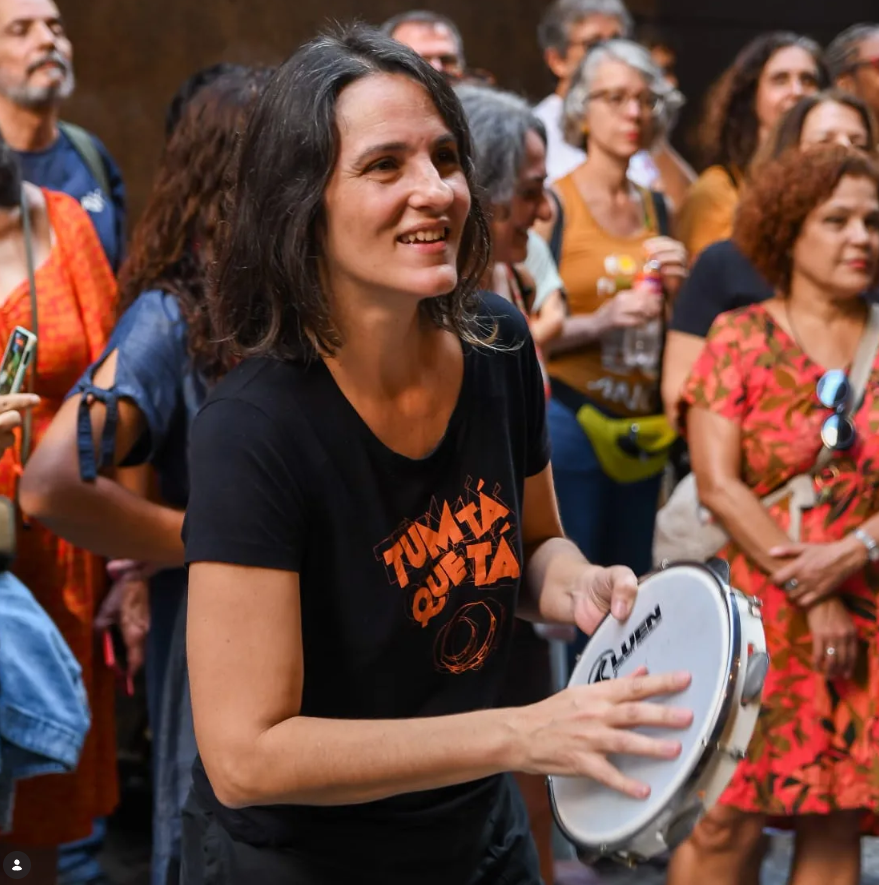
Ten names that help illuminate women's participation in choro, from Chiquinha Gonzaga's pioneering path to contemporary renewal, spanning instrument, composition, pedagogy and international circulation.
women in choro · Chiquinha Gonzaga · Luciana Rabello · choro · Brazilian music · female protagonism · roda de choro · composition · instrument
To talk about choro still tends to mean repeating a lineage narrated almost exclusively through male names. But that history is incomplete. Since the nineteenth century, women have participated in building the genre as composers, instrumentalists, performers, educators, scene organizers and agents of its circulation beyond Brazil. In recent years, initiatives such as the Cronologia Feminina do Choro (Female Chronology of Choro), presented by the Instituto Moreira Salles, have helped bring this subject back into view, showing that women's presence in choro is not a lateral exception but a constitutive part of its history.
This article does not aim to establish a closed ranking or suggest that these ten names occupy exactly the same historical position. What it proposes is a selection: ten presences that help us understand different dimensions of women's participation in choro, from pioneering to instrumental practice, from pedagogy to international circulation, from memory to contemporary renewal.
Chiquinha Gonzaga
Any serious text about women in choro must begin with Chiquinha Gonzaga. Her trajectory goes far beyond the role of symbolic figure. The Casa do Choro documents her professional activity as pianist in the Choro Carioca ensemble, linked to Joaquim Callado, as well as the early success of works such as Atraente and her position as Brazil's first female conductor. The IMS, in turn, places her among the central composers of a female chronology of the genre. In Chiquinha, we find not merely a female pioneer but a decisive figure in the very process of professionalizing popular music in Brazil.
Luciana Rabello
If Chiquinha helps open the history, Luciana Rabello is one of its great axes of continuity. A cavaquinho player, composer and producer, she appears in both the Casa do Choro and the Dicionário Cravo Albin as a direct heir to the tradition of Canhoto and Jonas, a professional on the instrument since 1976 and one of the most important figures in the contemporary institutionalization of choro. Her name is linked not only to performance but to the building of lasting cultural infrastructure, especially through Acari Records and the Escola Portátil de Música (Portable School of Music). In terms of transmission, recording and repertoire organization, Luciana is a structural name.
Nilze Carvalho
Nilze Carvalho represents a highly visible female presence on the choro and samba scene, with a career that began early and has extended across decades. The Dicionário Cravo Albin records that in 1981 she released the first album in the Choro de menina series, followed by new volumes in subsequent years. The IMS includes her among the contemporary composers and instrumentalists featured in programs dedicated to the female chronology of choro. Nilze matters because she combines instrumental command, stage presence and permanence, occupying a space that was long denied or diminished for women within instrumental popular music.
Daniela Spielmann
In the wind instruments, Daniela Spielmann is a central name for understanding women's presence in contemporary choro. The Dicionário Cravo Albin presents her as a saxophonist, flutist, arranger and pianist, and her career encompasses significant projects such as Rabo de Lagartixa, Mulheres em Pixinguinha, the album Choros, por que sax? and, more recently, a tribute to Jacob do Bandolim alongside Sheila Zagury. Daniela helps dismantle a narrow image of choro as an exclusively male universe, including in its solo instruments and spaces of timbral invention.
Ignez Perdigão
Ignez Perdigão occupies an important place in this constellation by bringing together composition, multi-instrumentalism and musical training. The Dicionário Cravo Albin records her studies with figures such as Jodacil Damasceno, Koellreutter, João Pedro Borges and Marcelo Bernardes, as well as her work with the Quinteto Casa do Caboclo and, from 2000 onward, with the group Choro na Feira. Her presence expands the portrait of women in choro beyond the spotlight performer, revealing an involvement tied also to the internal fabric of the scene, to sustained work and to movement between repertoires, instruments and musical roles.
Clarice Magalhães
The pandeiro player, singer and composer Clarice Magalhães is another important name, especially for making visible women's presence in the percussion of choro. According to the Dicionário Cravo Albin, she was a member of Choro na Feira, with whom she released Na cadência do samba and performed in the United States in 2001. Her career also encompasses the dialogue between choro and samba, without losing the instrumental grounding that places her squarely within the chorão universe. Clarice is a necessary reminder that the history of the genre is also made in the pulse, in the accompaniment and in collective listening.
Naomi Kumamoto
The Japanese flutist Naomi Kumamoto introduces a decisive dimension: the international circulation of choro. The Casa do Choro reports that she came from classical music in Japan, first approached the genre after meeting Maurício Carrilho in 2000, released the album Naomi Vai pro Rio on Acari Records in 2003 and moved to Rio de Janeiro in 2004. The Casa do Choro's own archive also catalogues several of her compositions. Naomi matters because she shows that choro is not merely a locally preserved tradition but a living language, capable of forming performers, composers and cultural mediators beyond Brazil.
Choro das 3
Although not an individual name, Choro das 3 deserves a place in this selection because the group has become a rare reference point for sustained female protagonism in instrumental choro. The trio formed by the sisters Corina, Elisa and Lia Meyer Ferreira has accumulated more than two decades of activity and consolidated a national and international presence. The group's significance lies not only in its musical quality but in the fact that it has made visible, on a lasting basis, a female place in choro that does not depend on isolated exceptionalism but on a consistent artistic project.
Laila Aurore
Among the most recent names, Laila Aurore appears as a clear sign of renewal. The Memória do Cavaquinho Brasileiro project presents her as a cavaquinho player, composer, arranger and educator, as well as the founder of Chora – Mulheres na Roda (Women in the Roda), an initiative dedicated to learning the language of choro and expanding women's presence on the scene. The IMS also includes her among the contemporary composers featured in its female chronology of the genre. Laila enters here not only for her artistic work but because she embodies an important shift: women's presence in choro ceases to be merely a subject of historical recovery and becomes organized action in the present.
Anat Cohen
Anat Cohen enters this text as an international bridge. A clarinetist and saxophonist recognized in jazz, she maintains a consistent relationship with Brazilian music and with choro, documented in her official discography, which includes the album Nosso Tempo with the Choro Ensemble and collaborations with the Trio Brasileiro, such as Alegria da Casa and Rosa dos Ventos. Her case should not be read as belonging to the Brazilian historical core of the genre, but as proof of choro's power as a transnational language, capable of engaging major instrumentalists from other traditions without losing its identity.
Beyond the exception
Perhaps the main point of this selection is precisely this: women in choro do not form a curious appendix to the genre's history. They are present at the origin, in the continuity, in the pedagogy, in the composition, on stage, in recordings, in the roda and in the renewal. Some of these trajectories are better known; others still need greater visibility. But all of them help correct a recurring distortion: the notion that choro was made almost exclusively by men and only occasionally touched by female presences. The documentation available at institutions such as the Casa do Choro, the IMS and the Dicionário Cravo Albin shows precisely the opposite: the history is broader, richer and more complex than the repeated canon tends to admit.
Sources
- Instituto Casa do Choro — Biographical entries on Chiquinha Gonzaga, Luciana Rabello and Naomi Kumamoto, plus catalogue of works. Available at: casadochoro.com.br
- Dicionário Cravo Albin da Música Popular Brasileira — Entries on Luciana Rabello, Nilze Carvalho, Daniela Spielmann, Ignez Perdigão and Clarice Magalhães. Available at: dicionariompb.com.br
- Instituto Moreira Salles — Cronologia Feminina do Choro program and Chiquinha Gonzaga archive. Available at: ims.com.br
- Memória do Cavaquinho Brasileiro — Entry on Laila Aurore and information on the Chora – Mulheres na Roda project.
- Anat Cohen — Official biography and discography, including Nosso Tempo and collaborations with Trio Brasileiro.
Suggested course
Move from editorial context into guided study with synchronized score and structured steps.
All courses
Browse the public course catalog connected to the content hubs.