Blog
How to Study Choro Guide
A practical guide for aspiring choro musicians, covering listening, practice, and 13 essential steps.
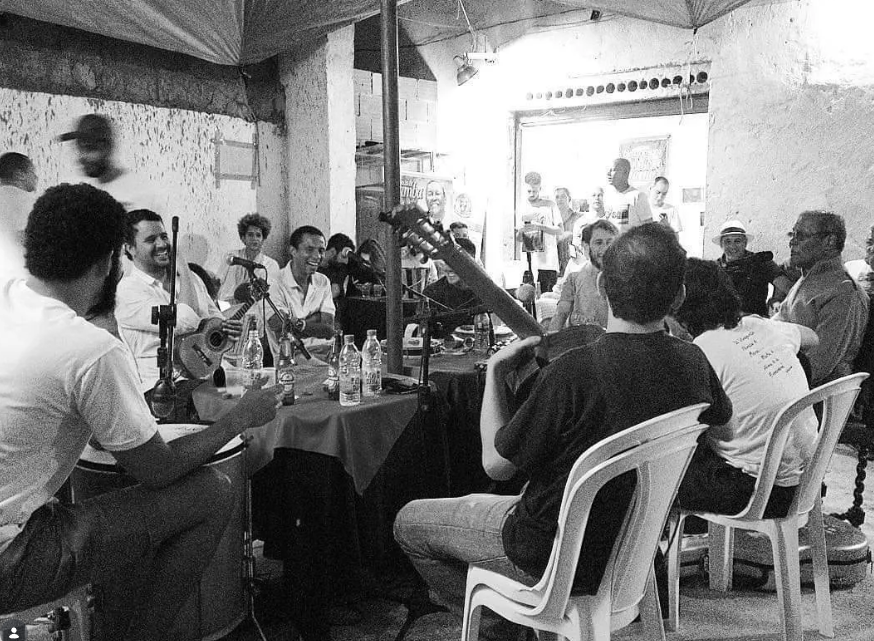
Becoming a chorão is not just about learning to play a few choro tunes. It is about entering a language. That means developing listening skills, memory, harmonic perception, rhythmic command, formal awareness, repertoire, and above all, musical coexistence. In choro, playing well is not simply "getting it right." It is knowing how to listen, accompany, respond, wait, lead, and participate in the music as a living thing.
1. Listen to the great names until they become an internal reference
Before wanting to play a lot, you need to listen a lot. Pixinguinha, Jacob do Bandolim, Joaquim Callado, Ernesto Nazareth, and Waldir Azevedo are among the essential names for anyone who wants to understand the choro language in depth. Each one helps illuminate a different part of the idiom: melodic construction, swing, form, phrasing, rhythmic refinement, and the way the repertoire consolidated across generations.
The goal is not to listen passively, but to listen while trying to recognize phrases, modes of articulation, section endings, levadas, and harmonic pathways. To begin this journey, it is also worth visiting our article Principais nomes do choro.
2. Study choro harmony as a language, not as a chart
Choro harmony is strongly tonal. This means that harmonic functions appear with great clarity, tension-and-resolution movements are well defined, and certain pathways recur frequently across the repertoire. For this reason, memorizing isolated chords is not enough. You need to recognize cadences, identify the most common harmonic clichés, and understand how they appear in different keys.
In practice, a good starting point is to work with tonal centers that are very common in the repertoire — such as C, F, G, D, Am, Dm, and Em — and to internalize these key areas until ear and hand recognize the pathways instinctively. Our training at Chorolab emphasizes the cycle of fifths, neighboring keys, tonic, dominant, and subdominant functions, melody/harmony relationships, sequences in all keys, and the study of chord inversions.
But studying harmony in choro is not just about understanding the "basic pathway" of major and minor keys. It is also about observing the solutions that became part of the language. A productive approach is to study the harmony of Pixinguinha and identify patterns: chromatic approaches, dominants, characteristic voice-leading, turns that reappear across different works. Gradually, these clichés stop sounding like formulas and begin to feel like vocabulary.
3. Understand the form of the pieces and the relationships between sections
In choro, knowing the internal harmony of each section matters, but understanding the form of the piece is even more decisive. Knowing which key the A section is in helps predict likely paths for B and C. The repertoire often works with recurring formal relationships, and recognizing them saves mental energy when accompanying, memorizing, and playing in the roda.
This study of form should not be abstract. It needs to happen alongside the repertoire. When learning a piece, ask: how many sections does it have? Where is the repeat? Where does the key change? Where does the return typically appear? Where does the music call for preparation? At Chorolab, form, phrase structure, and the relationship between melody and harmony are treated as central elements in building repertoire and musical literacy.
4. Learn the melodies, because they almost always point to the harmony
In choro, melody and harmony communicate very directly. In many cases, the melody already reveals the chord through arpeggios, structural tones, and contours that make the harmonic function clear. For this reason, even players of accompaniment instruments benefit greatly from studying the melodies. And those who solo or improvise benefit even more.
Learning to sing or play the melodies helps you hear resolutions better, anticipate chords, memorize the form, and perceive the spaces where the accompaniment can breathe or respond. It is no coincidence that choro pedagogy typically treats melodic perception, arpeggios, memorization, and melody/harmony relationships as interconnected elements rather than separate compartments.
5. Know the subgenres and learn the levada for each one
Anyone who wants to become a chorão needs to understand that choro does not live in a single rhythm. Polca, maxixe, valsa, schottisch, samba, and other constituent genres are part of this language and require different ways of accompanying, phrasing, and breathing musically. Knowing "the chords of the piece" is not enough. You need to know how it moves.
Studying the subgenres and their rhythmic characteristics is therefore an essential part of one's formation. Chorolab's pedagogy focuses precisely on the specific practice of genres such as choro, maxixe, valsa, polca, and schottisch, as well as the foundational levadas of choro and its constituent rhythms. In other words: if you have not mastered the levada, you have not yet fully entered the language.
6. Learn inversions and create motion in the bass
In choro accompaniment, sophistication often comes not from stacking tensions in densely voiced chords, but from knowing how to voice-lead well. Since much of the repertoire works with triads and seventh chords in highly functional progressions, inversions become indispensable for creating fluidity, connection between chords, and motion in the bass.
Studying the third, fifth, and seventh in the bass, along with sequences in various keys, is a practical path toward making the harmony more musical and less static. This work also lays the groundwork for understanding baixarias, baixos obrigatórios (obligatory bass lines), and the role of the guitar within the regional.
7. Learn to read chord charts, form, and score markings
In choro, reading is not just about deciphering notes. It is about understanding the map of the music. First and second endings, repeat signs, D.S., coda, repetitions, section changes — all of this is part of the global reading of the piece. A good accompanist needs to see the form before stumbling over it.
Even when the roda happens by ear, this competence makes a difference. It accelerates study, improves memorization, and reduces dependence on the written page. Chorolab's curriculum includes chord chart reading, repertoire construction and memorization, and command of repeat and navigation markings in the score.
8. Memorize harmonies and build real repertoire
Scores help, but memory liberates. Memorizing harmonies allows you to play with greater attention to the collective sound, to look more at the other musicians, to anticipate returns more effectively, and to react musically to what is happening. In choro, this makes an enormous difference.
Memorizing is not rote learning. It means reviewing the piece slowly, understanding its structural anchors, recognizing its cadences, and repeating enough until the form becomes natural.
9. Study baixarias, chamadas, and arremates
Being a chorão also means knowing how to participate in the conversation at the level of detail. Baixarias teach you to occupy with intelligence the spaces left by the melody, creating counter-melodies and motion in the accompaniment. Chamadas (calls) and arremates (closing figures) help open and close sections with clarity, intention, and musical maturity.
In the case of baixarias, this study is central to the practice of the 6-string and 7-string guitars within the regional, with emphasis on contraponto, phrasing, and baixos obrigatórios. It is the kind of knowledge that transforms accompaniment into language.
10. Improvising in choro means speaking within the language
When it comes to improvisation, there is no point in treating choro as a territory without boundaries. The choro improvisation does not typically seek infinite expansion at any cost. It grows from the phrasing, rhythm, articulation, and harmony native to the genre. Improvising well in choro requires knowing the repertoire, understanding harmonic functions, listening to historical examples, and perceiving how the language organizes itself from within.
For this reason, rather than studying detached scales, it is more productive to study improvisation through repertoire and historical models. This is precisely the approach taken in Chorolab's advanced curriculum, which connects contraponto and improvisation to the choro language and to the practice of ensemble interpretation.
11. Play in the roda and learn how to behave musically
No amount of study replaces the roda. That is where the repertoire comes to life, where form stops being theory, and where the musician learns to listen to the collective. In the roda, playing less is sometimes playing better. A player who knows little can still contribute a great deal with a solid levada, attention to form, and silence at the right moment.
If you do not know a chord, it is better to listen, observe, and use the repeat to learn. The most common beginner mistake is not playing too little — it is playing too much without understanding what is happening.
12. Study at home what the roda revealed
When a piece comes up in the roda that you could not follow, do not treat it as a defeat. Treat it as an assignment. Go home, review it carefully, figure out the chords, play it slowly, understand the form, and lock in the harmony. The roda shows what is missing. Study organizes the response.
This cycle is one of the engines of learning in choro: listen, try, fail, review, come back better. Little by little, the repertoire stops being hostile territory and becomes familiar ground.
13. And when you already know a lot, help keep the roda alive
Those with experience also carry responsibility. Choro grows stronger when more experienced players keep the roda musically demanding yet humanly welcoming. Being patient with newcomers is not lowering the standard. It is honoring the genre's own tradition of living transmission.
The democratic spirit associated with the collective practice of choro has no room for empty exhibitionism or pedagogical arrogance. The true chorão is not simply the one who plays the most. It is the one who helps the music circulate.
Final thoughts
Becoming a chorão is a process. It involves listening, repertoire, form, harmony, levada, memory, reading, improvisation, coexistence, and the roda. It does not happen overnight, but it does not depend on some mysterious talent either. It depends on consistency, attention, and love for the language.
In short: listen to the masters, study the harmony, understand the form, learn the melodies, master the levadas, memorize the repertoire, attend the roda, and respect the living tradition of choro. The rest will come the way a good contracanto does: at the right time.
Suggested course
Move from editorial context into guided study with synchronized score and structured steps.
All courses
Browse the public course catalog connected to the content hubs.