Blog
Choro: Brazil's Cultural Heritage in 2024
Choro was recognized as Brazil's Intangible Cultural Heritage in 2024. Learn why this living network needs community support.
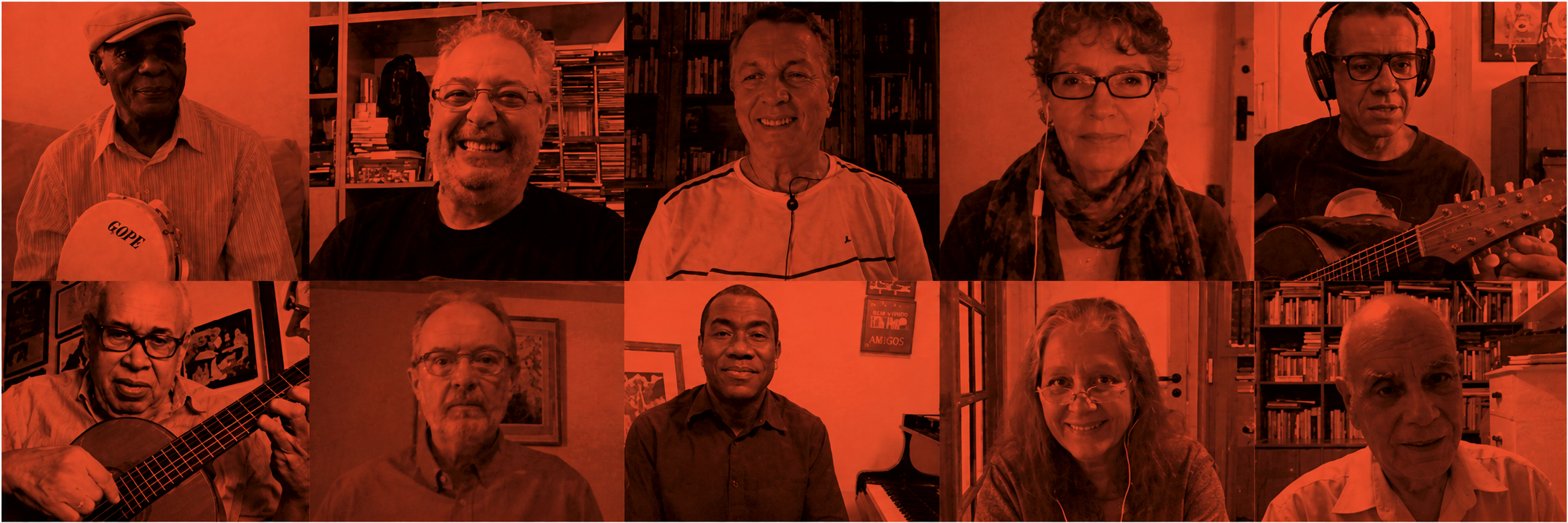
In February 2024, choro was recognized as an Intangible Cultural Heritage of Brazil by Iphan (the National Historic and Artistic Heritage Institute). The news circulated widely among musicians, researchers, rodas and admirers of Brazilian music. It was a historic achievement.
But there is a lesser-known part of this story: for that recognition to happen, an enormous effort of research, listening, documentation and mapping of choro across the country was carried out.
This work helped form the Base de Dados Choro Patrimônio (Choro Heritage Database), hosted on the Acervos Virtuais of UFPel (the Federal University of Pelotas). It is a public, free and collaborative platform that brings together information on archives, rodas, teaching initiatives, associations, clubs, discography, research and publications connected to the world of choro.
In other words: there is a great map of Brazilian choro. And it needs to be known, used and updated by the community itself.
Registration, Not Tombamento
In everyday use, many people say that choro was "tombado" (landmarked). The expression appears frequently in conversations, posts and news. But, technically, the correct term is another.
Choro was registered (registrado) as an Intangible Cultural Heritage of Brazil, in Iphan's Livro das Formas de Expressão (Book of Forms of Expression).
This distinction matters. Tombamento (landmarking) is typically used for material assets, such as buildings, monuments, architectural ensembles and objects. Registration (registro), by contrast, recognizes intangible cultural assets: practices, knowledge, celebrations, forms of expression and ways of doing transmitted by the community over time.
In the case of choro, this is essential. Because choro is not only a repertoire of pieces, nor only a musical genre with its own characteristics. It is also a social practice, a form of gathering, a way of learning, playing, listening, living together and transmitting knowledge.
Choro lives in the rodas (jam sessions), in schools, in clubs, in archives, in families of musicians, in notebooks of scores, in recordings, in the baixarias (bass-line counterpoint) passed on by ear, in the levadas (rhythmic patterns) learned through shared practice and in the stories that circulate across generations.
To recognize choro as intangible heritage is to recognize this living network.
An Achievement Built by Many Hands
The recognition of choro as an Intangible Cultural Heritage of Brazil did not happen overnight.
The request for recognition began through the mobilization of institutions and people connected to choro, such as the Clube do Choro de Brasília, the Casa do Choro, the Clube do Choro de Santos and many musicians, researchers and admirers of the cultural practice in different regions of the country.
From there, it was necessary to build a process of technical instruction. This means gathering documents, testimonies, research, historical references and evidence capable of demonstrating the cultural importance of choro for Brazil.
During the pandemic, this stage took on a very special dimension. Researchers worked remotely, interviewing people, filling out forms, gathering information and organizing data on different fronts of the life of choro in the country.
It was meticulous work. Form by form. Interview by interview. Archive by archive. Roda by roda.
The question behind it all was simple and enormous at the same time: where does choro live?
What Was Mapped
The research was organized around four major axes: archives; teaching initiatives; associations and clubs; rodas and performance venues.
These four axes help reveal choro not only as music, but as a cultural ecosystem.
Archives: They hold scores, records, photographs, documents, recordings, notebooks, concert programs and memories that are often at risk of disappearing.
Teaching initiatives: They show how choro is transmitted today, whether in formal schools, free courses, universities, workshops, social projects or informal gatherings.
Associations and clubs: They reveal the organizational dimension of choro, with groups that promote rodas, festivals, gatherings, courses, performances and preservation efforts.
Rodas and performance venues: They show the practice happening: musicians meeting, repertoires circulating, beginners learning, masters teaching, audiences forming and choro recreating itself in the present.
This survey gave rise to the Inventário Nacional do Choro (National Inventory of Choro).
Choro in Numbers
The Inventário Nacional do Choro gathered impressive data.
It mapped 165 archives of interest to the memory of choro, 86 formalized teaching initiatives, 48 choro associations or clubs and 131 rodas de choro, including both active rodas and inactive ones recalled by interviewees.
In addition, the Base de Dados Choro Patrimônio also brings together research, publications, discography, seminars and materials related to the registration process.
These numbers are not merely statistics. They show the capillarity of choro in Brazil.
They show that choro is present in different regions, with its own accents, formations, practices and modes of organization. They also show that the history of choro does not fit into a single city, a single school, a single lineage or a single narrative.
Choro is plural. And its heritage lies precisely in that diversity.
The Base de Dados Choro Patrimônio
One of the most important results of this process is the Base de Dados Choro Patrimônio.
Hosted on the Acervos Virtuais of UFPel, the database brings together part of the material produced during the research for the registration of choro as a Cultural Heritage of Brazil.
There it is possible to consult information on archives, teaching initiatives, associations and clubs, rodas and performance venues, research and publications, discography, seminars and the technical dossier of the process.
The platform was conceived as a great digital archive about choro. But not as a closed file. On the contrary: the proposal is that it be continuously nourished and corrected by the community itself.
This is fundamental because choro is always in motion.
A roda changes address. A new course begins. A collective forms. An archive is discovered. A researcher publishes a thesis. A school opens a class. A group ends its activities. A club resumes its gatherings. A new generation begins to play.
If choro is alive, its database needs to be alive too.
To Preserve Is Not to Freeze
When we speak of heritage, there is always the risk of imagining something frozen in time, kept in a display case, protected from the world.
But choro does not fit that image.
To preserve choro does not mean to freeze the practice. It means to create the conditions for it to continue existing, transforming and being transmitted.
It means valuing the masters who kept this tradition in motion. It means recognizing the importance of rodas as spaces of learning. It means preserving archives before documents, recordings and scores are lost. It means supporting teaching initiatives. It means giving visibility to clubs, associations, researchers, instrumentalists, composers, teachers, producers and communities that sustain this music every day.
In choro, memory is not separate from practice.
Memory is in the roda.
It is in the gesture of accompanying. It is in the baixão that responds to the melody. It is in the levada learned by watching another musician's hand. It is in the repertoire someone calls up from memory. It is in the story told between one piece and another.
The heritage of choro is not a motionless object. It is a network in action.
For Chorolab, promoting the Base de Dados Choro Patrimônio is a fundamental task.
Because teaching choro is not only teaching repertoire, harmony, levadas, baixarias, improvisation or musical language. All of this is essential, of course. But choro is greater than the content of a single class.
To teach choro is also to help preserve a collective memory.
It is to recognize those who came before. It is to value the masters. It is to bring new generations closer to this tradition. It is to promote rodas. It is to strengthen teaching initiatives. It is to organize information that is often scattered. It is to build bridges between musicians, researchers, teachers, students, clubs, archives and communities.
Chorolab has also been working on cataloguing rodas, instrumentalists and initiatives connected to choro and Brazilian music. We know how much work this kind of mapping takes. And we know how much it is worth.
For this reason, this theme speaks directly to our mission.
The Base de Dados Choro Patrimônio shows that choro is a living network, built by many hands. Chorolab's role is to add to this network: teaching, promoting, studying, cataloguing and connecting people who keep choro in motion.
An Invitation to the Choro Community
The Base de Dados Choro Patrimônio needs to be known.
If you play choro, research choro, teach choro, organize a roda, take part in a club, keep scores, know an archive, attend a school or follow this music closely, this database is also for you.
Look for your roda. Look for your school. Look for your club. Look for references from your region. See what is already registered. And when you notice that something needs to be updated or added, take part.
Heritage is safeguarded this way: by playing, teaching, researching, documenting and sharing.
The recognition of choro as an Intangible Cultural Heritage of Brazil was an enormous achievement. But it is not a final point. It is a call.
A call to look at choro with greater care. To strengthen its networks. To preserve its archives. To promote its rodas. To recognize its stories. To ensure that this music, so old and so present, continues to create a future.
Choro is a heritage of Brazil.
And this heritage is alive every time someone opens the instrument, calls up a piece and gathers the roda.
https://acervosvirtuais.ufpel.edu.br/choropatrimonio/
Sources
- Iphan — Registration of choro as an Intangible Cultural Heritage of Brazil in the Livro das Formas de Expressão (February 2024), technical dossier and Inventário Nacional do Choro.
- Base de Dados Choro Patrimônio / Acervos Virtuais da UFPel — Public and collaborative platform with data on archives, teaching initiatives, associations and clubs, rodas, research, publications, discography and seminars.
- Instituto Casa do Choro — Institution that mobilized the registration request. Available at: casadochoro.com.br
Suggested course
Move from editorial context into guided study with synchronized score and structured steps.
All courses
Browse the public course catalog connected to the content hubs.