Blog
Choro Mandolinists in Activity
A curated selection of active choro mandolinists, showcasing masters, new generations, and diverse regional representatives.
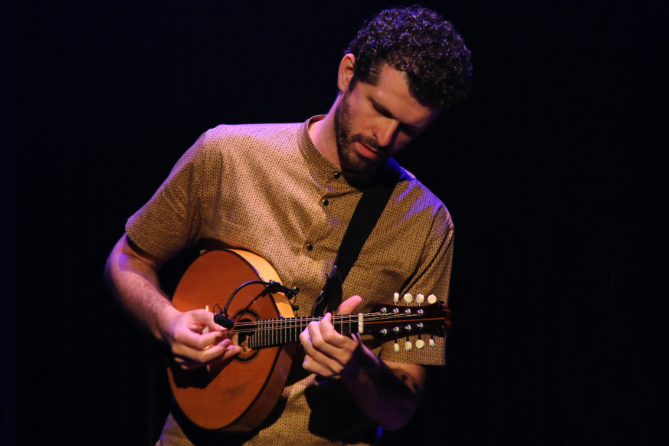
A curated survey of masters, performers, composers, and emerging voices of the Brazilian bandolim (mandolin), assembled from the conversation generated by ChoroLab's community.
Tags: bandolim, bandolim players, choro, Brazilian music, active instrumentalists, regional schools, contemporary panorama
Introduction
Few instruments have as strong a relationship with choro (Brazil's foundational instrumental genre) as the bandolim (mandolin). Since Jacob do Bandolim, Luperce Miranda, and so many other masters, the instrument has become a central voice in the chorístico language: it carries the melody, articulates with precision, improvises, ornaments, challenges the accompaniment, and often defines the very character of the regional (the traditional choro ensemble).
ChoroLab published a list of active choro bandolim players that sparked real conversation. The audience recalled essential names, flagged absences, brought artists from across Brazil's regions, and demonstrated something important: the Brazilian bandolim is very much alive. Comments surfaced names including Izaías Bueno de Almeida, Jane do Bandolim, Joel Nascimento, Jorge Cardoso, Reco do Bandolim, Fábio Peron, Ian Coury, Carrapicho Rangel, Pedro Franco, Marco César, Altino Toledo, Macaúba do Bandolim, Adamor do Bandolim, Daniel Migliavaca, Maik Oliveira, Rafael Esteves, Tiago Tunes, André Ribeiro, and many others.
This entry is not a ranking. It is a starting map for anyone who wants to listen to choro bandolim today: living masters, established performers, teachers, composers, researchers, and names from younger generations who continue expanding the instrument's possibilities.
Living Masters and Essential References
Among the names most recalled by the audience, Izaías Bueno de Almeida, also known as Izaías do Bandolim, stands out with particular force. Connected to the history of choro in São Paulo, he began playing the bandolim as a child and became a central reference for the genre, especially from the 1970s onward, with the group Izaías e Seus Chorões (Izaías and His Chorões).
Another unavoidable name is Joel Nascimento, bandolim player, composer, and arranger from Rio de Janeiro. His discography spans decades, including works such as Chorando pelos Dedos and recordings in dialogue with figures like Hamilton de Holanda. The Instituto Moreira Salles dedicated an 80th-anniversary special to him on Rádio Batuta, a measure of his importance to the history of the Brazilian bandolim.
Jane do Bandolim, born Jane Silvana Corilov, is a bandolim player, teacher, and one of the most significant female figures associated with the instrument. Her trajectory began in childhood and includes work as a performer of choro and other Brazilian genres alongside sustained pedagogical activity.
Within the Rio de Janeiro tradition, Déo Rian remains an essential reference. Formed in the rodas de choro (informal jam sessions) of Jacarepaguá, he studied bandolim with Moacir Arouca and with Luperce Miranda himself. His path is deeply tied to the memory of Jacob do Bandolim and to the ensemble Época de Ouro.
Ronaldo do Bandolim, from Petrópolis, was a member of the legendary Época de Ouro and of the Trio Madeira Brasil, a group that helped renew the language of strings in choro alongside Marcello Gonçalves and Zé Paulo Becker.
Pedro Amorim, bandolim player, guitarist, composer, and teacher affiliated with the Escola Portátil de Música (Portable Music School), was shaped by Jacob do Bandolim, Rossini Ferreira, and Joel Nascimento. He has traveled throughout Brazil and abroad promoting choro and samba.
Marcílio Lopes deserves recognition not only as a performer but as a researcher. Holding a degree in Composition and a doctorate in Musicology from UNIRIO, his academic work investigates the influence of song on the consolidation of Jacob do Bandolim's style.
Bandolim, Research, and Regional Schools
The bandolim in choro does not live only along the Rio–São Paulo axis. One of the most important contributions from the audience was precisely the recall of artists tied to other regions.
Marco César, from Pernambuco, is one of the great names of the northeastern bandolim. A teacher, composer, and performer, he is recognized as one of the figures responsible for the consolidation and renewal of Pernambuco's instrumental music scene.
In Ceará, Jorge Cardoso works as a bandolim player, composer, and researcher. His training includes studies with Elismar Pontes, Marco César, and Ugo Orlandi, in addition to solo performances in several countries.
Also from Ceará, Macaúba do Bandolim, born José Felipe da Silva, is a master of popular culture from the state, with more than six decades devoted to music. He remains active in the rodas de choro of Fortaleza.
In Pará, Adamor do Bandolim represents a fundamental strand: the so-called choro amazônico (Amazonian choro). His compositions draw on Afro-indigenous rhythms, carimbó (an Afro-indigenous dance rhythm from the Amazon region), and Caribbean sonorities, with historical ties to the island of Marajó.
In Brasília, Reco do Bandolim occupies a special place not only as a performer but as an institutional builder. Founder of the Escola Brasileira de Choro Raphael Rabello and president of the Clube do Choro de Brasília, he played a decisive role in transforming the federal capital into a major hub for choro education and dissemination.
Virtuosity, Composition, and New Languages
When discussing the contemporary expansion of the bandolim, Hamilton de Holanda is an unavoidable name. Founder of the first choro school in Brasília in 1997, and one of the key figures in the movement that established the Dia Nacional do Choro (National Day of Choro), he brought the ten-string bandolim to a position of considerable international visibility.
Danilo Brito represents a lineage deeply rooted in the traditional repertoire, in composition, and in the attentive listening to the great masters. Self-taught, he began recording at a young age and built a career recognized for its technical command and interpretive maturity.
Nilze Carvalho is an essential figure for understanding the passage between choro and samba. As a child, she recorded the series Choro de Menina as a bandolim player, later consolidating a broad career as a singer, composer, and multi-instrumentalist.
Luis Barcelos, a bandolim player, guitarist, and composer from Rio Grande do Sul based in Rio de Janeiro, works across choro, instrumental music, and song. He has been a member of groups including Bandolinata and the Conjunto Época de Ouro.
Tiago Souza, also known as Tiago do Bandolim, carries a direct bridge to tradition: he is the son of Ronaldo do Bandolim. His trajectory runs through Rio's choro scene of the 2000s, the Regional Carioca, and a language that weaves together tradition, samba, baião (a rhythmic genre from northeastern Brazil), tango, and jazz.
Maycon Júlio, a member of the Trio Júlio, represents a family-based and collective formation connected to the Escola Portátil de Música. The trio is made up of brothers Magno, Marlon, and Maycon Júlio, the latter on bandolim.
The Generation Expanding the Map
The audience also recalled names that are newer or less well known to the broader public, but highly active in rodas, schools, festivals, and original projects.
Fábio Peron is one of the strong names in the ten-string bandolim. A composer and multi-instrumentalist, his album Folia de tRreis — with Edu Ribeiro and Toninho Ferragutti — was nominated for a Latin Grammy for Best Instrumental Album.
Ian Coury, born in Brasília, is one of the most internationally active young figures in this scene. His musical path moves through choro, MPB (Música Popular Brasileira), samba, jazz, and world music, including a period at the Berklee College of Music.
Vitor Casagrande has an important presence as a performer, composer, and teacher. Trained in bandolim at the Conservatório de Tatuí, holder of a master's degree from UFRJ, and a teacher at the Escola de Choro de São Paulo, he has also developed study materials for the instrument.
Fernando Dalcin is associated with Jacob do Bandolim's repertoire and the research of the composer's lesser-known works. He presented the project Jacob do Bandolim: Outras Composições, dedicated to both canonical pieces and unpublished compositions by Jacob.
Pedro Franco, a musician from Porto Alegre, works as a guitarist, bandolim player, composer, and arranger. His solo album was nominated for the Prêmio da Música Brasileira (Brazilian Music Award) and he is regarded as one of the standout names of his generation.
Daniel Migliavaca, from Curitiba, works as a bandolim player, composer, and educator. His pedagogical work includes teaching polca, maxixe (an early Afro-Brazilian dance rhythm), choro, and samba accompaniment.
Maik Oliveira and Rafael Esteves form the Banduo, a São Paulo project that explores the sonic possibilities of the instrument across choro tradition, concert music, and new languages.
Tiago Tunes, from Brasília, started attending rodas de choro at age seven, made his stage debut at eight, and progressed from an eight-string to a ten-string bandolim. He is one of the most active young voices in Brasília's scene.
Eric Diógenes, a rising name in choro from Ceará, dedicates himself to the study of Jacob do Bandolim's output. He trained with Carlinhos Patriolino, Jorge Cardoso, and Vitor Casagrande.
André Ribeiro, connected to the interior of São Paulo state, works on choro projects in Campinas and surrounding areas, with a repertoire drawing on Pixinguinha and Altamiro Carrilho, and with recordings released.
Caio Vinicius, @caiobandolim, is a bandolim player and composer associated with the original project Batuque Negro, blending samba, choro, jazz, and forró (a northeastern Brazilian dance genre).
Women on Bandolim: A Presence That Needs More Visibility
The original list and the comments it generated reveal an important issue: women bandolim players in choro remain underrepresented in the conversation.
Beyond Nilze Carvalho and Jane do Bandolim, the audience recalled Elisa Meyer Ferreira, Laídia Evangelista, and Dany Dantas. Elisa is a member of Choro das 3, a group formed by sisters Corina, Elisa, and Lia Meyer Ferreira, with a trajectory dedicated to the choro repertoire and to original compositions.
Laídia Evangelista works as a multi-instrumentalist with a presence on bandolim. Dany Dantas appears in choro programming in Brazil's Northeast, particularly in Paraíba and Rio Grande do Norte.
This is a point that deserves continued attention: not merely including women on a list, but investigating their trajectories, repertoires, recordings, rodas, and pedagogical contributions in greater depth.
Other Names Recalled by the Audience
Beyond those already discussed, comments also mentioned Paulinho do Bandolim, Rafael Ferrari, Milton Mori, Henrique Araújo, Elias Barboza, Altino Toledo, Ailton Reiner, João Fernando, Álvaro Gil, Felipi Bastos, Marcelo Jiran, Gabriel Mariotto, and Ricardo Calafate. Some of these names have readily accessible public records; others require more careful verification of spelling, artistic profile, and current activity before entering a definitive editorial list.
Altino Toledo has a documented trajectory as a bandolim teacher at the Conservatório de Tatuí. João Fernando is active as a musician associated with Casuarina, working across choro, samba, and MPB, and playing cavaquinho (a small four-string Brazilian instrument), bandolim, and guitarra baiana (a ten-string electric instrument associated with axé and northeastern music).
No List Can Contain the Instrument
What was most striking about the audience's response was not only the push for missing names. It was the demonstration that the choro bandolim continues to be widespread, alive, and diverse.
There are masters who preserve the tradition of Jacob, Luperce, and Izaías. There are composers creating new repertoire. There are teachers training new chorões (choro musicians). There are instrumentalists taking the bandolim into jazz, concert music, samba, frevo (a fast-paced genre from Pernambuco), carimbó, the international stage, and the neighborhood roda.
So rather than asking "who was left out?", perhaps the better question is: where do you start listening?
The answer may lie precisely in that plurality. Start with the masters. Go to the recordings. Find the rodas. Listen to the new releases. Compare timbres, attacks, ornaments, levadas (rhythmic patterns), phrasing, and repertoire choices.
The bandolim in choro has never been a museum piece. It is a fine blade in motion: it cuts, sings, responds, provokes, and keeps opening paths.
Sources
- Instituto Moreira Salles / Rádio Batuta — 80th-anniversary special on Joel Nascimento; recordings and interviews. Available at: ims.com.br
- EMESP — Escola de Música do Estado de São Paulo — Profile of Jane do Bandolim. Available at: emesp.org.br
- Instituto Casa do Choro — Archive entries on Jorge Cardoso, Eric Diógenes, and other bandolim players cited. Available at: casadochoro.com.br
- Choro Patrimônio — Documentation on Adamor do Bandolim and Amazonian choro.
- Escola Brasileira de Choro Raphael Rabello / Clube do Choro de Brasília — History of Reco do Bandolim as founder and institutional builder. Available at: clubedochoro.com.br
- Dicionário Cravo Albin da Música Popular Brasileira — Entries on Joel Nascimento, Trio Júlio, and other musicians cited. Available at: dicionariompb.com.br
- Correio Braziliense — Feature on Ian Coury, 2026.
- Conservatório de Tatuí — Records of Vitor Casagrande and Altino Toledo as teachers and performers.
- Unesp — Coverage of the Banduo project (Maik Oliveira and Rafael Esteves), 2026.
- Rádio Senado — Profile of Tiago Tunes.
- Correio RAC — Feature on André Ribeiro.
- Sesc São Paulo — Coverage of Caio Vinicius and the Batuque Negro project.
Suggested course
Move from editorial context into guided study with synchronized score and structured steps.
All courses
Browse the public course catalog connected to the content hubs.