Choropedia
Sátiro Bilhar: Brazilian Guitarist and Composer
Discover Sátiro Bilhar, a key figure in the development of choro music in Rio de Janeiro, known for his classic "Tira Poeira."
Introduction
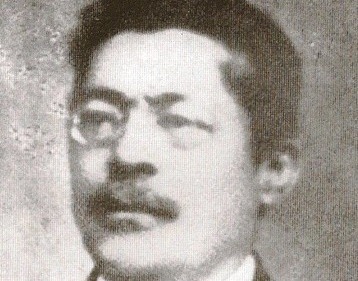
Sátiro Lopes de Alcântara Bilhar, known as Sátiro Bilhar or Satyro Bilhar (Baturité, Ceará, February 27, 1860 – Rio de Janeiro, October 23, 1926), was a Brazilian guitarist, pianist and composer.
Belonging to the first generations of chorões (choro players) in Rio de Janeiro, Sátiro lived at a time when choro (Brazil's oldest urban instrumental genre) was still taking shape in serenades, dances and gatherings of musicians. He moved among figures such as João Pernambuco, Quincas Laranjeiras, Catulo da Paixão Cearense, Donga and Villa-Lobos.
His importance for choro lies less in the number of compositions he left than in his way of playing. Sátiro was known for his ability to transform the same piece with every performance, altering harmonies, rhythms, accompaniments and baixarias (the guitar's improvised bass countermelodies).
The guitar and the old chorões
Sátiro Bilhar was part of Rio's musical world in the late nineteenth century and the first decades of the twentieth, a decisive period for the formation of choro.
By day he worked as an employee of the Estrada de Ferro Central do Brasil (the Central Railway of Brazil). Off duty, he circulated among musicians, poets, serenaders and bohemians, taking part in rodas (informal playing circles), dances and musical gatherings.
This was a common reality among the early chorões. Many did not live from music alone and moved between formal employment and an intense musical life.
In that environment, Sátiro became known above all as a guitarist. His instrument created bass lines, altered chords, answered the melodies and transformed the music as he played.
That freedom of interpretation would become one of the fundamental traits of the choro guitar.
The art of variation
One of the best-known stories about Sátiro was told by Donga.
According to him, Sátiro did not need a vast repertoire to command a dance. He played few pieces, but could transform them so many times over that they always sounded new.
He might present a piece as a choro and then turn it into a waltz, alter the harmony, invent new passages or change the accompaniment entirely.
Hence the remark attributed to Donga that with four tunes he could carry a whole dance.
The story helps explain something important about the early days of choro. Music was not treated as a fixed rendering of the score. The performer had to know how to create upon it.
For Sátiro, varying was part of composing.
Sátiro and the formation of choro
Sátiro Bilhar belongs to a generation earlier than the great choro recordings and the consolidation of a repertoire now considered classic.
In that period, the word choro referred not only to compositions but also to a way of playing and to the gathering of musicians itself.
Polkas, waltzes, lundus, modinhas (sentimental Brazilian art songs) and maxixes could all belong to the same evening. The chorão had to know these genres and be able to accompany them, transform them and respond to the other musicians.
Sátiro represents precisely that tradition.
His ability to reharmonize melodies, create baixarias and change the character of a piece shows how much of the language of choro was built orally, inside the rodas, before it was preserved in scores and recordings.
For this reason, his story helps us understand choro as a Brazilian way of playing.
Tira Poeira
Sátiro Bilhar's best-known composition is Tira Poeira, a choro that crossed the twentieth century and remained in the instrumentalists' repertoire.
The piece gained particular visibility through the interpretations of Jacob do Bandolim, helping keep Sátiro's name alive among later generations of chorões.
Tira Poeira also offers a direct link to that older musical world. Its construction invites variation, changes of articulation and a constant dialogue between melody, harmony and accompaniment.
It is a piece that asks the performer to do exactly what Sátiro became known for: never playing it the same way twice.
Catulo and Rio's popular music
Sátiro was also close to the world of modinhas and popular song.
With Catulo da Paixão Cearense, one of the central figures of Rio's musical life in that period, he is associated with the song As ondas são anjos que dormem no mar.
Another composition, Gosto de ti porque gosto, circulated as both modinha and lundu (an Afro-Brazilian song and dance form) and reached the first decades of the recording industry in versions by performers such as Cadete and Mário Pinheiro.
This movement between choro, lundu, modinha and maxixe was common among the musicians of his generation, and shows how much closer these genres were to one another than present-day classifications might suggest.
Notable works
Among the compositions associated with Sátiro Bilhar are:
- Tira Poeira
- Gosto de ti porque gosto
- Gosto!
- As ondas são anjos que dormem no mar, with Catulo da Paixão Cearense
- Estudo de harpa
- O que vejo em teus olhos
- Tu és uma estrela
A large part of his output has not come down to us, and his known body of work is small compared to that of other composers of the period.
His influence, however, cannot be measured by the number of surviving scores alone.
Sátiro belongs to a generation in which much of the music existed in the moment of performance and was transmitted directly between musicians. Much of what he created may have vanished precisely because it lived in the variations, the accompaniments and the solutions invented during the rodas.
Sátiro's importance for choro
Sátiro Bilhar died in Rio de Janeiro on October 23, 1926.
There are no known recordings of his own playing. What we know of his manner on the guitar has come mainly through the accounts of musicians who knew him and through the few compositions that survived.
Even so, his name remains important to the history of choro.
Sátiro represents an era in which the chorão was not merely someone capable of performing a piece. One had to accompany, improvise, create baixarias, alter harmonies and react to the other musicians.
In that sense, his career helps reveal one of the characteristics that remain at the heart of choro to this day: the written music is only the beginning.
Between the score and the roda there is a space for invention. And it was in exactly that space that Sátiro Bilhar became one of the most striking figures of the old guard of choro.
Reference recordings
- Gosto de ti porque gosto – recorded by Cadete, Odeon.
- Gosto de ti porque gosto – recorded by Mário Pinheiro, as a lundu.
- Tira Poeira – recorded by Jacob do Bandolim and by other performers across the twentieth century.
Sources
- Instituto Casa do Choro – archive, biography and catalogue of works of Sátiro Bilhar.
- Dicionário Cravo Albin da Música Popular Brasileira – biographical entry and documentation on his work.
- Instituto Moreira Salles – documentation on Sátiro Bilhar, Donga and the early chorões.
- Discografia Brasileira – phonographic records of Sátiro Bilhar's compositions.
- Música Brasilis – supplementary documentation on Sátiro Bilhar and his family.
Suggested course
Move from editorial context into guided study with synchronized score and structured steps.
All courses
Browse the public course catalog connected to the content hubs.