Choropedia
Nelson dos Santos Alves - Brazilian Musician
Nelson dos Santos Alves was a Brazilian cavaquinho player and composer, influential in choro music.
Introduction
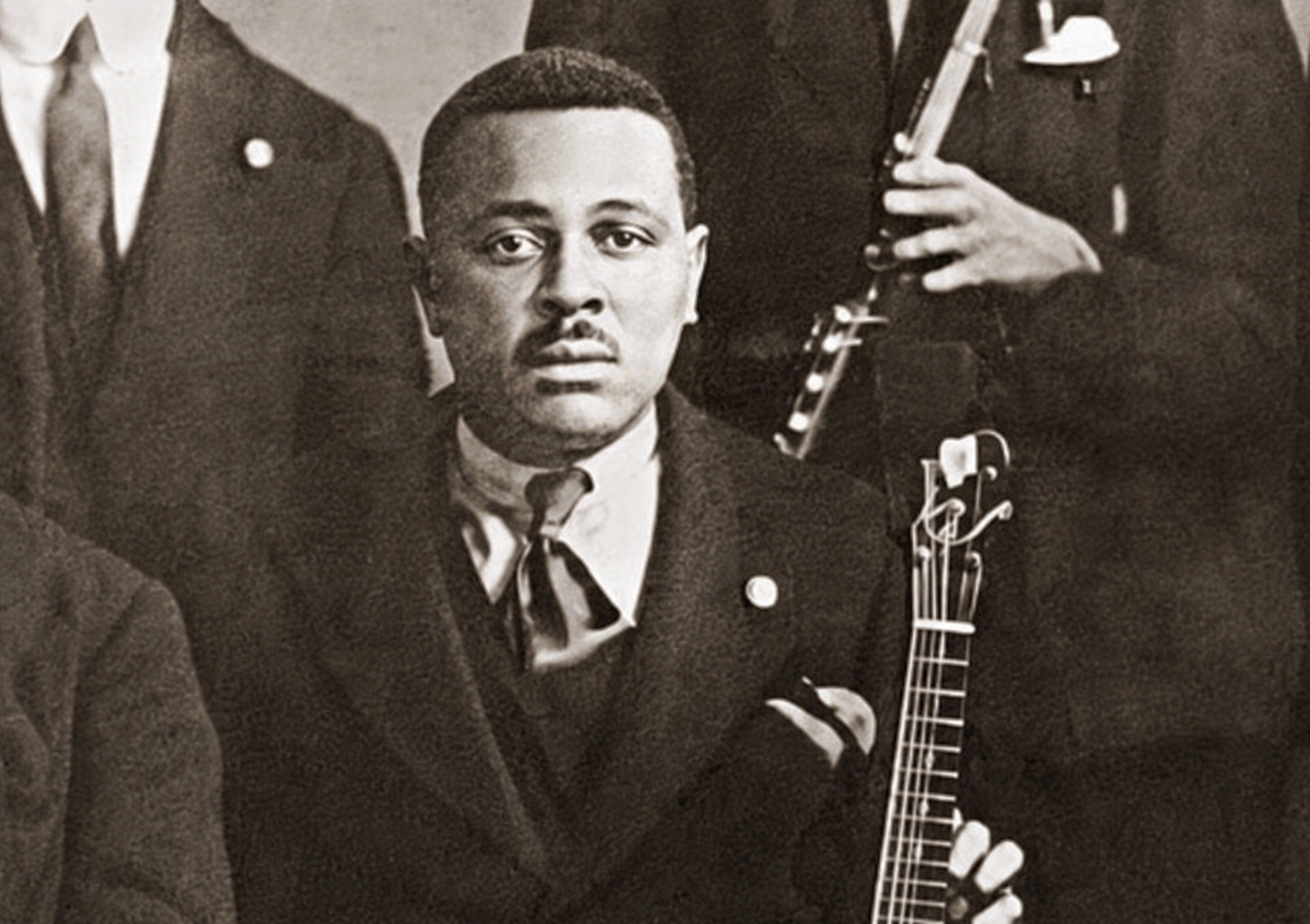
Nelson dos Santos Alves, known as Nelson Alves (Rio de Janeiro, 1895–1960), was a Brazilian cavaquinho (small four-string guitar) player and composer. Present at decisive moments in the formation of urban choro (Brazilian instrumental genre born in nineteenth-century Rio de Janeiro), he took part in historic ensembles, accompanied some of the leading instrumentalists of his generation, and helped expand the role of the cavaquinho within instrumental groups.
His career spanned the first commercial recordings made in Brazil, the creation of the Oito Batutas, and the development of a more soloistic language for the instrument.
First ensembles and recordings
Nelson Alves began his professional activity during the 1910s, a period in which choro was starting to occupy the recording studios, cinemas, theaters, and salons of Rio de Janeiro.
Alongside the guitarist Tute, he was a member of the Grupo Chiquinha Gonzaga, musically led by the flutist Antônio Maria Passos. The ensemble took part in recordings of the composer's works, helping to document on disc the sound of the choro groups of that period.
He also belonged to the Grupo Carioca, whose soloist was the trombonist Candinho Silva. In these ensembles, the cavaquinho served an essential function in sustaining rhythm and harmony, connecting the melody of the solo instruments to the movement of the guitars.
The Oito Batutas
In 1919, Nelson Alves took part in the founding of the Oito Batutas, an ensemble created to perform at the Cinema Palais in downtown Rio de Janeiro. Led by Pixinguinha and made up of musicians such as Donga and China, the group became one of the principal references of Brazilian popular music in the first decades of the twentieth century.
The Batutas performed a repertoire of choros, maxixes, batuques (Afro-Brazilian dance forms), songs, and regional genres. Their success led the group to tour Brazil and to perform internationally, including stays in France and Argentina.
During the Argentine season of 1923, the Oito Batutas made twenty recordings for Victor of Buenos Aires, on which Nelson Alves is credited on cavaquinho. Photographs and accounts from the period also show that he played instruments that are uncommon today, such as the five-string cavaquinho and a banjo tuned like a mandolin.
He later joined the Grupo da Guarda Velha, organized by Pixinguinha and devoted to preserving and renewing repertoires linked to choro, samba, and the older musical traditions of Rio de Janeiro.
The *cavaquinho* of Nelson Alves
Nelson Alves belonged to a generation that established the cavaquinho as an indispensable element of choro ensembles. His instrument was not limited to marking chords: it took an active part in driving the rhythm, created responses to the melodies, and could take on the leading voice.
In 1929 and 1930, he recorded his own compositions as a soloist for the Victor and Brunswick labels. These recordings revealed a musician capable of combining rhythmic precision, agility, and melodic clarity, at a time when few cavaquinho players appeared as protagonists on record.
His writing features lively melodies, frequent modulations, and a strong sense of swing. Even in technically demanding passages, the musical design remains tied to dance and to the conversational quality characteristic of the roda de choro (informal gathering where choro is played).
Important works
Among his best-known compositions are:
Mistura e manda A choro of great rhythmic vitality, it became one of the most frequently performed works in his repertoire.
Serpentina A piece marked by agile melodic motion and harmonic shifts that demand technical command from the ensemble.
Ficou calmo Recorded by the composer himself in 1929, it is one of the principal documents of his work as a soloist.
Nem ela nem eu A choro preserved in the repertoire of successive generations of instrumentalists.
In addition to choros, Nelson Alves wrote waltzes, polkas, and schottisches, among them Gotas sonoras, A hora da saudade, Lucília, Radiosa, and Requebros da bahiana.
Importance for *choro*
Nelson Alves belonged to the generation that carried the tradition of the conjuntos de pau e corda ("wood and string" ensembles) onto the stage, into the recording studios, and on international tours.
As an accompanist, he took part in building the collective sound that defined choro in the first decades of the twentieth century. As a soloist and composer, he demonstrated that the cavaquinho could also carry complex melodies and occupy the center of a recording.
Though less remembered than other musicians of his generation, Nelson Alves left compositions that remain present in rodas de choro and in the repertoire of cavaquinho players. His music combines melodic inventiveness, rhythmic firmness, and command of the language of the genre.
Sources
The following sources are relevant to the study of Nelson Alves and the musical context in which he worked:
Instituto Casa do Choro. Entry "Nelson Alves" and sheet music catalogue. — Central source for biographical data, activity in instrumental groups, recordings as a soloist, and identification of his principal compositions.
Instituto Moreira Salles — Pixinguinha Collection. Photographs and documents related to the Grupo do Caxangá and the Oito Batutas. — Reference for identifying Nelson Alves in the historic ensembles he belonged to.
Pixinguinha — Vida e Obra. Profile of the Oito Batutas. — Information on the creation of the ensemble, performances at the Cinema Palais, and the group's tours during the 1920s.
Discografia Brasileira — Discos do Brasil. Records of Nelson Alves as composer and instrumentalist. — Source for recordings, instrumental credits, repertoire, and participation in the Oito Batutas discs.
Dicionário Cravo Albin da Música Popular Brasileira. Entry "Nelson Alves." — Complementary reference on his career, the ensembles he joined, and his recordings as a cavaquinho player and composer.
Suggested course
Move from editorial context into guided study with synchronized score and structured steps.
All courses
Browse the public course catalog connected to the content hubs.