Choropedia
Luiz Americano do Rego
Luiz Americano do Rego was a prominent Brazilian clarinetist and saxophonist.
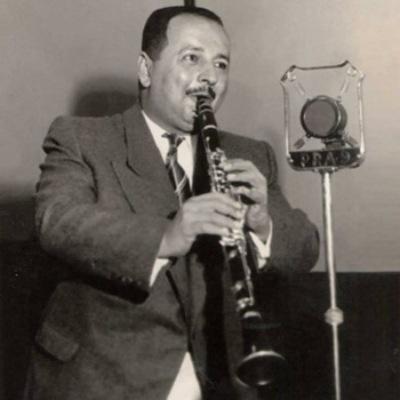
Introduction
Luiz Americano do Rego (Aracaju, Sergipe, February 27, 1900 – Rio de Janeiro, March 29, 1960) was a Brazilian clarinetist, saxophonist and composer, recognized as one of the leading instrumentalists of choro (an instrumental genre of Brazilian urban popular music) in the first half of the twentieth century.
Over a career spent between orchestras, record labels and radio stations, he stood out both as a performer and as the creator of his own repertoire. His compositions, among them É do que há, Numa seresta and Lágrimas de virgem, became references for generations of musicians.
A frequent collaborator of Pixinguinha, he took part in important ensembles of Brazilian popular music and performed alongside figures such as Radamés Gnattali and Luciano Perrone.
Training and Early Years
The son of Jorge Americano, a bandmaster in Aracaju, Luiz began studying the clarinet at the age of 13 under his father's guidance. His musical training took place in the world of the bands, which played an important role in instrumental teaching and practice in Brazil.
In 1918, he joined the Army and became a member of his barracks band in Aracaju. Shortly afterward, he was transferred to Maceió, Alagoas, where he served in the 20th Light Infantry Battalion (20º Batalhão de Caçadores). In 1921, he was transferred to the 3rd Infantry Regiment in Rio de Janeiro, then the federal capital, where he went on to build his professional career.
After leaving military service in 1922, he began working as a clarinetist and saxophonist in ensembles and orchestras. Among the groups he played with were those of Justo Nieto, Raul Lipoff, Simon Bountman and Romeu Silva, all part of Rio's busy music circuit. In the early 1920s, he also took part in the instrumental accompaniment of recordings made at Odeon.
First Recordings and the Years in Argentina
In the 1920s, Luiz Americano began recording on 78 rpm discs, mainly for the Odeon label. His first record as a soloist was released in 1927, featuring the waltz Leda and the choro Sentimento, both his own compositions, performed on saxophone.
His recorded repertoire included choros, polkas, maxixes (a lively Brazilian urban dance of the late nineteenth and early twentieth centuries) and waltzes, alternating his own compositions with works by other authors, such as the maxixe Desordeiro by Freire Júnior, recorded the same year. The saxophone held an important place in these early recordings, at a time when the instrument was expanding its presence in Brazilian popular music.
In 1928, he traveled to Argentina, where he spent three months in the orchestra of the American drummer Gordon Stretton. He then joined the orchestra of Adolfo Carabelli, a prominent figure on the Buenos Aires music scene.
The Argentine experience broadened his international career and brought him into contact with different repertoires and orchestral formats. In 1930, he returned to Rio de Janeiro, where he formed the dance band American Jazz, which he led for about two years.
Pixinguinha and the Grupo da Guarda Velha
In 1932, Luiz Americano joined the Grupo da Guarda Velha, an ensemble created by Pixinguinha that brought together, among others, Donga, João da Baiana, Bonfiglio de Oliveira and Vantuil, key names in the choro and samba tradition.
His collaboration with Pixinguinha became one of the most enduring professional relationships of his career. In this circle, he took part in recordings by popular singers and in repertoires that brought choro, samba and other urban genres closer together. His command of music reading and his experience as a soloist made him a sought-after instrumentalist in the ensembles of the time.
In 1940, he was one of the musicians chosen by Pixinguinha, at the request of Heitor Villa-Lobos, for the recordings made by conductor Leopold Stokowski during his visit to Brazil. In these sessions, released by Columbia in the Native Brazilian Music collection, he performed his own compositions, such as Tocando pra você.
Radio and the Great Orchestras
With the expansion of Brazilian radio, Luiz Americano began working regularly in studio ensembles. He accompanied singers and played on recordings with arrangements by Pixinguinha and Radamés Gnattali, two of the leading names in Brazilian popular orchestration. Among his best-remembered contributions is the introductory solo on the foxtrot Renúncia, the hit that launched singer Nelson Gonçalves in 1942.
In 1937, he joined the Trio Carioca, with Radamés Gnattali on piano and Luciano Perrone on drums. Inspired by the trio of Benny Goodman, Gene Krupa and Teddy Wilson, the group recorded a single disc, featuring Radamés's choros Cabuloso and Recordando.
For years he worked as a studio musician in the orchestras of Rádio Mayrink Veiga, one of Rio's leading stations. In the 1950s, he joined Rádio Nacional, where he remained until his death.
His professional activity also included performances in teatro de revista (Brazilian musical revue theater) and dance halls, settings that required musicians to be familiar with a wide range of styles and repertoires.
Clarinet, Saxophone and Choro
Luiz Americano built his career mastering two wind instruments with distinct characteristics. On both clarinet and saxophone, he stood out for his agility, technical precision and melodic fluency.
His recordings as a soloist feature ornamented melodies, fast passages and articulations characteristic of choro. His technical command allowed him to play lines of great motion, alternating singing phrases with virtuosic passages.
As a composer, he devoted himself especially to the choro and the waltz. The waltz Lágrimas de virgem, one of the recording highlights of 1931, earned him enough in royalties to buy the house where he lived in the Brás de Pina neighborhood of Rio de Janeiro.
His importance was recognized during his lifetime: in 1954, Ary Barroso, interviewed by the Revista da Música Popular, named him among the most important musicians in Brazilian popular music. His repertoire continued to be recorded by later generations, as in the version of É do que há recorded by Netinho do clarinete in 1970.
Major Works
His compositions include:
- É do que há
- Numa seresta
- Lágrimas de virgem
- Assim mesmo
- Ao luar (lyrics later added by Sérgio Brito)
- Intrigas do boteco do Padilha
- Tocando pra você
- Tigre da Lapa
- Sossega Juca
- Luiz Americano de passagem pela Arábia
- Sorriso de cristal (authorship also credited to Érica Rego)
- Minha lágrima (authorship also credited to Érica Rego)
His catalog comprises works preserved in manuscript scores, commercial editions and historical recordings. Part of this repertoire remains present in rodas de choro (informal choro gatherings where musicians play in a circle) and in the studies of clarinetists and saxophonists.
Selected Discography and Recordings
- Leda / Sentimento — Odeon, 1927
- Calamitoso / Muito me cantas — Odeon, 1927
- Na maciota / Desordeiro — Odeon, 1927
- Linda Erika — Odeon, 1929
- É do que há / Lágrimas de virgem — Odeon, 1931
- Numa seresta / Soluços — RCA Victor, 1931
- Intrigas do boteco do Padilha / Verdade — Odeon, 1940
- Saxofone, por que choras? / Lágrimas de virgem — Todamérica, 1953
- Chora, saxofone — RCA Victor, 1955
- Luiz Americano e seu conjunto — RCA Victor, 1956
- Luiz Americano – Saxofone, por que choras? — Intercdrecords, 2001 (reissue)
The recordings made throughout his career document his work as a soloist and composer, as well as his role in establishing the Brazilian instrumental repertoire on record.
Sources
- Dicionário Cravo Albin da Música Popular Brasileira. Entry: Luiz Americano.
- AZEVEDO, M. A. de (Nirez) et al. Discografia brasileira em 78 rpm: 1902–1964. Rio de Janeiro: Funarte, 1982.
- Instituto Moreira Salles. Discografia Brasileira and 78 rpm sound archive.
- UCLA Library, Frontera Collection. Columbia Presents: Native Brazilian Music, vol. 2 (recordings supervised by Leopold Stokowski).
Suggested course
Move from editorial context into guided study with synchronized score and structured steps.
All courses
Browse the public course catalog connected to the content hubs.