Choropedia
Henrique Cazes - Brazilian Cavaquinho Musician
Discover Henrique Cazes, a key figure in Brazilian cavaquinho, known for his compositions and educational contributions.
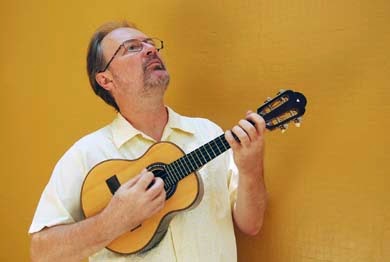
Photo: Marília de Figueirêdo
Introduction
Henrique Leal Cazes (Rio de Janeiro, February 2, 1959) is a cavaquinho player, composer, arranger, music producer, researcher, writer and teacher. Across five decades of professional activity, he has become one of the leading references for the Brazilian cavaquinho, both as a performer and through his work developing repertoire, teaching methods and research dedicated to the instrument and to choro.
His career spans several fronts: he was a member of the Camerata Carioca, worked directly with Radamés Gnattali, developed projects dedicated to the music of Pixinguinha and Waldir Azevedo, built an extensive career as a soloist, and published works that are fundamental to the study of the cavaquinho and the history of choro.
Early Years and Training
Son of the guitarist and composer Marcel Cazes and brother of the percussionist Beto Cazes, Henrique grew up surrounded by music. He began playing the guitar as a child and, around the age of 13, became interested in the cavaquinho as well as in other string instruments, among them the banjo, the bandolim, the viola caipira (a ten-string Brazilian folk guitar) and the tenor guitar.
Largely self-taught as an instrumentalist, he pursued in parallel an academic path uncommon among professional musicians of his generation: he first graduated in Chemistry from the Federal University of Rio de Janeiro. Decades later he would return to the university through music, completing a master's degree and a doctorate at the UFRJ School of Music.
His professional activity began in 1976, as a member of the group Coisas Nossas, alongside musicians such as Beto Cazes, Oscar Bolão and the brothers Aloísio and Carlos Didier. The ensemble was especially devoted to the repertoire of Noel Rosa and appeared on television programs and in shows connected to samba and the popular music of Rio de Janeiro.
Camerata Carioca and Radamés Gnattali
A decisive moment came in 1980, when Henrique Cazes joined the Camerata Carioca, a group formed around the bandolim player Joel Nascimento and closely associated with the composer and arranger Radamés Gnattali.
The lineup brought together Joel Nascimento on bandolim, Henrique Cazes on cavaquinho, Maurício Carrilho and João Pedro Borges on guitars, Luís Otávio Braga on seven-string guitar and Beto Cazes on percussion.
The Camerata took part in an important phase in the renewal of choro in the early 1980s. The group brought the traditional lineup of the regionais (the small ensembles that traditionally accompanied choro) closer to elaborate written arrangement, especially through the work of Radamés Gnattali.
Its recordings include Vivaldi e Pixinguinha, released by Funarte in 1982, and Tocar, from 1983. In performances and recordings of that period, Cazes also worked with artists such as Elizeth Cardoso, broadening his experience as an instrumentalist both within and beyond the strictly instrumental repertoire.
His contact with Joel Nascimento and Radamés Gnattali would prove particularly important for the path Henrique later followed as a solo cavaquinho player, arranger and researcher.
The Cavaquinho as a Solo Instrument
For much of its history in Brazilian popular music, the cavaquinho was strongly tied to an accompanying role. Musicians such as Garoto and, above all, Waldir Azevedo had already demonstrated the instrument's possibilities as a soloist. From the 1980s onward, Henrique Cazes began to develop that path systematically.
In 1988 he released his first solo album, Henrique Cazes, beginning a discography devoted to expanding both the repertoire and the technical possibilities of the cavaquinho.
The following years brought albums such as Tocando Waldir Azevedo (1990), Waldir Azevedo, Pixinguinha, Hermeto & Cia. (1992), Desde que o Choro é Choro (1995) and Relendo Waldir Azevedo (1997).
Waldir Azevedo holds a particularly important place in this trajectory. Henrique dedicated albums, concerts and research to the composer of "Brasileirinho", "Delicado" and "Pedacinhos do Céu", treating his work as a fundamental stage in the development of a solo language for the Brazilian cavaquinho.
In 2012 he released Uma História do Cavaquinho Brasileiro, conceived as a historical journey through the instrument, passing through composers of different eras, from Joaquim Callado and Ernesto Nazareth to Canhoto, Radamés Gnattali, Paulinho da Viola and Waldir Azevedo.
New Repertoires for the Cavaquinho
An important part of Henrique Cazes's work consists of bringing the cavaquinho to repertoires and ensembles not traditionally associated with the instrument.
This research appears in projects such as Bach in Brazil, produced in the late 1990s, in which works by Johann Sebastian Bach were arranged for Brazilian instruments, and in the Beatles'n'Choro series, which reworked Beatles compositions into arrangements drawing on forms such as choro, maxixe and waltz.
In Eletro Pixinguinha XXI, released in 2002, Cazes returned to Pixinguinha, this time also drawing on electronic resources and new approaches to arrangement.
These experiments coexist with his work tied directly to the traditional repertoire. Rather than abandoning the historical references of the cavaquinho, his projects place the instrument in contact with different musical languages, ensembles and repertoires.
Pixinguinha
The music of Pixinguinha is one of the most persistent threads of Henrique Cazes's career.
In 1988 he created and directed the Orquestra Pixinguinha, dedicated to recreating the composer's original arrangements. The project made it possible to recover a less familiar dimension of Pixinguinha: that of the orchestrator and arranger responsible for a vast output for ensembles, orchestras and popular recordings.
Decades later, Cazes took part in another project of major documentary scope. Drawing on some 50 previously unrecorded Pixinguinha melodies, authenticated through research, the project Pixinguinha como Nunca was developed.
With musical direction and arrangements by Henrique Cazes, the melodies were given harmonizations and instrumentation for new recordings. The project brought together musicians such as Carlos Malta, Silvério Pontes, Marcelo Caldi, Marcos Suzano and João Camarero, alongside Cazes himself, and resulted in concerts and four albums released in 2023.
Escola Moderna do Cavaquinho
His work as a teacher led Henrique Cazes to one of the most enduring contributions of his career.
When he began teaching regularly in the early 1980s, he recognized the need for a method specific to the cavaquinho. Guided by Joel Nascimento, he began adapting exercises drawn from violin, bandolim, guitar and electric guitar methods to the characteristics of the instrument.
The result was Escola Moderna do Cavaquinho, published in 1988.
The method covers technique, accompaniment, chord formation, scales, repertoire and solo playing. Over the following decades it went through numerous editions and became one of the main didactic references for students of the instrument, including a Japanese edition.
This work continued with the creation of the 12 Estudos para Cavaquinho Solo, written over several years to address different technical and musical problems of the instrument.
The studies were gathered, alongside other pieces, in Música Nova para Cavaquinho, published in 2019 and accompanied by a recording project dedicated to the compositions.
The Cavaquinho in the University
Henrique Cazes's teaching work also reached higher education.
A professor at the UFRJ School of Music, he took part in establishing the institution's pioneering bachelor's degree in cavaquinho, bringing into the university setting an instrument historically passed on above all through rodas, families of musicians, recordings and direct learning between players.
At UFRJ itself, Cazes completed a master's degree in Music in 2011, with research related to rodas de choro, and a doctorate in Music in 2019.
His academic activity thus came to run alongside the experience accumulated as a performer, teacher and researcher of popular music.
Researcher and Writer
Henrique Cazes has also become a bibliographic reference for the study of choro.
His book Choro: do Quintal ao Municipal, published in 1998, offers a historical overview of the genre, covering musicians, ensembles, stylistic transformations and changes in the ways choro has been produced and circulated. The work reached its fifth edition in 2021.
He has also published works dedicated to figures of Brazilian music, among them Monarco, Chiquinha Gonzaga, Waldir Azevedo and Jacob do Bandolim.
In 2023 he released O Choro Reinventa a Roda: 150 anos de uma utopia musical, revisiting the history of the genre through its collective practice and the transformations that have taken place over roughly a century and a half.
Cazes has also worked in radio, producing and hosting programs about choro on stations such as Rádio MEC, Rádio Nacional, Rádio Roquette Pinto and Rádio MPB FM.
Composer
Alongside his work as a performer and researcher, Henrique Cazes has developed his own repertoire for the cavaquinho.
His pieces include the 12 Estudos para Cavaquinho Solo, as well as choros, waltzes and works conceived for different ensembles. Some of these compositions set out to explore technical possibilities rarely found in the traditional repertoire of the instrument, including polyphonic writing, independence of voices and new combinations of articulation.
The composer Ernani Aguiar also dedicated to him the Concertino para cavaquinho e cordas, expanding the instrument's presence in the chamber music repertoire.
Fifty Years of Career
In 2026, Henrique Cazes completed 50 years of professional activity, counted from his entry into the group Coisas Nossas in 1976.
The date was marked by concerts devoted to his career, bringing together repertoire from its different phases and composers who accompanied his musical path, among them Pixinguinha, Waldir Azevedo, Radamés Gnattali, Garoto, Noel Rosa and Hermeto Pascoal, as well as his own compositions.
Five decades after his professional beginnings, his activity remains tied to the same fronts that have crossed throughout his career: performance, composition, teaching, historical research and the development of the cavaquinho.
Selected Discography
- Henrique Cazes — 1988
- Tocando Waldir Azevedo — 1990
- Waldir Azevedo, Pixinguinha, Hermeto & Cia. — 1992
- Desde que o Choro é Choro — 1995
- Relendo Waldir Azevedo — 1997
- Bach in Brazil — 1999
- Pixinguinha de Bolso — 2000
- Beatles'n'Choro — series begun in 2002
- EletroPixinguinha XXI — 2003
- Uma História do Cavaquinho Brasileiro — 2012
- Música Nova para Cavaquinho — 2019
- Pixinguinha como Nunca — album series, 2023
Selected Books and Publications
- Escola Moderna do Cavaquinho — 1988
- Choro: do Quintal ao Municipal — 1998
- Monarco — 2003
- Biographical profiles of Chiquinha Gonzaga, Waldir Azevedo and Jacob do Bandolim — 2010
- Música Nova para Cavaquinho — 2019
- O Choro Reinventa a Roda: 150 anos de uma utopia musical — 2023
Sources
- Instituto Casa do Choro — Memória do Choro collection: composer records, digitized scores and documentation on Brazilian choro, the Camerata Carioca and related bibliography. Available at: https://acervo.casadochoro.com.br/
- Instituto Moreira Salles — IMS Archive and Rádio Batuta: recordings and programs on the Camerata Carioca, Henrique Cazes, Pixinguinha and Waldir Azevedo. Available at: https://ims.com.br/ and https://radiobatuta.ims.com.br/
- Universidade Federal do Rio de Janeiro — School of Music, Graduate Program in Music (PPGM-UFRJ) and PROMUS faculty profile. Available at: https://ppgm.musica.ufrj.br/ and https://promus.musica.ufrj.br/en/portfolio_page/henrique-cazes-en/
- Henrique Cazes's official website — biography, discography, projects and publications. Available at: https://www.henriquecazes.com.br/bio
- Dicionário Cravo Albin da Música Popular Brasileira — entry on Henrique Cazes. Available at: https://dicionariompb.com.br/artista/henrique-cazes/
Suggested course
Move from editorial context into guided study with synchronized score and structured steps.
All courses
Browse the public course catalog connected to the content hubs.