Choropedia
Dominguinhos: Influential Brazilian Musician
Discover Dominguinhos, a talented accordionist and composer from Pernambuco, deeply influential in Brazilian music.
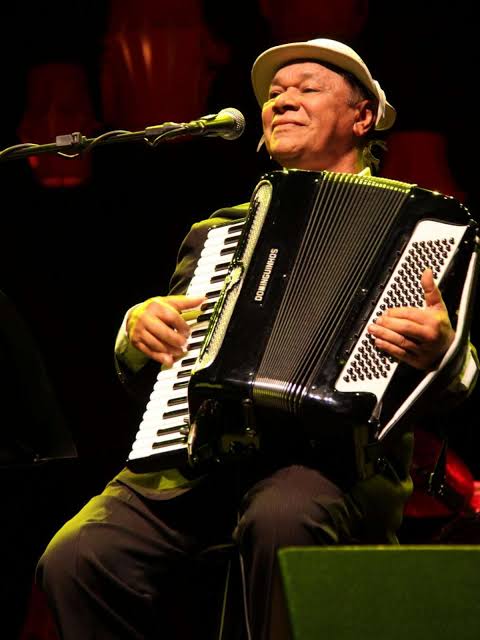
José Domingos de Morais (1941–2013), known as Dominguinhos, was a Brazilian accordionist, composer and singer. Luiz Gonzaga took him under his wing and called him his artistic heir. His work moves through baião, forró, xote, choro and samba, with influences from bossa nova and jazz as well.
Childhood and Musical Training
Dominguinhos was born on February 12, 1941, in Garanhuns, Pernambuco. He was the son of Mestre Chicão, an accordionist and tuner of eight-bass button accordions (foles de oito baixos). He began playing as a child, first on pandeiro and then, for good, on accordion, and formed the trio Os Três Pinguins with two of his brothers. At the time, he performed as Neném do Acordeon.
At the age of eight, he met Luiz Gonzaga, who heard him playing outside a hotel where Gonzaga was staying and became his musical godfather. In 1954, he moved with his father and older brother to Nilópolis, in the Baixada Fluminense outside Rio de Janeiro, where Gonzaga gave him an accordion.
Largely self-taught, he studied some music with the accordionist and arranger Orlando Silveira, who became his main reference in the world of choro. Sivuca and Hermeto Pascoal were also among his references.
Career and Partnerships
In 1957, at 16, he made his first recording, playing accordion on Moça de Feira (Armando Nunes and J. Portela) on a Luiz Gonzaga album. That same year he adopted the stage name Dominguinhos, suggested by Gonzaga, and formed the Trio Nordestino with Borborema and Miudinho, performing in dance halls, nightclubs, gafieiras and steakhouses.
In the 1960s, he played in Canhoto's regional alongside Meira, Dino Sete Cordas and Orlando Silveira, accompanying radio artists. In 1964 he released his first LP, Fim de Festa, and in 1965 he recorded an album aimed at a northeastern audience, returning to a repertoire of forrós and baiões.
In 1972, at the invitation of manager Guilherme Araújo, he began working with Gilberto Gil and Gal Costa. He later played in shows by Caetano Veloso, Chico Buarque, Fagner and Maria Bethânia.
His partnership with Anastácia, to whom he was married, produced songs such as Eu Só Quero um Xodó, Tenho Sede and Sanfona Sentida. He also wrote Lamento Sertanejo with Gilberto Gil, Isso Aqui Tá Bom Demais and Tantas Palavras with Chico Buarque, and De Volta pro Meu Aconchego with Nando Cordel.
Over his career he recorded more than 40 albums. Among other awards, he received six Prêmios Sharp, the 2002 Latin Grammy for the album Chegando de Mansinho, and the 2010 Prêmio Shell de Música for his body of work.
Dominguinhos and Choro
Besides baiões, xotes and forrós, Dominguinhos composed and recorded choros. He played in Canhoto's regional in the 1960s and regarded Orlando Silveira as his main reference in the genre.
His choros include Princesinha no Choro, Nilopolitano, Noites Sergipanas, Homenagem a Pixinguinha and Chorando em Passo Fundo.
In 1994, he released Choro Chorado on Warner/Continental, an album of choros by other composers, including Bebê, Pedacinho do Céu, Espinha de Bacalhau, Tico-Tico no Fubá, Delicado, Apanhei-te Cavaquinho and Doce de Coco.
With guitarist Yamandu Costa, he recorded a duo album on Biscoito Fino, listed in the Dicionário Cravo Albin as Lado B (2010); the same label released the CD Yamandu + Dominguinhos in 2007. The repertoire combines compositions by Dominguinhos, such as Noites Sergipanas and Homenagem a Pixinguinha, with classics such as Naquele Tempo, by Pixinguinha and Benedito Lacerda, and Doce de Coco, by Jacob do Bandolim.
In 2017, cavaquinho and bandolim player Henrique Araújo released O Choro do Sertão, his first solo album, dedicated to Dominguinhos's instrumental compositions.
Dominguinhos died on July 23, 2013, aged 72, at Hospital Sírio-Libanês in São Paulo, from infectious and cardiac complications.
Compositions Mentioned
- Eu Só Quero um Xodó (with Anastácia)
- Tenho Sede (with Anastácia)
- Sanfona Sentida (with Anastácia)
- Lamento Sertanejo (with Gilberto Gil)
- Isso Aqui Tá Bom Demais (with Chico Buarque)
- De Volta pro Meu Aconchego (with Nando Cordel)
- Garanhuns
- Princesinha no Choro
- Nilopolitano
- Noites Sergipanas
- Homenagem a Pixinguinha (with Anastácia)
- Chorando em Passo Fundo
Sources and References
- Casa do Choro — Dominguinhos
- Casa do Choro — Catalog of works by Dominguinhos
- Dicionário Cravo Albin da Música Popular Brasileira — Dominguinhos
- Instituto Moreira Salles — Dominguinhos, o herdeiro
- Rádio Batuta / IMS — Choros de Dominguinhos por Henrique Araújo
- Rádio Batuta / IMS — Dominguinhos
- Sesc São Paulo — Isso é bom demais
- Novabrasil FM — 8 curiosidades sobre Dominguinhos
Suggested course
Move from editorial context into guided study with synchronized score and structured steps.
All courses
Browse the public course catalog connected to the content hubs.