Choropedia
Cristovão Bastos: Pianist and Composer
Cristovão Bastos is a Brazilian pianist and composer known for his contributions to choro and instrumental music.
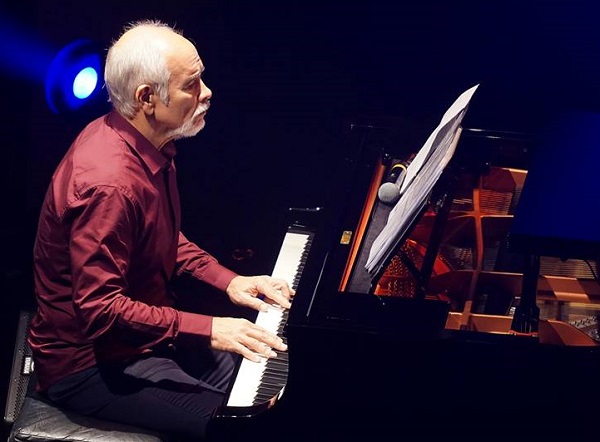 Foto: Marcos Trojan
Introduction
Cristovão da Silva Bastos Filho (Rio de Janeiro, 3 December 1946) is a Brazilian pianist, composer and arranger. Born in the Marechal Hermes neighborhood, he built an extensive career in Brazilian popular and instrumental music, working in choro and samba, on records, in concerts and in soundtracks.
He has written with composers such as Chico Buarque, Aldir Blanc, Paulinho da Viola, Paulo César Pinheiro, Elton Medeiros, Luciana Rabello and Abel Silva. As an arranger, he has worked with artists including Nana Caymmi, Edu Lobo and Gal Costa, as well as with several of his songwriting partners.
Training and early years
Cristovão began studying music theory and the accordion as a child. By the age of 13 he was already playing at dances, and at 17 he moved to the piano professionally at a nightclub in Cascadura, in Rio de Janeiro's northern suburbs.
The change of instrument came about by chance. The house pianist left the job and the owner asked Cristovão whether he could play piano. Although he had little experience on the instrument, he took the position and developed his technique on the job, while at the same time deepening his studies.
He also began writing arrangements early on. While playing in a dance band, he wrote an arrangement that caught the attention of saxophonist and arranger Aristides Santos, who led the ensemble. From then on, he took on that role regularly.
Paulinho da Viola and choro
Cristovão's relationship with Paulinho da Viola occupies an important place in his career. In 1976 he played piano on Memórias Chorando, a Paulinho album devoted entirely to choro. On the track Choro de Memórias, for instance, he appears alongside Paulinho on cavaquinho, César Faria on guitar, Dininho on bass and other musicians.
The two also became songwriting partners. Among the works they wrote together are Acreditei nos Beijos Dela, Meu Tempo de Garoto, Não Me Digas Não and Um Choro pro Waldir.
Throughout his career Cristovão maintained an instrumental output directly tied to the genre. The Casa do Choro catalogue lists among his works choros, waltzes, maxixes, schottisches and choros-canção, including titles such as Choro Saudoso, Choro dos Mestres, Chupando Manga, Flor de Jacarandá and Acreditei nos Beijos Dela.
Banda Black Rio
In the 1970s, Cristovão was part of the first line-up of Banda Black Rio, alongside Oberdan Magalhães, Barrosinho, Lúcio Trombone, Cláudio Stevenson, Jamil Joanes and Luiz Carlos Batera.
He played on the group's first album, Maria Fumaça, released in 1977. With Cláudio Stevenson, he composed Metalúrgica, one of the tracks on the record.
Cristovão later recounted that the repertoire of that period was developed collectively over long rehearsals, and that the first album was prepared without the musicians using any written scores. According to him, everyone weighed in on the different instruments and took part in building the arrangements.
Composer and collaborator
Cristovão's body of work includes both instrumental music and songs written with some of Brazil's leading lyricists and composers.
With Chico Buarque, he composed Todo o Sentimento and Tua Cantiga. The first collaboration came about after Cristovão played the melody for Miúcha, who passed it on to her brother. Years later, it was again through her that Tua Cantiga reached Chico.
With Aldir Blanc he sustained an extensive partnership that produced songs such as Resposta ao Tempo, Suave Veneno, Cinquenta Anos and Dasdô e o Gato. Resposta ao Tempo and Suave Veneno were recorded by Nana Caymmi and used in Brazilian television productions.
Other collaborators include Paulo César Pinheiro, Abel Silva, Hermínio Bello de Carvalho, Jorginho do Pandeiro, Maurício Carrilho, João Lyra and Luciana Rabello.
The arranger
Alongside his work as a performer and composer, Cristovão developed an extensive career as an arranger for albums and stage productions. He has written arrangements for artists such as Paulinho da Viola, Chico Buarque, Nana Caymmi, Edu Lobo, Gal Costa, Elza Soares, Emílio Santiago, Fafá de Belém and Ângela Maria.
Explaining his working process, Cristovão says an arrangement usually starts from a conversation with the artist and the producer, in which the direction of the song is defined. The work may involve changes to harmony, melody, rhythm and instrumentation.
Cristovão also taught himself guitar and had some contact with flute and trumpet, though he devoted himself professionally to the piano. Speaking specifically about samba arrangements, he says he often prefers to start from the guitar because of its cadence, using the piano as a complement.
The piano in choro
The presence of the piano in choro ensembles is one aspect of Cristovão's work that has been studied academically, drawing on his own recordings and statements.
Discussing how the piano enters a regional that already has a melody instrument, cavaquinho, guitars and percussion, Cristovão reached for the image of a painting: "You can't walk into a picture and smudge the painter's color" ("Você não pode entrar num quadro e sujar a cor do pintor"). For him, the instrument should come in to contribute to the ensemble, not to cover up what the other musicians are doing.
The observation echoes another remark of his about samba arrangements: "I like to use the piano as a complement" ("gosto de usar o piano como complemento").
Avenida Brasil
In 1996 Cristovão released Avenida Brasil, his first solo album. Produced by Almir Chediak, the record brings together his own compositions and works by composers connected to his career.
The tracks include Os Três Chorões, Avenida Brasil, Mandacaru – Sertão de Caicó, Rumo Zona Oeste and Um Choro pro Waldir, as well as Tudo se Transformou by Paulinho da Viola, Pianinho by Edu Lobo and Aldir Blanc, Mistura e Manda by Nelson Alves, and Todo o Sentimento, Cristovão's co-write with Chico Buarque.
The album featured musicians such as Luciana Rabello, Maurício Carrilho, João Lyra, Marco Pereira, Jorginho do Pandeiro, Mauro Senise and Zé Nogueira. The arrangements were written by Cristovão.
Instrumental encounters
Even before his first solo album, Cristovão recorded Bons Encontros with guitarist Marco Pereira, released in 1992 and devoted to compositions by Ary Barroso and Noel Rosa. The album won the Prêmio Sharp for best instrumental record.
In 2002 he recorded Domingo na Geral with the group Nó em Pingo d'Água. In 2008 he released Curtindo a Gafieira.
In 2020 he joined seven-string guitarist Rogério Caetano for a duo album. The repertoire includes Acreditei nos Beijos Dela, Polca do Jequitibá, Choro Saudoso and Choro pro Waldir, along with compositions by Rogério Caetano and Eduardo Neves. The record was nominated for the Latin Grammy for Best Instrumental Album in 2021.
Cristovão returned to the duo format with guitarist João Lyra on Varandão, an album made up of original choros by the two musicians.
With Mauro Senise, he recorded Choro Negro, dedicated to the work of Paulinho da Viola. The album was nominated for the Latin Grammy for Best Instrumental Album in 2023.
Notable works
- Acreditei nos Beijos Dela, with Paulinho da Viola
- Choro Saudoso
- Choro dos Mestres
- Um Choro pro Waldir, with Paulinho da Viola
- Os Três Chorões
- Avenida Brasil
- Pitangueira, with Luciana Rabello
- Polca do Jequitibá, with Maurício Carrilho
- Todo o Sentimento, with Chico Buarque
- Tua Cantiga, with Chico Buarque
- Resposta ao Tempo, with Aldir Blanc
- Suave Veneno, with Aldir Blanc
Selected discography
- Bons Encontros, with Marco Pereira — 1992
- Antônio Carlos Jobim – Letra & Música, with Leny Andrade — 1995
- Avenida Brasil — 1996
- Domingo na Geral, with Nó em Pingo d'Água — 2002
- Curtindo a Gafieira — 2008
- Cristovão Bastos e Rogério Caetano, with Rogério Caetano — 2020
- Varandão, with João Lyra — 2022
- Choro Negro, with Mauro Senise — 2022
- Amizade, with Áurea Martins — 2025
Sources
- Instituto Casa do Choro. Composer archive and sheet music catalogue for Cristovão Bastos.
- Instituto Moreira Salles / Rádio Batuta. Cristovão Bastos e Rogério Caetano; Paulinho da Viola no choro.
- OLIVEIRA, Luísa Camargo Mitre de. Uma Roda de Choro no piano: práticas idiomáticas de performance a partir de gravações dos pianistas Cristóvão Bastos e Laércio de Freitas. Master's dissertation, Universidade Federal de Minas Gerais, 2017.
- OLIVEIRA, Luísa Camargo Mitre de. "O piano no grupo de choro: outras possibilidades". Música Popular em Revista, Unicamp.
- Dicionário Cravo Albin da Música Popular Brasileira. Entry "Cristovão Bastos".
- Discografia Brasileira. Recording records and credits for Cristovão Bastos.
- Sesc São Paulo. "Sons em harmonia". Interview with Cristovão Bastos, 2017.
- Jornal do Brasil. "Glorioso Cristovão", 2018.
- Latin Recording Academy. Best Instrumental Album nominations, 2021 and 2023.
Suggested course
Move from editorial context into guided study with synchronized score and structured steps.
All courses
Browse the public course catalog connected to the content hubs.