Choropedia
Bonfiglio de Oliveira: Brazilian Trumpeter and Composer
Learn about Bonfiglio de Oliveira, a key figure in Brazilian choro music known for his compositions and contributions as a trumpeter.
Introduction
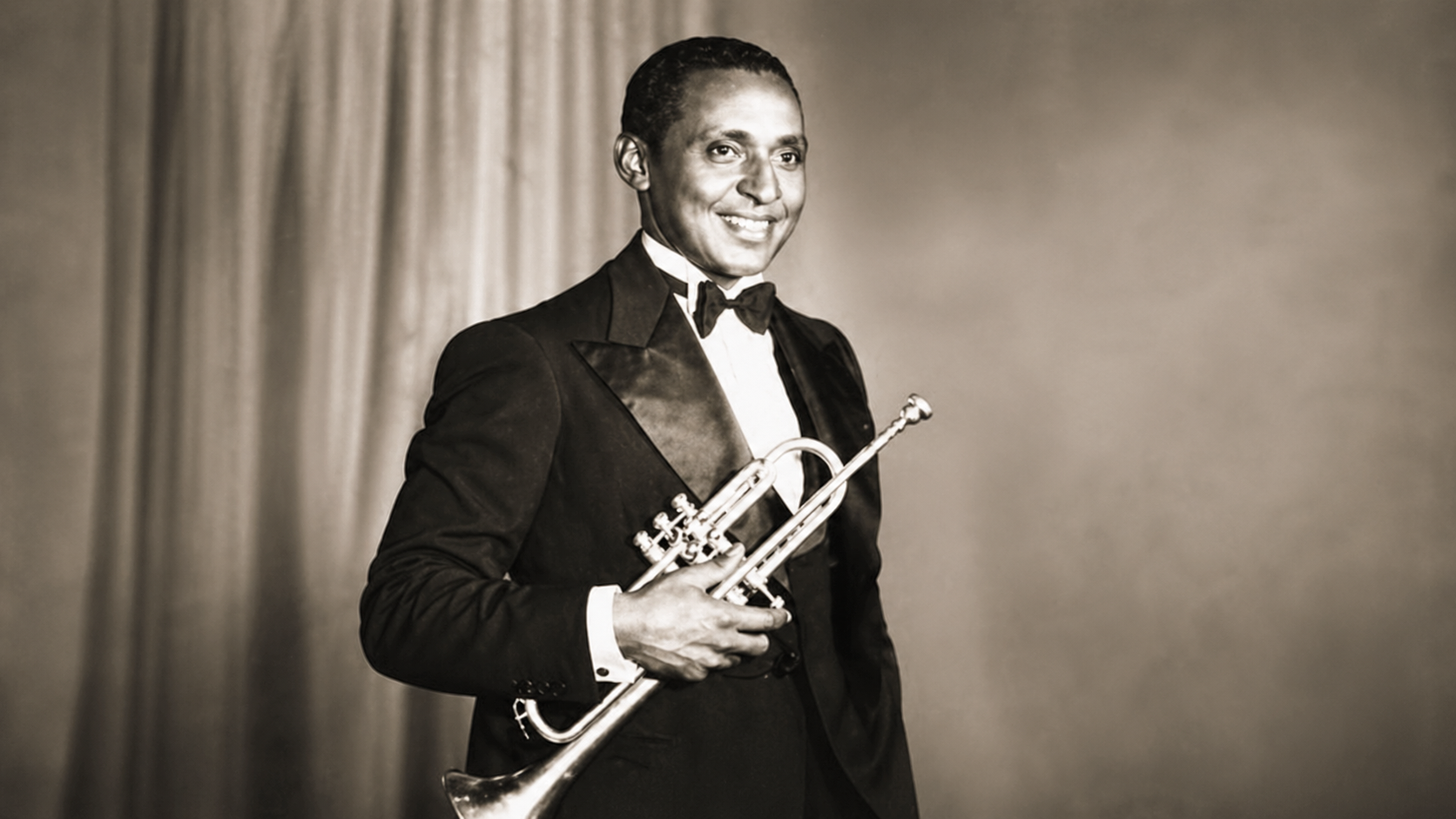
Bonfiglio de Oliveira (Guaratinguetá-SP, September 27, 1894 — Rio de Janeiro, May 16, 1940) was a trumpeter, double bassist, and composer, an important figure in Brazilian popular music in the early decades of the 20th century. A native of Guaratinguetá, in the state of São Paulo, he built a career tied to wind bands, cinemas, theaters, radio, 78 rpm recordings, and the groups that helped shape the sound of urban choro (a Brazilian instrumental music genre rooted in late-19th-century Rio de Janeiro) in the city.
He also appears in sources under variant spellings, such as Bonfíglio de Oliveira and Bomfiglio de Oliveira.
Musical Training
Bonfiglio began his musical studies in Guaratinguetá. His father was a double bassist in the Banda Mafra and passed on his first musical knowledge to him. Before settling on the trumpet, Bonfiglio also played bass drum and performed in local bands. Later, he studied trumpet with maestro Acosta and joined the Banda Mafra as a trumpeter.
His training in bands is an important factor for understanding his trajectory. In the early 20th century, many musicians associated with choro came up through civilian, school, military, or religious bands. These spaces offered musical literacy, ensemble practice, technical mastery of the instrument, and exposure to dance repertoires, dobrados (Brazilian military marches), waltzes, polkas, maxixes (an urban Brazilian dance form descended from polka and lundu), and other genres that circulated between popular settings and written repertoire.
While still young, Bonfiglio also joined the Banda do Colégio São José, where he received instruction in conducting and composition. His first composition is said to have been the dobrado "Pe. Frederico Gióia," a tribute to the Salesian priest who taught him elements of conducting and composition. He later moved to Lorena and Piquete, where he organized a band that performed in cities throughout the Vale do Paraíba region.
Arrival in Rio de Janeiro
Around 1912, Bonfiglio was invited by the conductor and violinist Lafaiete Silva, brother of the flutist Patápio Silva, to relocate to Rio de Janeiro. In the federal capital, he joined the orchestra of the Cinema Ouvidor, conducted by Lafaiete himself, a venue where Pixinguinha also performed.
Upon arriving in Rio, Bonfiglio went to live at the Pensão Viana, the home of Pixinguinha's family, known for hosting musicians and serving as a meeting point for instrumentalists. This proximity placed him in direct contact with one of the most important hubs of Rio's popular music in the period.
In Rio de Janeiro, Bonfiglio worked intensely as a trumpeter and double bassist in cinema and theater orchestras. There is also record of his attendance at the Conservatório Musical do Rio de Janeiro and his work with the Orquestra Sinfônica do Rio de Janeiro, then conducted by Francisco Braga.
The Choro Carioca and the First Recordings
Bonfiglio was a member of the Choro Carioca, the ensemble associated with Pixinguinha's first recordings. The lineup featured Pixinguinha on piccolo, Irineu de Almeida on ophicleide and euphonium, Bonfiglio de Oliveira on trumpet, Léo and Otávio Viana on guitars, and Henrique Viana on cavaquinho (a small four-string Brazilian guitar).
This involvement is crucial for understanding his place in the history of choro. Bonfiglio was not merely a musician close to Pixinguinha; he was part of the formations that helped record on disc a musical language still in the process of consolidation. In the Choro Carioca, Bonfiglio's trumpet dialogued with piccolo, ophicleide, euphonium, guitars, and cavaquinho, in a sound that still maintained strong ties to the band tradition but was already pointing toward choro as an urban, instrumental, and recorded practice.
It is worth treating expressions like "improvisation" with care in this context. In early choro recordings, variation often appears as ornamentation, rhythmic alteration, countermelody, inflection, or small melodic modification, and not necessarily as free improvisation in the later jazz sense. Bonfiglio's recording of "Flamengo" presents improvisations of a primarily ornamental character, with the use of mordents and appoggiaturas that do not fundamentally alter the melodic line.
The Trumpet in Choro
Bonfiglio occupies a special position in the history of choro as one of the principal references for the trumpet, or pistom (the Brazilian Portuguese term for the trumpet/cornet in popular music), within Brazilian popular music. He was one of the greatest instrumentalists of his time, alongside Pixinguinha and Luís Americano.
His importance lies not only in instrumental technique. Bonfiglio represents a generation of musicians who moved between band, theater, cinema, radio, recording, and Carnival. His trumpet appears at a moment when wind instruments had a strong presence in urban popular music, before the image of choro settled more narrowly around the flute, bandolim (Brazilian mandolin), cavaquinho, and guitars.
In 1930, Bonfiglio received from President Washington Luís a silver pistom engraved with an inscription calling him "the greatest pistonist in Brazil." The episode reflects the public recognition of his instrumental work.
The Batutas, Jazz Bands, and Sonic Modernization
Bonfiglio's trajectory also passes through the instrumental transformations of the Batutas. After the Oito Batutas traveled to Paris in 1922, several formations linked to the group incorporated instruments associated with the jazz band model, such as saxophone, trumpet, trombone, and drums. One configuration of the Jazz Band Os Batutas brought together Pixinguinha and Paraíso on saxophones, Esmerino Cardoso on trombone, Euclides Virgulino on drums, and Sebastião Cirino and Bonfiglio de Oliveira on trumpets.
This information should be read with historical care. The presence of the term "jazz band" in 1920s Brazil did not necessarily indicate jazz practice in the North American sense. It often indicated a modern instrumentation associated with saxophones, brass, drums, and urban dance repertoires. In that context, jazz influence was largely confined to the instrumentation and the format of the ensembles.
Bonfiglio thus stands in a transitional zone: he came from a band background, worked in choro and theater orchestras, and also took part in groups seeking a modern sound for Brazilian popular music. His trumpet crossed this historical corridor with ease.
Performance in Carnival, Radio, and Theater
Bonfiglio took an active part in Rio's Carnival celebrations. He was present in the Grupo do Caxangá in 1917 and served as music director for the rancho (a type of Carnival ensemble that paraded through the streets with songs, choreography, and themed costumes) Ameno Resedá in 1919. In the 1930s, he joined the Grupo da Guarda Velha and the orchestra Diabos do Céu.
This information shows that his career does not belong solely to the history of instrumental choro. Bonfiglio worked in an environment where choro, samba, march, maxixe, waltz, Carnival rancho, theater revue, radio, and recording constantly intersected. This circulation was typical of professional musicians of the period: the same instrumentalist might play in silent cinema, accompany singers, perform in orchestras, record choros, write Carnival marches, and take part in regional ensembles (small groups built around guitars, cavaquinho, and a melodic lead instrument such as flute or bandolim).
During the 1930s, Bonfiglio worked on the Programa Casé at Rádio Philips as a soloist and orchestra member. He also passed through theatrical companies such as the Companhia Arruda and the Companhia Jardel Jércolis, with which he toured Portugal, Spain, and France.
Bonfiglio the Composer
Although remembered chiefly as a trumpeter, Bonfiglio left an impressive catalog as a composer. There are 33 works attributed to him, including choros, waltzes, tangos, marches, sambas, polkas, and maxixes. Among the titles are "Flamengo", "Amor não se compra", "Isto é nosso", "Gargalhada", "Glória", "Terezinha", "Alzira", "Carolina", and "Não posso comer sem molho".
He maintained partnerships with composers and lyricists such as Lamartine Babo, Orestes Barbosa, Hervé Cordovil, Herivelto Martins, André Filho, and Valfrido Silva. This network of partnerships confirms his broad presence in Brazilian popular music of the period, in instrumental repertoire as well as in song and Carnival.
Among his best-known works is the choro "Flamengo," recorded by Bonfiglio himself in 1931 for Victor. The recording was made on October 17, 1931, on Victor disc 33494, with "Terezinha" on the other side.
"Flamengo" and the Language of Choro
"Flamengo" is one of Bonfiglio's most representative works. The choro combines melodic clarity, idiomatic writing for the trumpet, and a structure close to the traditional choro model. The piece is a historical example of the trumpet's presence in the genre. The work approaches rondo form, with contrasting sections and modulations characteristic of classic choro.
Bonfiglio's recording presents an instrumentation close to the tradition of pau e corda ensembles (literally "wood and strings"; small groups of guitar, cavaquinho, and a melodic instrument): the trumpet as the melodic instrument, accompanied by guitar and cavaquinho. This combination shows how the trumpet could occupy, in choro, a function similar to that of the flute or other solo instruments, without losing its own identity as a brass voice.
There are different interpretations of the origin of the title "Flamengo." Some sources suggest a tribute to the Rio football club; others, to the Carioca neighborhood where Bonfiglio is said to have lived. Neither hypothesis is securely substantiated. The most prudent approach, then, is to present the title as associated with Bonfiglio's Carioca world, without categorically asserting a single motivation.
Featured Works
Flamengo: Bonfiglio de Oliveira's best-known choro. Recorded by the composer himself in 1931, it became a recurring piece in the repertoire of choro instrumentalists and received later recordings. The phonogram is a 1931 Victor recording, with accompaniment by guitars, cavaquinho, and drums.
Terezinha: waltz recorded by Bonfiglio on the same Victor disc 33494, with "Flamengo" on the other side. The recording dates from October 17, 1931, with release in December of the same year.
Glória: waltz that figures among his major works. It was composed in 1918 in Guaratinguetá, and later received lyrics by Branca M. Coelho, recorded by Gastão Formenti in 1931.
Isto é nosso: choro present in his catalog, recorded by the Orquestra Típica Victor, conducted by Radamés Gnattali, in 1936.
Amor não se compra: choro that represents Bonfiglio's instrumental work within the choro repertoire.
Não posso comer sem molho: Bonfiglio's maxixe, recorded by Francisco Alves and Gastão Formenti in 1928. The work shows his circulation beyond strictly instrumental choro, reaching the sung and danced repertoire of the period.
Legacy
Bonfiglio de Oliveira's legacy can be understood in three principal dimensions. The first is instrumental: he was one of the great references for the trumpet in Brazilian popular music, in an era when wind instruments played a decisive role in shaping urban sound. The second is compositional: he left choros, waltzes, marches, maxixes, sambas, and songs that circulated in records, on radio, in theaters, and in rodas (informal gatherings where choro musicians play together). The third is historical: his closeness to Pixinguinha and his participation in groups such as Choro Carioca, Grupo do Caxangá, Guarda Velha, Diabos do Céu, and formations linked to the Batutas place him at the center of a decisive moment in Brazilian music.
Bonfiglio belonged to a generation in which the boundaries between genres were still in motion. The same musician could perform in a band, cinema, theater, rancho, radio, and recording session; could compose choro, waltz, maxixe, march, and samba; could read scores, accompany singers, solo, conduct, and take part in modern formations. This versatility is not a biographical detail but a key to understanding how choro took shape in the midst of urban circulation.
His tombstone bears the inscription: "Com a sua arte atingiu a imortalidade" ("Through his art he attained immortality"). The phrase sounds solemn, but in Bonfiglio's case it seems just. His work endures not only in the historical record but in the sound of the trumpet that still finds room in choro rodas, opening a path between strings, winds, and memory.
Sources
- Dicionário Cravo Albin da Música Popular Brasileira — Entry "Bonfíglio de Oliveira," with biographical data, catalog of works, partnerships, and recordings. Available at: dicionariompb.com.br
- Instituto Casa do Choro — Composers' archive and score catalog of Bonfiglio de Oliveira, including records of groups, dates, and the list of 33 works attributed to the composer. Available at: casadochoro.com.br
- Instituto Moreira Salles / Discografia Brasileira — Phonograms "Flamengo" and "Terezinha," from Victor disc 33494, recorded on October 17, 1931. Available at: ims.com.br
- MOTA, Pedro. Dois estudos de caso do trompete no choro: Flamengo, de Bonfiglio de Oliveira, e Peguei a Reta, de Porfírio Costa. Master's thesis, UFMG. — Musicological analysis of "Flamengo," the instrumentation of the 1931 recording, and the role of the trumpet in choro.
For complementary consultation on the Carioca musical environment in which Bonfiglio worked, we recommend cross-referencing the sources above with the Choropedia entries dedicated to Pixinguinha, the Oito Batutas, and the formation of urban choro in the early decades of the 20th century.
Suggested course
Move from editorial context into guided study with synchronized score and structured steps.
All courses
Browse the public course catalog connected to the content hubs.