Choropedia
Avena de Castro - Brazilian Musician
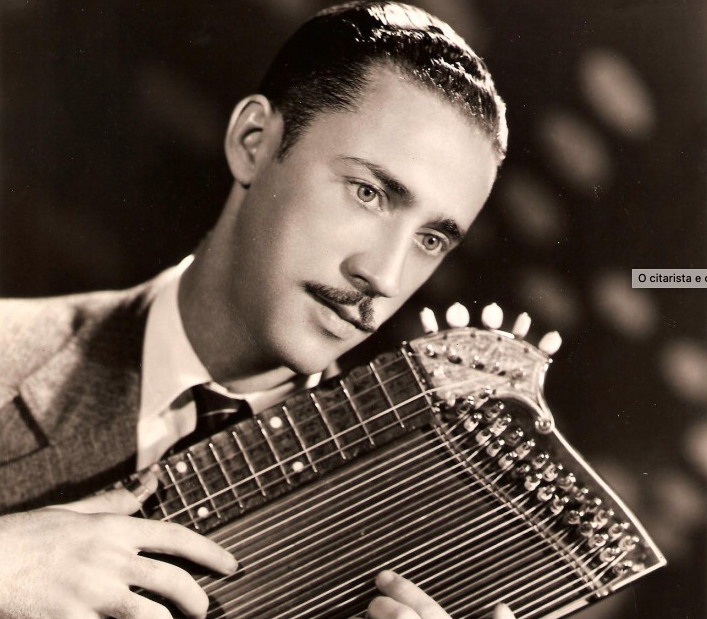
Avena de Castro was a Brazilian citarist and composer instrumental in Brasília's music scene.
Introduction
Heitor Avena de Castro, known as Avena de Castro (Rio de Janeiro, 7 December 1919 – Brasília, 11 July 1981), was a Brazilian zither player and composer. Trained in the concert music tradition, he built a singular career by adapting the zither — a European instrument rarely heard in Brazilian popular music — to the repertoire of choro, samba and the waltz.
Beyond his work as an instrumentalist and composer, he played a decisive role in organizing the musical scene of Brasília. The rodas (informal playing gatherings) hosted by Avena and his companions helped establish choro in the new capital and contributed to the founding of the Clube do Choro de Brasília, of which he was the first president.
Training and musical career
Avena began his musical studies in childhood. After an early encounter with the piano, he took up the zither under the Viennese musician Carlos Tyll and later refined his technique with Nikolas Schaack.
His training was initially oriented toward the classical and Romantic repertoire. From 1937 onward he began performing as a soloist and in duo with his brother, playing transcriptions of composers such as Bach and Chopin. The discipline of written music remained a defining trait of his playing, marked by precise reading and careful phrasing.
In 1943 he moved to Ubá, in Minas Gerais, where he worked as an accountant at a paper factory. There he met Lezir Ferreira, whom he married in 1947. Two years later he returned to Rio de Janeiro and began working professionally at radio stations such as Rádio Nacional and Rádio Roquette-Pinto.
In that environment he mixed with musicians including Pixinguinha, Garoto, Radamés Gnattali, Altamiro Carrilho, Waldir Azevedo and Jacob do Bandolim. Between 1953 and 1959 he released a series of 78 rpm records on the Copacabana and Continental labels, documenting both popular repertoire and his own compositions.
The zither in *choro*
Avena de Castro's most distinctive contribution was bringing the zither into the world of choro. Traditionally tied to European music and to a slower-moving repertoire, the instrument acquired in his hands a language rooted in the swing, syncopation and ornamentation of Brazilian popular music.
Avena produced transcriptions of works by Ernesto Nazareth and developed his own compositions adapted to the technical possibilities of the zither. By bringing the zither into the choro repertoire, Avena explored characteristics particular to the instrument: its range, the sustain of its notes and the delicacy of its timbre.
His playing preserved elements of his classical training: strict fidelity to the score, clarity of individual voices and control of dynamics. At the same time, his repertoire took in choros, sambas, tangos brasileiros (Brazilian tangos) and waltzes, producing a combination uncommon in Brazilian instrumental music.
Avena de Castro and *choro* in Brasília
With the construction of Brasília, Avena moved to the new capital, where his home and the residences of other musicians became meeting points for instrumentalists, civil servants and choro enthusiasts.
The Saturday rodas brought together figures such as Raimundo de Brito, Odette Ernest Dias, Neusa França, Pernambuco do Pandeiro, Bide da Flauta, Waldir Azevedo and other members of Brasília's first generation of chorões (choro musicians). The movement became known as Sábado à tarde ("Saturday afternoon").
The exchange among these musicians consolidated a repertoire, forged connections between instrumentalists from different regions of the country and laid the foundations for a permanent musical life in the city. In 1977 Avena became the first president of the Clube do Choro de Brasília. He also presided over the regional branch of the Ordem dos Músicos do Brasil (Brazilian Musicians' Order) between 1973 and 1979.
His activity therefore extended well beyond his individual work as a zither player. Avena acted as the organizing force behind a musical community that helped turn Brasília into one of the important centers of Brazilian choro.
Major works
| Title | Reference | Notes |
|---|---|---|
| Evocação de Jacob | Tribute to Jacob do Bandolim | His best-known composition, written after the mandolinist's death. |
| Sábado à tarde | The rodas of Brasília | Tied to the gatherings that shaped the city's choro scene. |
| Quando fala o coração | Lyrical choro | Later recorded by Waldir Azevedo. |
| Cordas românticas | With Waldir Azevedo | A partnership between two central figures of Brazilian music. |
| Papo de anjo | Choro | Included on the album dedicated to Jacob do Bandolim. |
| No balanço da Luciana | Tribute to Luciana Rabello | Recorded by the cavaquinho (small four-string guitar) player on her 2000 album. |
| Queixumes | Choro | Re-recorded by Déo Rian on the album Choros de sempre. |
| Paquetá | Waltz | Recorded by the composer himself on a 78 rpm disc. |
His surviving catalogue also includes choros such as Altamirando, Meiguice, Dialogando, Expansivo, Quarentão, Noites jacobeanas and A flauta do Plauto, along with sambas and waltzes.
Musical example
Evocação de Jacob is Avena de Castro's most representative work. Written in 1969, shortly after the death of Jacob do Bandolim, the piece does more than offer a sentimental portrait of his friend. Its melody recalls gestures associated with Jacob's playing, with long phrases, expressive ornamentation and changes of direction that evoke the language of the bandolim (Brazilian mandolin).
The choro has been recorded by a range of instrumentalists and ensembles, among them Toquinho, Joel Nascimento, Época de Ouro, Raphael Rabello and Armandinho. In circulating beyond the zither, it became part of the genre's permanent repertoire and the main point of entry into Avena's work.
Selected discography
- Meet Mr. Callaghan / Falando-te, 1953 — The zither player's first 78 rpm record.
- Uma cítara no samba, 1958 — An album devoted to the presence of the zither in Brazilian popular music.
- Naquele tempo, 1961 — An album of instrumental repertoire performed by the zither player.
- De Castro toca e você dança, 1960s — Released with De Castro e seu conjunto.
- Avena de Castro relembra Jacob Bittencourt, 1969 — His most widely noticed work, dedicated to the music of Jacob do Bandolim.
- Uma cítara com amor, 1973 — An album gathering choros, sambas, waltzes and original compositions.
The album dedicated to Jacob holds particular historical value: it contains the mandolinist's final appearance on record, in the performance of Três estrelinhas, by Anacleto de Medeiros.
Legacy
Avena de Castro occupies a singular position in the history of Brazilian music. His importance lies not only in the rarity of the instrument he chose, but in his ability to create for it a popular language of its own.
By carrying the zither into choro, he expanded the genre's timbral possibilities and demonstrated that its identity does not depend on a fixed instrumental lineup. As a composer, he left behind a preserved repertoire that continues to be taken up by bandolim players, cavaquinho players, guitarists and choro ensembles.
In Brasília his presence was broader still. The rodas he took part in helped build a musical community, shape repertoires and establish institutions that remained active after his death.
His personal archive, maintained by his son Otávio Cláudio Ferreira de Castro, brings together manuscripts, records, tapes, photographs, concert programs, press clippings and two zithers. The collection documents the career of an unusual instrumentalist and a foundational chapter in the formation of choro in the Brazilian capital.
Avena de Castro endures as the musician who found for the zither an unexpected place: at the center of the roda.
Sources
Instituto Casa do Choro — entry "Castro, Heitor Avena de." Principal source for biographical data, musical training, professional career, characteristics of his playing and catalogue of compositions.
Dicionário Cravo Albin da Música Popular Brasileira — entry "Avena de Castro." Reference for information on his classical training, his work as a zither player, transcriptions, recordings, performances and discography.
Discografia Brasileira / Instituto Moreira Salles — records of Avena de Castro. Source for consulting and verifying discs, phonograms, repertoire, labels and release dates.
Choro Patrimônio / Universidade Federal de Pelotas — "Acervo Avena de Castro." Reference for the musician's career in Brasília, his participation in the formation of the city's first choro rodas, the founding of the Clube do Choro de Brasília and the composition of his personal archive.
Clube do Choro de Belo Horizonte — "101 anos de Heitor Avena de Castro." Complementary source for biographical and discographical information and for contextualizing his importance as a composer and zither player.
Suggested course
Move from editorial context into guided study with synchronized score and structured steps.
All courses
Browse the public course catalog connected to the content hubs.