Choropedia
Aunt Amélia: A Choro Pioneer
Discover Aunt Amélia, a Pernambuco pianist and composer who transformed choro music for the piano.
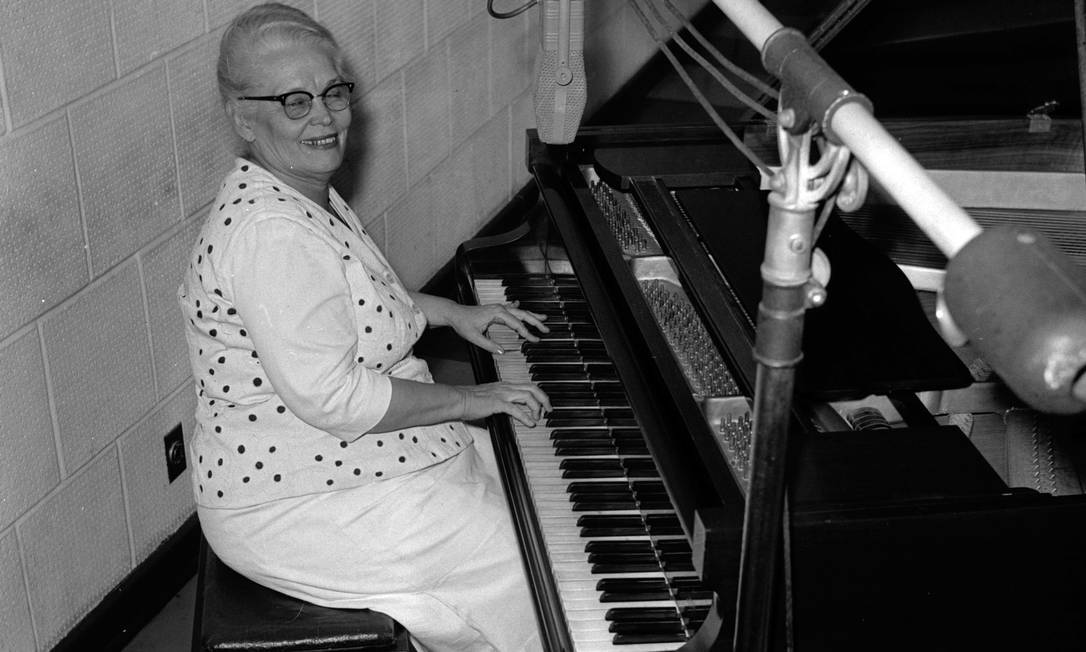
Tia Amélia (1897–1983): the life, work, and legacy of Amélia Brandão Néri, a pianist from Pernambuco who translated the logic of the regional (the traditional choro ensemble) to the keyboard and established the piano as a fully chorão instrument. Discover her valsas, choros, and her presence in the history of Brazilian popular piano.
Tags: Tia Amélia, Amélia Brandão Néri, choro, Brazilian piano, women in choro, Brazilian women composers, Pernambuco
Introduction
Tia Amélia, the artistic name of Amélia Brandão Néri (Jaboatão, Pernambuco, May 25, 1897 — Goiânia, Goiás, October 18, 1983), was a pianist, composer, and instrumentalist whose career spans different fields of Brazilian music: classically trained piano, urban popular repertoire, research on folkloric themes, radio, television, and — decisively — choro (a traditional Brazilian instrumental genre that emerged in late 19th-century Rio de Janeiro).
Her importance to choro lies in a specific contribution: the treatment of the piano as a chorão instrument (an instrument that "weeps" or "cries" within the choro aesthetic), capable of singing melodies while simultaneously sustaining bass lines, swing, and counter-melodies through the left hand. From this perspective, her work converses with the tradition of Ernesto Nazareth, Chiquinha Gonzaga, and Carolina Cardoso de Menezes, without being reducible to any of them. Alongside a long public career carried by radio and television, Tia Amélia secured a singular place in Brazilian popular piano, still in the process of being rediscovered today.
Training and Musical Context
Amélia Brandão was born into a musical family. Her father was the conductor of the Jaboatão town band, a clarinetist and violonista (guitarist); her mother played piano. This domestic environment offered her early contact with the instrument and with the popular and salon repertoire that circulated in Pernambuco at the beginning of the 20th century.
Her piano training was initially focused on the classical repertoire, although her inclination toward composition surfaced early: at twelve, she wrote her first known piece, the valsa (waltz) Gratidão. Sources record that her marriage, at the age of 17, temporarily interrupted her plans to pursue an artistic career. The traditional bibliography typically states that Amélia was widowed at 25; recent research suggests a more complex situation, linked to her separation from her husband and the social need to present herself as a widow in a period before divorce was legalized in Brazil.
From the 1920s onward, she began to perform professionally, especially in Recife. She worked at Rádio Clube de Pernambuco — a foundational space for her early visibility — and engaged in research on popular and folkloric themes from the state and other regions. This phase consolidated her image as a pianist and composer linked to Brazilian regional music, even before her stronger association with choro.
In 1929 or 1930, she traveled to Rio de Janeiro to resolve a copyright matter involving one of her compositions. Her stay in the then-capital had important consequences: she performed at the Teatro Lírico, was warmly received by the public and the press, and began appearing on Rio stations such as Mayrink Veiga, Sociedade, and Clube do Brasil. Throughout the 1930s, she toured Brazil and the Americas, often accompanied by her daughter Silene de Andrade, a singer, dancer, and reciter. Recent studies interpret this circulation as part of an artistic and diplomatic activity, tied to the promotion of Brazilian culture in a context of growing Pan-Americanism.
After a period away from the stage, living between Marília and Goiânia, she resumed her artistic activity in the 1950s, with decisive encouragement from singer Carmélia Alves. It is in this phase that the artistic persona Tia Amélia consolidates — a figure associated with the memory of popular piano, with valsas, choros, and an affectionate image of velha guarda (the "old guard," a term denoting an elder generation of musicians regarded as keepers of tradition), but also strategically constructed for radio, television, and the urban audience of the time. More than a term of endearment, "Tia Amélia" (Aunt Amélia) functioned as an artistic persona: a figure of musical authority linked to tradition, capable of holding her own in the media during a period dominated by new musical languages, by bossa nova, and by emerging television.
Musical Style
Tia Amélia's style is defined by the encounter between classical piano training, an attentive listening of Brazilian popular piano, and her own conception of instrumental choro at the keyboard. Some of her most characteristic traits include:
Melodic language: The melodies tend toward cantábile lyricism, with well-shaped phrases that draw both from the romantic salon tradition and from the melodic imagination of choro and the Brazilian valsa. There is a taste for clear thematic exposition, ornamental embellishments, and inflections that bring the pianistic writing close to the expressive speech of choro soloists.
Harmonic language: The harmony works with the tonal vocabulary typical of choro and urban popular music — secondary dominants, modulations to neighboring keys, chromatic progressions — without gratuitous elaboration. Cadences are usually clear, and the harmonic motion is guided by the voice of the left hand.
Rhythm and syncopation: The characteristic pulse of choro is present in the more strongly choro-flavored pieces, with syncopation, displaced accents, and the dialogue between tension and resolution. In valsas and pieces of a more lyrical character, the swing shifts to the articulation of the triple meter, without losing the Brazilian quality of the phrasing.
The left hand as engine: Perhaps the most distinctive trait of Tia Amélia's pianistic writing. The left hand does not limit itself to marking harmony: it creates counter-melodies, suggests walking bass lines, proposes levadas (rhythmic accompaniment patterns characteristic of Brazilian popular music). In interviews, the composer herself argued that true choro for piano cannot be sustained by melody alone, but rests on the work of the left hand — a function frequently compared to that of the violão de sete cordas (the seven-string guitar, the bass-line voice of the traditional choro ensemble).
Instrumentation and texture: The writing is for solo piano and treats the instrument as a small orchestra: melody sung in the right hand, counter-melodies and bass articulated in the left, with textures that recall the work of a regional condensed into two hands. Many pieces also work well in arrangements for choro ensembles.
Typical forms: The catalog is dominated by choros, valsas, and character pieces, with binary and ternary structures close to those adopted by the Rio choro tradition and by early 20th-century Brazilian popular piano.
Innovations and distinctive aspects: Tia Amélia's most original contribution lies in the way she translates to the keyboard a logic of accompaniment, bass, and rhythmic conduction usually associated with the regional. More than playing choros on the piano, she helped conceive the piano as a chorão instrument, integrated into the roda (the choro circle, where musicians gather to play together) — not as a competitor to the ensemble, but as a complete expression of how it works.
Important Works
Below is a selection of compositions representative of Tia Amélia's style and frequently associated with her popular piano and choro repertoire:
| Title | Genre | Notes |
|---|---|---|
| Cuíca no choro | Choro | An emblematic piece of Tia Amélia's pianistic choro; recorded on 78 rpm by RCA Victor. |
| Bom dia Radamés | Choro | A tribute to Radamés Gnattali, a fellow musician of her generation and a major reference of the Brazilian piano. |
| Bordões ao luar | Choro / character piece | The title itself ("Bass Strings in the Moonlight") highlights the importance of the bass and the singing left hand. |
| Chora coração | Valsa / choro | An example of the lyrical melodic quality characteristic of her writing. |
| Sorriso de Bueno | Choro | A piece associated with the mature phase of her output. |
| Casa da farinha | Folk-inspired piece | Illustrates her dialogue with Brazilian popular themes. |
| Capelinha de melão | Popular stylization | An example of her work with folkloric and children's source material. |
| Dois namorados | Valsa | Represents the more lyrical, salon-leaning side of her catalog. |
| Revoltado | Choro | A piece of more incisive character, with strong rhythmic work. |
| Nos cafundó do coração | Popular piece | Belongs to the set of works tied to affective memory and regional imagination. |
Musical Example
Cuíca no choro is one of the most useful pieces for introducing the listener to Tia Amélia's style. Attentive listening reveals how the left hand articulates a pattern of bass and counter-melodies that alone sustains much of the piece's swing, while the right hand exposes the melody with a phrasing close to that of a choro soloist. The writing displays the composer's signature: the piano works as a condensed regional, with bass strings, harmony, and singing voice coexisting in two hands. Alongside Bom dia Radamés, this choro synthesizes the singular place her work occupies in Brazilian popular piano.
Influences and Connections
Influences on Tia Amélia:
- The Brazilian popular piano tradition — Ernesto Nazareth, Chiquinha Gonzaga, and Carolina Cardoso de Menezes form the aesthetic horizon of her writing, especially in her treatment of valsas, choros, and character pieces.
- The European classical-romantic repertoire — Her classical piano training left marks in the rigor of voice leading and in the careful design of the melodic line.
- Popular and folkloric music of the Northeast — Years of research and activity in Recife fed her repertoire with regional material that became part of her writing.
- The logic of the choro regional — Listening to popular ensembles directly informed her conception of the piano as an instrument for the roda.
Dialogues and connections:
- Radamés Gnattali — Composer, arranger, and pianist to whom Tia Amélia dedicated Bom dia Radamés, in one of the most explicit homages of her catalog. The aesthetic proximity between the two pianists is evident in their treatment of syncopation and harmony.
- Carmélia Alves — A singer who played a decisive role in Tia Amélia's artistic return to Rio de Janeiro in the 1950s, contributing to the consolidation of her public persona and her return to stages and studios.
- Silene de Andrade — Her daughter, a singer, dancer, and reciter, with whom Tia Amélia shared tours through Brazil and the Americas during the 1930s.
Performers and successors:
- Hercules Gomes — A pianist who has taken on a central role in the recent rediscovery of Tia Amélia's work, with the album Tia Amélia Para Sempre (Selo Sesc, 2020) and through the transcription and arrangement of scores from her catalog.
- Contemporary performers and pianists — The revival of her repertoire has been growing among pianists and choro groups, especially after the publication of the biography Tia Amélia: o piano e a vida incrível da compositora (2024).
Circulation context:
- She worked at Rádio Clube de Pernambuco as early as the 1920s, in one of the first consistent experiments in Brazilian radio.
- She performed at the Teatro Lírico in Rio de Janeiro and on stations such as Mayrink Veiga, Sociedade, and Clube do Brasil.
- In the 1950s and 1960s, she hosted the programs Velhas Estampas (TV Rio) and Tia Amélia, Suas Histórias e Seu Piano Antigo (TV Tupi), which combined music, narrative, and the memory of Brazilian music.
Legacy
Tia Amélia occupies a singular place in the history of choro and Brazilian popular piano. Her work shows that the piano was not merely a salon instrument, a domestic accompaniment, or a bridge between the erudite and the popular. In her hands, it became a chorão instrument: capable of singing melodies, sustaining bass lines, creating swing, suggesting levadas, and condensing, in two hands, part of the complexity of a regional.
On the map of Brazilian popular piano, her music belongs alongside the great figures of the tradition. The lineage in which she is inscribed connects Nazareth, Chiquinha Gonzaga, and Carolina Cardoso de Menezes to later developments in pianistic choro, with the left hand functioning as the secret engine of the roda. This conception, defended by the composer herself in interviews, continues to offer a productive model for pianists devoted to the repertoire.
Despite the recognition she received in her lifetime from musicians, journalists, and critics, Tia Amélia underwent a process of erasure after her death — linked to recurring factors in the history of Brazilian music: gender, regionality, age, the limited circulation of scores, and the difficulty of incorporating women popular composers into the official narrative of choro and Brazilian piano. In recent years, this scenario has begun to shift. The album Tia Amélia Para Sempre, by Hercules Gomes (Selo Sesc, 2020), and the biography Tia Amélia: o piano e a vida incrível da compositora, by Jeanne de Castro (2024), are landmarks of this rediscovery, alongside academic research and new recordings.
Her trajectory also broadens our understanding of women in choro. Tia Amélia was a composer, pianist, researcher, communicator, and a radio and television artist. Behind the affectionate persona of the "aunt at the piano" stood a sophisticated professional, technically trained, attentive to the popular repertoire, and capable of transforming memory, folklore, and pianistic language into authorial work. Restoring her to the center of choro history is a way of recognizing a lineage in which tradition and invention meet at the keyboard.
Selected Discography
- Velhas Estampas. Odeon, 1959.
- As músicas da vovó no piano da titia. Odeon, 1960.
- Cuíca no choro / Bom dia Radamés Gnattali. RCA Victor, 1960. (78 rpm)
- A bênção, Tia Amélia. Marcus Pereira, 1980.
- A bênção, Tia Amélia. CD reissue, Marcus Pereira, 1995.
- Tia Amélia Para Sempre. Hercules Gomes. Selo Sesc, 2020.
Sources
The following sources are relevant to the study of Tia Amélia and the musical context in which she worked:
- CASTRO, Jeanne de. Tia Amélia: o piano e a vida incrível da compositora. São Paulo: Tipografia Musical, 2024. — The reference biography, with documentary research and a critical revision of information consolidated by the traditional bibliography.
- CASTRO, Jeanne de. Tia Amélia: trajetória da compositora que encontrou no Choro sua síntese musical. ANPPOM Proceedings, 2024. — Academic article on the place of choro in the composer's work.
- ROSA, Robervaldo Linhares; MARCONATO, Thiago Leme. De Amélia Brandão Nery a Tia Amélia: a incrível história da compositora e seu piano. Música Hodie, 2024. — Study on the construction of her artistic persona and her public trajectory.
- Cravo Albin Dictionary of Brazilian Popular Music. Entry "Tia Amélia." — A reference biographical and discographic entry.
- Instituto Casa do Choro. Archive. Entry "Tia Amélia." — Documentation on the composer's life, work, and her context within choro.
- Revista Concerto. Biografia revela vida e obra de Amélia Brandão, a Tia Amélia, 2024. — Contextualized review of the recent biography.
- Sesc São Paulo. Tia Amélia: o piano e a vida incrível da compositora, 2024. — Institutional material tied to the biography's launch and the broader rediscovery effort.
Note: For consultation of scores and recordings, we recommend the archive of the Instituto Casa do Choro, the National Library of Brazil (Rio de Janeiro), and the transcription work carried out by pianist Hercules Gomes around the composer's catalog.
Suggested course
Move from editorial context into guided study with synchronized score and structured steps.
All courses
Browse the public course catalog connected to the content hubs.