Choropedia
Astor Silva - Brazilian Trombonist
Astor Silva was a key figure in Brazilian music as a trombonist and composer.
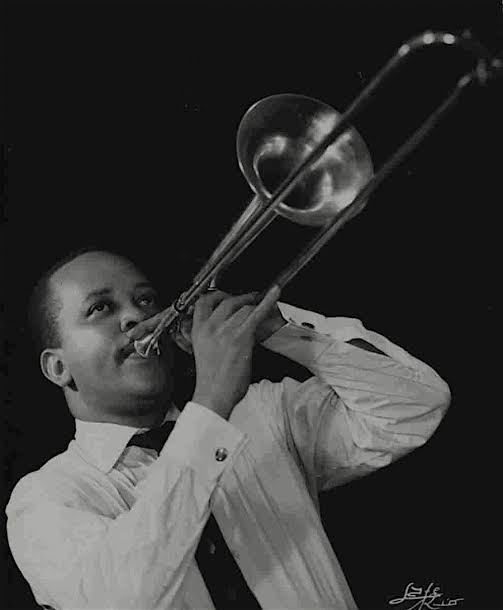
Astor Silva (Rio de Janeiro, May 10, 1922 – Rio de Janeiro, February 12, 1968) was a trombonist, composer, arranger and conductor. He worked in choro (an instrumental genre of Rio de Janeiro, born in the late 19th century), in samba and in dance music, and he was one of the central figures of the trombone in Brazilian popular music from the 1940s to the 1960s. He wrote Chorinho de Gafieira, one of the most widely played choros in rodas (informal choro jam sessions) across Brazil.
Childhood and musical training
Astor Silva was born in the Catumbi neighborhood of Rio de Janeiro. He began studying music at the Instituto João Alfredo, formerly the Asilo dos Meninos Desvalidos (Asylum for Destitute Boys), which trained many of Rio's band musicians. He played in its student band and was conducting it by the age of 12.
He studied with Romeu Malta and Djalma Freitas and played several wind instruments, including the trumpet and the bombardino (euphonium), before the trombone became his main instrument.
Musical career
He began playing professionally in his teens. By 16 he was already performing with the saxophonist and clarinetist Luiz Americano. He worked in the dancings (paid dance halls) of the Cinelândia district and at the Cassino Icaraí in Niterói, both of which gave dance orchestras steady work.
In 1946 gambling was banned in Brazil and the casinos closed. That same year Astor joined Severino Araújo's Orquestra Tabajara, which had arrived in Rio the year before under contract to Rádio Tupi. He recorded extensively with the Tabajara and toured with it in Argentina, Uruguay and France.
His recording debut as a soloist came in 1951 on the Rio label, with two gafieira choros by other composers: Dragão Dengoso (Altivo Pinto and Oscar Camelo) and Comprando Barulho (Djalma Mafra and Neufar). In the mid-1950s, leading Astor e Seu Conjunto, he recorded his own choros for the Todamérica label, among them No Melhor da Festa, Chorinho de Boate and Sombra e Água Fresca.
From then on he worked more and more as an arranger, conductor and musical director. He worked for record labels such as CBS and Continental, as well as for Rádio Tupi and TV Rio, and he led ensembles such as Astor e Sua Orquestra and Os Sambistas do Asfalto. He arranged and directed recordings for Elza Soares, Jamelão, Ciro Monteiro, Elis Regina and Roberto Carlos, among others. His name appears on more than two hundred releases. He also played on many recordings without credit, which was common in the 78 rpm era. In 1962 the newspaper O Jornal named him the best orchestrator of 1961.
Astor Silva died in Rio de Janeiro on February 12, 1968, at the age of 45.
The trombone between choro and gafieira
In early choro, the trombone took over from the bands the role of the ophicleide and the bombardino. It rarely played the main melody. It supplied countermelodies and bass lines that "stitched" the melodic line together, a practice connected to the baixarias (bass-line counterpoint) later taken up by the violão de sete cordas (seven-string guitar). Candinho Silva (1879–1960) is the leading name of this period.
During the 1940s and 1950s the instrument moved to the foreground. Three things helped: the American big bands led by trombonists such as Tommy Dorsey and Glenn Miller, the radio orchestras, and Rio's dance-hall circuit. This shift found its own idiom in the gafieiras, the popular dance halls of Rio. Gafieira ensembles replaced the traditional regional (choro ensemble of guitars, cavaquinho and pandeiro) with drums and double bass. They played a more danceable choro, with more room for improvisation and for interplay among the brass. In this setting the trombone took on the soloist's role and developed a language of its own, tied to the dance: swinging phrasing, accents in dialogue with the percussion, and glissandos, a device typical of the slide trombone.
Astor Silva belonged to the generation of soloist-arrangers who established this language, alongside Raul de Barros and Nelsinho do Trombone. He moved among the three settings that shaped the style: the school band, the dance halls and the big band. As a result, he played choro with the precision of the chorões (choro musicians) and, at the same time, with the rhythmic drive and brass-section writing of the dance orchestras.
Chorinho de Gafieira sums up this meeting of worlds. The original recording, by the Orquestra Tabajara in 1953, was released under the title Chorinho na Gafieira. The piece has the form and melodic contour of a choro, but it was written for the dance floor. Together with Raul de Barros's Na Glória, it became a cornerstone of the Brazilian popular trombone repertoire. Raul de Barros himself recorded it on his LP Brasil Trombone (1974). It spread to choro rodas throughout the country and is the subject of academic studies of the instrument. Trombonists such as Zé da Velha followed the path that Astor and his contemporaries opened; Zé da Velha recorded the album Só Gafieira! (1995) with Silvério Pontes.
Notable compositions
- Chorinho de Gafieira (original 1953 recording, as Chorinho na Gafieira)
- No Melhor da Festa
- Chorinho de Boate
- Sombra e Água Fresca
- Alta Noite (with Del Loro)
- Pisando Macio
- Humildemente (with Manoel Araújo and José Leocádio)
- Cadillac Enguiçado (with Manoel Araújo and José Leocádio)
- Chorinho da Nice
Sources and references
- Discografia Brasileira: Da gafieira ao rock, os cem anos do maestro e trombonista Astor Silva
- Discografia Brasileira: Chorinho na Gafieira, 1953 recording
- Dicionário Cravo Albin da Música Popular Brasileira: Astor Silva
- Casa do Choro: Acervo, Astor Silva
- FREITAS, Marcos Flávio de Aguiar. Os trombonistas no choro: dos precursores aos atuais referenciais. The Brazilian Trombone Association Journal, v. 2, n. 2
- Associação Brasileira de Trombonistas: Astor Silva, maestro, arranjador, compositor e trombonista (XV Simpósio Científico, 2026)
- Instituto Moreira Salles, Rádio Batuta: Brasil, trombone
Suggested course
Move from editorial context into guided study with synchronized score and structured steps.
All courses
Browse the public course catalog connected to the content hubs.