Choropedia
Ary Barroso: Brazilian Composer and Pianist
Explore the life of Ary Barroso, composer of Aquarela do Brasil and a central figure of the Radio Era.
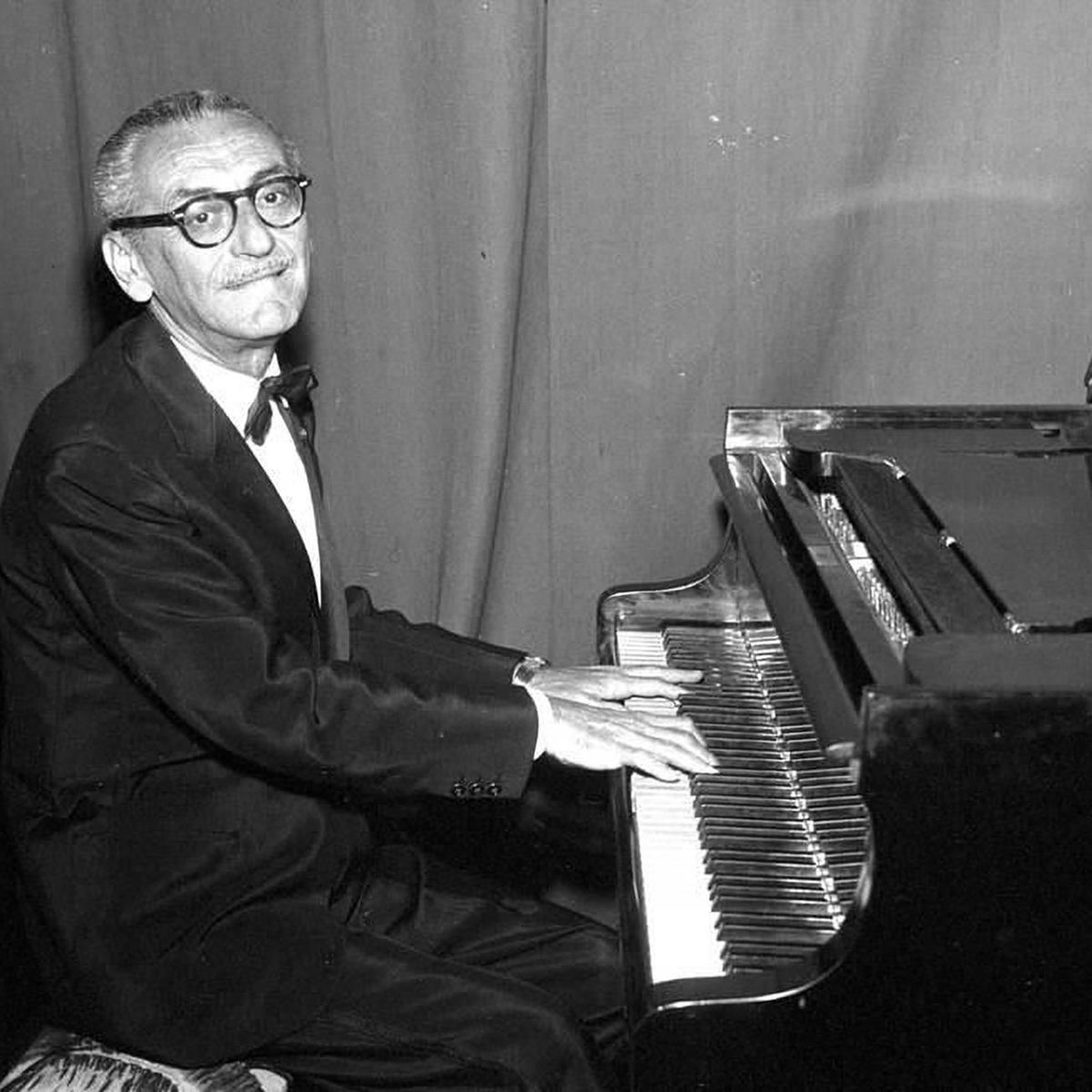
Ary Evangelista Barroso (Ubá, Minas Gerais, November 7, 1903 – Rio de Janeiro, February 9, 1964) was a composer, pianist, conductor, radio broadcaster, sports announcer, lawyer, and city councilman. The author of Aquarela do Brasil, Na Baixa do Sapateiro, No Tabuleiro da Baiana, and No Rancho Fundo, he was one of the central figures of Brazil's so-called Radio Era (1930s–1950s) and one of the composers who did the most to establish samba as the musical symbol of Brazil. At the piano, he brought the rhythmic language of samba and Rio de Janeiro's popular music to the keyboard, and his catalog includes at least one piece explicitly titled as a choro (the instrumental genre that emerged in Rio de Janeiro in the late nineteenth century): Choro Brasileiro nº 3.
Childhood and Training
The son of João Evangelista Barroso, a public prosecutor and state legislator, and Angelina de Resende Barroso, Ary lost both parents to tuberculosis at around the age of seven. He was raised in Ubá by his maternal grandmother, Gabriela Augusta de Resende, and by his aunt Rita — known as tia Ritinha — a piano teacher with whom he studied music theory, solfejo (solfège), and piano from the age of ten, under a regime of three hours of mandatory daily practice.
By the age of 12, he was already taking turns with his aunt as pianist at the Cine Ideal, accompanying silent film screenings. At around 15, he wrote his first composition, the cateretê (a rural dance genre from southeastern Brazil) De Longe.
Rio de Janeiro: From Law to the Piano
In 1920, following the death of his uncle Sabino Barroso, a former Minister of Finance, he received an inheritance and moved to Rio de Janeiro to study law, entering law school in 1921. The small fortune ran out after about three years of bohemian life, and Ary began supporting himself as a pianist in movie theaters, dance halls, cabarets, theaters, and orchestras — among them the orchestra of the Teatro Carlos Gomes, from 1929, and that of Napoleão Tavares, with which he traveled to Bahia in 1934.
In the late 1920s, he began composing for the teatro de revista (Brazilian musical revue theater). His first recordings appeared in 1929, including Vou à Penha, released by Mário Reis. For the 1930 Carnival, his marcha (a fast, duple-meter Carnival march) Dá Nela won a Carnival song contest and earned him a prize of five contos de réis — money he used to marry Ivone Belfort Arantes. That same year, he completed his law degree.
Career and Recognition
During the 1930s, Ary established himself as one of the most recorded composers in the country, writing sambas, marchas, sambas-canção (slower, romantic sambas), and numbers for revue productions. His partnership with lyricist Luiz Peixoto was among the most productive of his career, and his songs were released by performers such as Carmen Miranda, Francisco Alves, Sílvio Caldas, Orlando Silva, and Aracy de Almeida.
In 1939, he composed Aquarela do Brasil, recorded that same year by Francisco Alves. The song became the landmark of the samba-exaltação (exaltation samba), a strand of samba with patriotic lyrics and grand orchestral arrangements, and gained international renown after its inclusion in the Walt Disney animated feature Saludos Amigos (1942). Na Baixa do Sapateiro later appeared in The Three Caballeros (1944) under the title Bahia. Ary worked in Hollywood and was nominated for the Academy Award for Best Original Song for Rio de Janeiro, from the film Brazil (1944) — the first Oscar nomination ever received by a Brazilian.
Alongside his musical work, he built a long career in radio: he hosted talent shows, worked as a humorist and commentator, and became one of the most popular sports announcers in the country. An avowed supporter of the Flamengo football club, he became famous for announcing goals by playing a small harmonica. In 1947, he was elected city councilman of what was then the Federal District for the União Democrática Nacional (UDN). In 1955, he received the National Order of Merit.
Ary Barroso and Choro
Although his fame is tied to samba, Ary's training took place in the same professional environment in which choro developed in Rio de Janeiro: the movie-theater piano, theater and dance orchestras, and radio ensembles — spaces where popular pianists worked daily alongside flutists, cavaquinho (small four-string guitar) players, guitarists, and other chorões (choro musicians).
His pianism is marked by an effort to reproduce on the keyboard the groove of samba percussion — the beat of the tamborim (small hand-held frame drum), according to contemporary accounts — and his writing reveals traits familiar to the choro idiom: instrumentally conceived melodies, frequent modulations, and bass lines with independent motion that converse with the main melody in the manner of the baixarias (characteristic low-register countermelodies of the seven-string guitar).
Choro Brasileiro nº 3 is considered the only choro, strictly speaking, composed by Ary. He recorded it himself at the piano on the LP Encontro com Ary, introducing it as "a Brazilian chorinho in the old-guard style." The recording was reissued on the compilation Ary Barroso – 100 Anos (EMI), released for the composer's centenary.
His connection to the choro world is also reflected in the reception of his work: in 2004, the Clube do Choro de Brasília devoted its entire annual program to honoring the composer.
Advocacy for Authors' Rights
Ary played a prominent role in the professional organization of Brazilian composers. He was a founder and president of the Sociedade Brasileira de Autores, Compositores e Editores de Música (SBACEM — Brazilian Society of Authors, Composers, and Music Publishers) and campaigned throughout his life for the proper collection and fair distribution of royalties.
Final Years and Death
In 1961, he was diagnosed with cirrhosis of the liver, a condition that worsened over the following years. He died in Rio de Janeiro on February 9, 1964, on Carnival Sunday, just hours before the Império Serrano samba school entered the parade avenue with the theme Aquarela Brasileira, a samba-enredo (theme samba) by Silas de Oliveira paying tribute to the composer and his work.
Legacy
Ary Barroso combined harmonic sophistication, melodic invention, and strong popular appeal. Aquarela do Brasil became one of the most recorded Brazilian songs in the world, and his repertoire has been revisited by generations of performers — from Carmen Miranda and Francisco Alves to João Gilberto, who recorded him on his debut LP in 1959. His work remains a fundamental reference in the history of samba, of radio, and of the formation of modern Brazilian popular music.
Selected Works
- No Rancho Fundo (with Lamartine Babo, 1931)
- Na Batucada da Vida (with Luiz Peixoto, 1934)
- No Tabuleiro da Baiana (1936)
- Na Baixa do Sapateiro (1938)
- Aquarela do Brasil (1939)
- Camisa Amarela (1939)
- Os Quindins de Iaiá (1941)
- Rio de Janeiro (1944)
- Risque (1952)
- É Luxo Só (with Luiz Peixoto, 1957)
- Choro Brasileiro nº 3
Sources and References
- CABRAL, Sérgio. No tempo de Ary Barroso. Rio de Janeiro: Lumiar, 1993.
- Casa do Choro — Ary Barroso
- Instituto Moreira Salles — Ary Barroso Collection
- Dicionário Cravo Albin da Música Popular Brasileira — Ary Barroso
- Sesc SP — "Ary do Brasil", Cecília Prada (2003)
- Jornal de Brasília — "Samba-canção faz homenagem a Ary"
- Jornal de Brasília — "Confraria de mineiros" (2004)
Suggested course
Move from editorial context into guided study with synchronized score and structured steps.
All courses
Browse the public course catalog connected to the content hubs.