Choropedia
Antenógenes Silva: Brazilian Accordionist
Antenógenes Silva was a prominent Brazilian accordionist and composer, influencing generations in choro and other genres.
Introduction
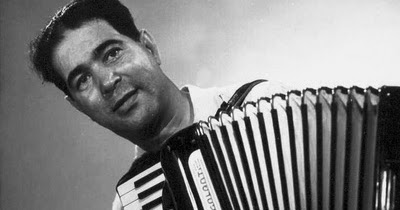
Antenógenes Silva (Uberaba, Minas Gerais, October 30, 1906 – March 9, 2001) was a Brazilian accordionist and composer, one of the leading figures on the instrument in Brazilian popular music during the radio era.
His career began as early as the 1920s, moving across choro, waltz, tango, maxixe, xote, mazurka and other popular genres, and bringing the accordion both to instrumental repertoire and to the accompaniment of singers.
Background and early years
The son of an accordion player, Antenógenes came into contact with the instrument early on and began composing while still young. He worked in a number of trades before dedicating himself professionally to music.
In 1927 he moved to Ribeirão Preto and, the following year, went on to São Paulo, where he worked at Rádio Educadora Paulista. In 1929 he made his first recordings for Victor, setting down compositions of his own such as the choro Gostei de Tua Caída, the maxixe Saudade de Uberaba, and the waltzes Norma and Feliz de Quem Ama.
Radio and recordings
In 1933, Antenógenes moved to Rio de Janeiro, then the main center of the Brazilian recording and broadcasting industry. From that point on he became a regular presence in studios, radio stations, and popular ensembles.
On accordion, he accompanied countless singers and took part in recordings by artists such as Augusto Calheiros, Gilberto Alves, Alcides Gerardi, Jamelão, De Morais and Ademilde Fonseca, while also leading ensembles of his own.
His work illustrates the versatility the accordion held in Brazilian urban music even before the instrument became established as one of the symbols of music from the Northeast. Antenógenes used it in waltzes, choros, sambas, marchas and tangos, with a musical language rooted as much in popular tradition as in the formal study of harmony and orchestration.
He refined his musical training with César Guerra-Peixe and went on to teach tango repertoire to Luiz Gonzaga during the Pernambuco accordionist's early years in Rio de Janeiro.
The accordion and choro
Although his career spanned many genres, Antenógenes maintained a constant connection to the instrumental language of choro.
His repertoire combined strongly cantabile melodies — especially in the waltzes — with livelier, more virtuosic pieces. Among his compositions tied to the world of the chorões are Retiro da Velha Guarda, Pica-Pau and Beija-Flor.
He also recorded works by foundational composers of Brazilian instrumental music, such as Zequinha de Abreu, helping to establish the accordion as an instrument capable of taking on the role of soloist in repertoires until then associated mainly with the piano, the flute, the bandolim and the wind instruments.
In 1957 he was awarded first prize at an international accordion competition held in Trossingen, Germany, a recognition that reinforced his reputation as an instrumentalist.
For many years he also ran an accordion school in Rio de Janeiro, where instrument, music theory, sight-singing and harmony were taught.
Notable works
Among his compositions and co-authored pieces are:
- Pisando Corações, with Ernâni Campos
- Santa Terezinha
- Saudades de Ouro Preto
- Retiro da Velha Guarda
- Pica-Pau, with Miguel Lima
- Cada Vez Te Quero Mais, with Miguel Lima
- Eu Chorei, Você Chorou, with Oswaldo Santiago
- Adeus Mãezinha, with De Morais
- Beija-Flor
- Saudades de Matão, a work whose authorship was the subject of a long-running dispute
His output reveals a musician positioned at the meeting point of urban choro, the tradition of Brazilian waltzes, regional music, and the radio repertoire of the first half of the twentieth century.
Sources
- Instituto Casa do Choro. Archive of composers and scores.
- Instituto Moreira Salles. Archives and Discografia Brasileira.
- Dicionário Cravo Albin da Música Popular Brasileira. Entry "Antenógenes Silva."
Suggested course
Move from editorial context into guided study with synchronized score and structured steps.
All courses
Browse the public course catalog connected to the content hubs.