Choropedia
Abel Luiz: Brazilian Musician and Educator
Discover Abel Luiz, a talented cavaquinho and bandolim player from Rio, leader of Choro Novo and music education advocate.
Introduction
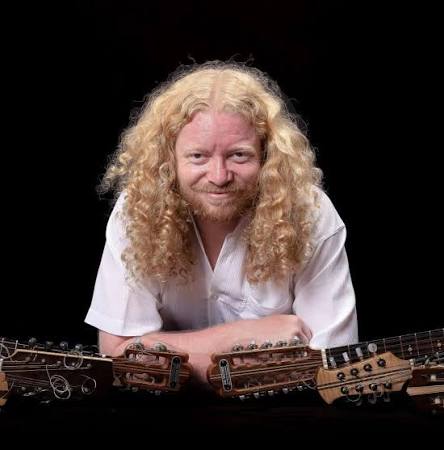
Abel Luiz Oliveira da Silva Machado (Rio de Janeiro, April 10, 1982), known as Abel Luiz and also called Sivuquinha, is a Brazilian cavaquinho (small four-string guitar) player, bandolim (Brazilian mandolin) player, composer, arranger, musical director, and multi-instrumentalist. His work spans choro, Rio de Janeiro's traditional instrumental genre, samba, and other forms of Brazilian instrumental and regional music, with a particular focus on plucked string instruments.
Besides the cavaquinho and the bandolim, he plays the violão tenor (Brazilian tenor guitar) and the viola caipira (Brazilian ten-string country guitar). He works as a performer, composer, researcher, and music educator. His career links the tradition of the rodas de choro (informal choro jam circles) of Rio de Janeiro's suburbs to contemporary composition and to projects in cultural education and mental health.
Training and Musical Context
Raised in the Engenho de Dentro neighborhood, in Rio de Janeiro's North Zone, Abel Luiz first encountered choro at home. He learned the cavaquinho from his maternal grandfather, Luiz Gonzaga da Silva, a violão de sete cordas (seven-string guitar) player who frequented the choro rodas of the city's suburbs. The family's music went back further: his great-grandfather played the cavaquinho and taught the instrument to his son.
As a child, he began accompanying his grandfather to the Roda do Barraco do Miro, on Rua Felício, between the Cascadura and Cavalcanti neighborhoods. The roda was founded in 1948 by the brothers Miro, Olavo, and Rodrigues, musicians from Ubá, Minas Gerais, who rehearsed in their backyard, a wooden shack painted blue. There Abel spent time with musicians of several generations and learned the genre's repertoire and collective practices.
Being left-handed, he adopted Olavo's way of playing: turning the instrument upside down without reversing the order of the strings. This became a defining feature of his technique.
He later studied cavaquinho at the Escola de Música Villa-Lobos, where his teachers and mentors included Guilherme Milagres, Joel Nascimento, André Poyart, Ignez Perdigão, Zé Menezes, and conductor Alceu Bocchino.
Samba and Professional Career
Abel Luiz was one of the founders of the Samba do Trabalhador, a weekly samba roda led by Moacyr Luz at the Clube Renascença in Rio de Janeiro. He was a performer and arranger on the album Samba do Trabalhador – Renascença Samba Clube, released in 2005 by Lua Music. The album includes the jongo (Afro-Brazilian drum-and-song tradition) Canto dos Cafezais, which he co-wrote with Daniel do Cavaco.
Over the course of his career, he has accompanied artists such as Dona Ivone Lara, Jamelão, Moreira da Silva, Áurea Martins, and Mariene de Castro.
In the 2010 and 2011 seasons, he was the cavaquinho player in the stage show É com esse que eu vou: o samba de carnaval na rua e no salão, conceived by Rosa Maria Araújo and Sérgio Cabral and directed by Charles Möeller and Claudio Botelho.
As a composer, he has written with figures from samba and choro such as Aldir Blanc, Ratinho, Aluízio Machado, Delcio Carvalho, Cristiano Nascimento, and Rafael Mallmith. Pato Novo, co-written with Aldir Blanc and Ratinho, opens the album É Samba! (2025) by singer Dorina.
Choro Novo
In 2010, Abel Luiz founded Choro Novo, initially with Marcelo Nami on seven-string guitar and Reinaldo Pestana on drums and percussion. In 2011, after Nami's departure, Marlon Mouzer took over the seven-string guitar.
The group built a repertoire combining the members' own compositions, works by Brazilian composers, and dialogues with other genres such as samba, jongo, and caboclinho (a carnival dance tradition from Pernambuco). In 2012, it presented the show Choro Novo visita Villa-Lobos e outros mestres as part of the Música no Museu series.
Its first album, Sotaques & Influências, was released in 2013 and features nine compositions by the members. Abel Luiz wrote O Bruxo, Chorrilho, and Catarina, as well as Tijolo na Nuca, co-written with Rafael Mallmith. In 2015, the album was shortlisted for the 26th Prêmio da Música Brasileira (Brazilian Music Awards) in the instrumental music category.
The second album, Diálogos Sonoros, released in 2023, broadened the trio's repertoire and musical range, with an emphasis on arrangements. The title also names a concert series in which the group hosts guests such as Mestre Siqueira and Rildo Hora.
The Onze Cordas Project
Onze Cordas ("Eleven Strings") is a duo with seven-string guitarist Rafael Mallmith, devoted to the pairing of the violão tenor, the four-string instrument Abel plays, and the seven-string guitar. The project combines the melodic, harmonic, and accompaniment possibilities of both instruments, which trade roles throughout the pieces.
In 2016, the duo presented its work at the Casa do Choro in Rio de Janeiro. That same year it released the album Onze Cordas, recorded between 2013 and 2015, with eleven original tracks in a range of Brazilian rhythms, written by the two members. The album reached digital platforms in 2021. Its tracks include Cabocla, Ballerine, Engenho-Porteño, Espontâneo, Insone, and Um Abraço no Abel, the last written by Mallmith. The project helps build a contemporary repertoire for the violão tenor.
Research and Composition for String Instruments
Abel Luiz's interest in the variety of Brazilian string instruments extends to his academic work. In the Professional Graduate Program in Music at the Universidade Federal do Rio de Janeiro (UFRJ), under the supervision of Henrique Cazes, he developed the project Cordal Carioca, presented as his master's thesis in 2023.
The project brings together compositions for six instrumental configurations: cavaquinho, bandolim, dynamic violão tenor, viola caipira (in cebolão tuning in G), cavaquinho tuned like a bandolim, and dynamic viola caipira (cebolão tuning in E). The pieces were recorded as scores, audio, and video, forming a repertoire devoted to the expressive character of each instrument.
The pieces include Tardio for cavaquinho; Aldeia for viola caipira; Vigília for bandolim; Teimoso for dynamic violão tenor; Vestida de Mar for cavaquinho tuned like a bandolim; and Flecheiro for dynamic viola caipira.
Music Education and Sociocultural Projects
Alongside his performing career, Abel Luiz works in music education and community cultural projects.
Since 2007, he has coordinated the Oficina Livre de Música (Open Music Workshop) at the Centro de Atenção Psicossocial Clarice Lispector, a public mental health center linked to the Instituto Municipal Nise da Silveira. The workshop brings together mental health service users, staff, and local residents. In this context, he became musical coordinator of the Bloco Carnavalesco Loucura Suburbana, a carnival bloco (street carnival group) that brings together carnival, artistic expression, and mental health.
He has also taken part in educational projects in Rio de Janeiro communities and taught string instruments at the Conservatório Brasileiro de Música.
In the choro world, he created Café Sonoro, a monthly teaching gathering that revived the traditional Roda da Bandolim de Ouro after the music shop moved to Praça da República. The project brought together experienced musicians, students, and beginners, valuing oral transmission, collective listening, and exchange between generations.
His work in these spaces reflects an understanding of choro not only as a repertoire but as a practice of sociability, learning, and preservation of cultural traditions.
In April 2024, he was honored at the Câmara Municipal do Rio de Janeiro (Rio de Janeiro City Council) during the celebrations of National Choro Day.
Important Works
| Work | Genre/Instrumentation | Co-writer |
|---|---|---|
| Carinhosa | Valsa (Brazilian waltz) | — |
| Quase Choro | Choro | — |
| O Bruxo | Choro | — |
| Chorrilho | Choro | — |
| Catarina | Choro | — |
| Tijolo na Nuca | Choro | Rafael Mallmith |
| Valscigana | Valsa | Rafael Mallmith |
| Canto dos Cafezais | Jongo | Daniel do Cavaco |
| Pato Novo | Samba | Aldir Blanc and Ratinho |
| Tardio | Cavaquinho | — |
| Aldeia | Viola caipira | — |
| Vigília | Bandolim | — |
| Teimoso | Dynamic violão tenor | — |
| Vestida de Mar | Cavaquinho tuned like a bandolim | — |
| Flecheiro | Dynamic viola caipira | — |
Selected Discography
- 2005 — Samba do Trabalhador – Renascença Samba Clube (Lua Music), guest performer
- 2013 — Sotaques & Influências (independent), with Choro Novo
- 2016 — Onze Cordas (independent), with Rafael Mallmith
- 2023 — Diálogos Sonoros (independent), with Choro Novo
Sources
- Memória do Cavaquinho Brasileiro. Abel Luiz. Available at: https://www.memoriadocavaquinho.com.br/compositores/abel-luiz
- Abel Luiz. Official Instagram. Available at: https://www.instagram.com/abelluiz.instrumentista/
- Dicionário Cravo Albin da Música Popular Brasileira. Abel Luiz. Available at: https://dicionariompb.com.br/artista/abel-luiz/
- Dicionário Cravo Albin da Música Popular Brasileira. Choro Novo. Available at: https://dicionariompb.com.br/grupo/choro-novo/
- Dicionário Cravo Albin da Música Popular Brasileira. Aldir Blanc. Available at: https://dicionariompb.com.br/artista/aldir-blanc/
- Instituto Moreira Salles — Rádio Batuta. Entrevista com Dorina. Available at: https://radiobatuta.ims.com.br/entrevistas/dorina
- Revista InFoco. Choro das Seis e Meia e saraus cariocas no Centro do Rio (2016). Available at: https://revistainfoco.com.br/2016/05/25/choro-das-seis-e-meia-e-saraus-cariocas-no-centro-do-rio/
- UFRJ — PROMUS. Abel Luiz Oliveira da Silva Machado — Cordal Carioca. Available at: https://promus.musica.ufrj.br/pesquisa/abel-luiz-oliveira-da-silva-machado/
- MACHADO, Abel Luiz Oliveira da Silva. Cordal Carioca. Master's thesis (Mestrado Profissional em Música) – UFRJ, 2023. Available at: https://promus.musica.ufrj.br/wp-content/uploads/2022/08/DISSERTACAO-ABEL-LUIZ-MACHADO.pdf
- Choro Patrimônio (UFPel). Roda do Barraco do Miro. Available at: https://acervosvirtuais.ufpel.edu.br/choropatrimonio/rodas-e-locais-de-performance/roda-do-barraco-do-miro/
- Choro Patrimônio (UFPel). Roda da Bandolim de Ouro. Available at: https://acervosvirtuais.ufpel.edu.br/choropatrimonio/rodas-e-locais-de-performance/roda-da-bandolim-de-ouro/
- EBC — Rádio MEC. MEC Instrumental: Abel Luiz (2023). Available at: https://radios.ebc.com.br/armazem-cultural/2023/10/28-09-23-mec-instrumental-abel-luiz-material-disponivel-na-pasta-do-site
- EBC — Rádio MEC. MEC Instrumental convida Abel Luiz (2019). Available at: https://radios.ebc.com.br/armazem-cultural/2019/05/mec-instrumental-convida-abel-luiz
- Arte de Toda Gente. Entrevista com Abel Luiz: "É na roda que se aprende a chorar!". Available at: https://artedetodagente.com.br/entrevista-com-abel-luiz-e-na-roda-que-se-aprende-a-chorar/
- Estúdio Artista 70. Choro Novo and Onze Cordas. Available at: https://estudioartista70.wixsite.com/estdioartista70
- ArteCult. Trio Choro Novo e Rildo Hora exploram as fronteiras do choro no show Diálogos Sonoros. Available at: https://artecult.com/trio-choro-novo-e-rildo-hora-exploram-as-fronteiras-do-choro-no-show-dialogos-sonoros/
Suggested course
Move from editorial context into guided study with synchronized score and structured steps.
All courses
Browse the public course catalog connected to the content hubs.